After the Storm Passes
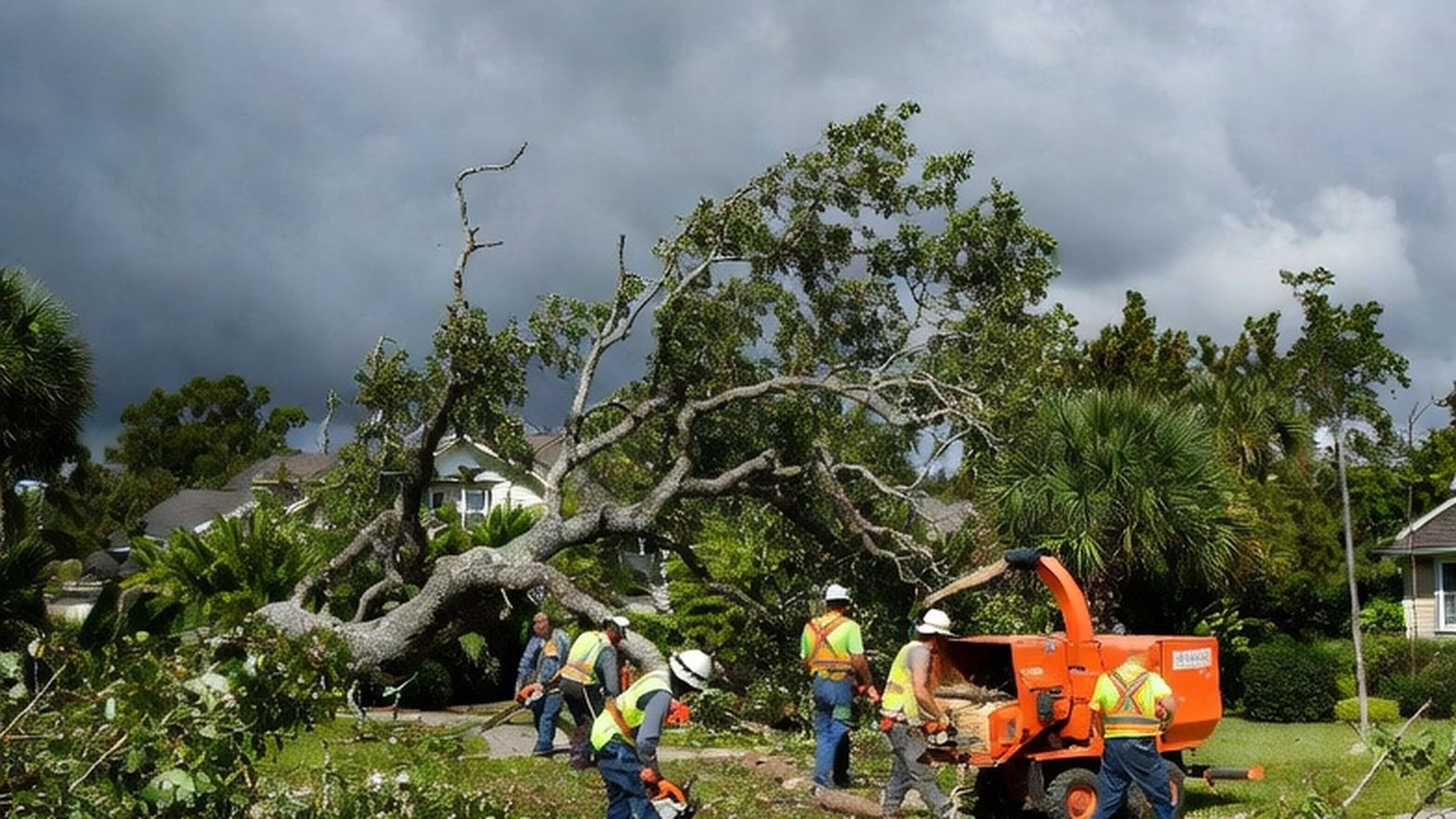
A major storm goes through Tallahassee, a tropical system, a severe squall line, sometimes an actual hurricane. When it's safe to go outside, you walk your property and see damage. Some trees are fine. One has a major limb hanging in the canopy. Another is pushed over at the base. A third looks okay but is missing branches.
The temptation is to call every tree service you can reach immediately and get everything handled at once. The reality is that immediate demand overwhelms capacity after major storms, and not all damage requires emergency response.
Here's how to triage what you're looking at.
Immediate Hazards. Address These First
The following situations genuinely require urgent attention:
Tree or large limb on a structure: A tree on your roof, through a wall, or pressing against your house is both a structural concern and an ongoing weather risk if there are additional storms pending. This is the classic emergency call.
Hanging limbs directly over occupied areas: A partially detached limb suspended in the canopy above your main entrance, a child's play area, an AC unit you need access to, or anywhere people regularly pass, this is an active hazard. A hanging limb can fall without warning, often days or weeks after the event that broke it.
Downed power lines in contact with trees: Don't approach or touch. Call your utility company (TALQUIN ELECTRIC: 850-627-7651 or FPL: 1-800-468-8243 depending on your area) first. Tree work involving power lines requires coordination with the utility.
Uprooted tree leaning against a structure: Even if it hasn't fully fallen, a root-balled tree pressing against a fence or structure needs to be handled before additional stress causes collapse.
Road or driveway blockage: A downed tree blocking your only access or a public road is a practical emergency even if no structure is damaged.
High Priority. Handle Within Days
Hanging limbs over unoccupied areas: A large hanging limb over the backyard away from structures and activity is a hazard but lower urgency than one over occupied areas. Get it scheduled, but it doesn't require an emergency after-hours call.
Heavily damaged trees with split or cracked main structure: A trunk that's split, a major scaffold limb that's cracked at the attachment, or severe crown loss that makes the tree structurally questionable, these warrant professional assessment and work within a reasonable window. The tree won't necessarily fail tomorrow, but delay isn't wise.
Trees visibly uprooted but not against structures: An uprooted tree lying in open yard. Not urgent in the same way, but the root plate leaves a hole in the ground and the tree should be removed before the wood begins deteriorating and handling becomes more difficult.
Monitor and Schedule. Can Wait for Normal Conditions
Minor limb and branch loss: Small branches and twigs down are normal storm byproduct. Clean up at your own pace. No professional service required for the storm damage itself.
Trees that lost branches but appear structurally sound: Common outcome. A tree missing some branches but with intact main structure and no hanging wood is generally fine. Schedule a professional assessment if you want to know whether the crown loss affects long-term health, but this is not urgent.
Leaning trees that were already there: If a tree was leaning pre-storm and is still leaning post-storm in the same way, the storm didn't change the situation materially. It's still the same conversation you should be having with an arborist about whether that lean warrants action.
Healthy trees blown over completely: A completely uprooted healthy tree (root ball out of the ground) can sometimes be reset if caught within a few days and if the root ball is largely intact. This is worth a call to an arborist quickly if you want to try to save it, but it's not an emergency in the hazard sense.
The After-Storm Contractor Warning
After major storms, unlicensed and uninsured contractors flood the area offering discounted emergency work. This is when the most homeowner complaints are filed with state licensing boards.
Pressure tactics like "I happen to have a crew free today, offer expires tonight" are red flags. A legitimate tree service will give you a written quote and not pressure you to sign immediately.
Verify insurance coverage (general liability and workers' comp) before authorizing work. After a storm, you're more exposed than usual to the risk of an uninsured worker injury on your property.
See our full guide on hiring a tree service in Tallahassee for what to ask.
Documentation Before Cleanup
Before any work begins, photograph all damage for your insurance claim. More documentation is better. Photograph from multiple angles, with something in frame for scale. Keep records of what you remove and when.
For damage that hit structures, contact your insurance company before starting significant work, they may want to send an adjuster first, or they may authorize immediate work to prevent further damage. Read your policy for emergency repair provisions.
24/7 emergency service for immediate tree hazards in the Tallahassee area. Call (850) 570-4074: available around the clock after storms.