
The Bamboo Problem
Bamboo was planted enthusiastically in Florida for decades, for privacy screens, for the tropical look, for erosion control. It delivers on those goals, but it also spreads aggressively through underground rhizomes that can extend 15 feet or more from the original planting per year.
The result: bamboo that was planted in one corner of a property, or that arrived from a neighboring property, is now expanding through the yard, into planting beds, under fences, and into spaces where it was never wanted.
Bamboo removal is more involved than most plant removal. Here's what to know before you start.
Running vs. Clumping Bamboo
First: the distinction matters enormously.
Clumping bamboo (Bambusa, Fargesia, and related genera): Expands slowly outward in a predictable clump. Manageable with periodic cutting of outer shoots. The more benign bamboo type.
Running bamboo (Phyllostachys, Pleioblastus, and related genera): Sends rhizomes 10-20+ feet from the parent plant, emerging as new shoots at variable distances. This is the invasive problem bamboo that most North Florida situations involve. Common varieties like golden bamboo (Phyllostachys aurea) (one of the most common residential plantings) is a runner.
If the bamboo on your property or a neighbor's property is sending up shoots far from the main clump, it's almost certainly running bamboo, and the removal approach is fundamentally different from clumping bamboo.
Why Bamboo Is Hard to Remove
Rhizome system: The above-ground bamboo is the visible portion of a large underground network. Cutting the canes removes what you can see; it doesn't address the rhizomes, which continue sending up new shoots.
Extensive spread: A mature running bamboo planting can have rhizomes extending in all directions for 20+ feet. Many of these rhizomes are beyond the original planting boundary.
Regrowth rate: Bamboo shoots can grow several inches per day during peak growing season. Cut it down, and new shoots emerge from the undisturbed rhizomes quickly.
What Works for Bamboo Removal
Mechanical + Chemical Combination
The most effective residential approach:
- Cut all canes to ground level. Remove everything above ground.
- Repeat cutting or mowing as new shoots emerge. Don't let them grow, keep cutting any growth back to the soil as quickly as it appears.
- Apply herbicide to fresh-cut stalks. Glyphosate (Roundup) applied to freshly cut surfaces is one method; foliar spray on young regrowth is another. The goal is getting the herbicide into the rhizome system.
- Repeat persistently. This is not a one-time job. Bamboo removal through this method takes 2-3 seasons of consistent effort.
The key is persistence. Abandoning the effort after one or two rounds leaves the rhizome system intact and allows full recovery.
Rhizome Excavation
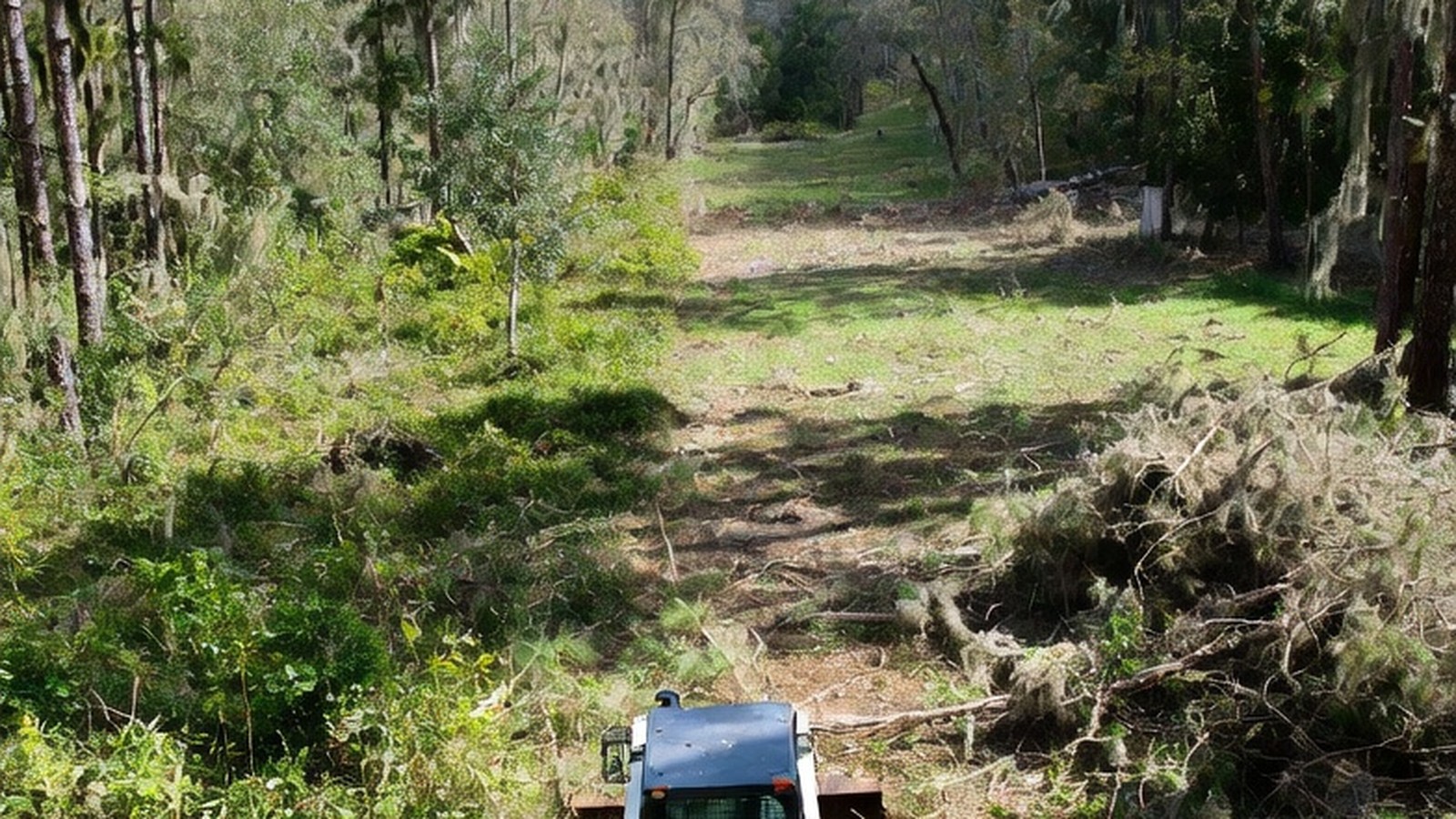
For smaller established stands, physically excavating and removing the rhizome mass is possible, but labor-intensive. A mini-excavator or skid steer can remove the bulk of the rhizome layer across a defined area. Remaining rhizome fragments will still produce new shoots, so follow-up management is still required.
This approach is practical for:
- Limited-size bamboo stands that need to be completely cleared in a single operation
- Areas where chemical application isn't preferred
Barriers
Rhizome barriers (thick HDPE plastic installed 24-30 inches deep) can contain bamboo spread from an adjacent property or limit expansion of an existing stand. They don't remove existing bamboo, but they prevent expansion past the barrier.
This is useful as a preventive measure or to protect a specific area while managing the existing bamboo elsewhere.
What Doesn't Work
Cutting alone without follow-up: Without herbicide application or rigorous repeated cutting, the rhizome system will fully recover. Bamboo is one of the fastest-growing plants on earth, it grows back.
Single herbicide application: One application rarely kills bamboo completely. The rhizome mass is large and not all of it is connected to the treated portions.
When to Call a Professional
For large established bamboo stands (areas 1,000 square feet or more) professional clearing with appropriate equipment is significantly more efficient than manual removal. We handle bamboo clearing as part of our land clearing and brush clearing services, including follow-up management.
If bamboo from a neighboring property is encroaching on yours, the same legal principles as other boundary plant issues apply, you can cut at the property line, but stopping the spread may require a barrier or coordination with the neighbor.
Bamboo removal or clearing in Tallahassee? Call (850) 570-4074 or request an estimate online.