Location Is the Most Important Decision
Most tree problems (roots damaging structures, trees outgrowing their space, chronic drought stress, conflicts with utilities) trace back to a planting location decision made 10 or 20 years earlier.
The right tree in the wrong spot creates decades of problems. The right tree in the right spot largely takes care of itself.
Here's how to evaluate a planting location before committing.
Overhead and Underground Utilities
Look up. Power lines above a planting site determine the maximum appropriate tree size. A tree that reaches 60 feet should not be planted under or near overhead distribution lines. North Florida utility trimming around power lines is expensive, creates ugly results, and stresses trees. The solution is species selection matched to the overhead clearance available.
- Under high-voltage transmission lines (the large towers): no trees
- Under distribution lines (standard neighborhood lines): small trees under 25 feet mature height, or plant away from the line path
- In open areas away from lines: full-size trees are appropriate
Look underground. Underground utilities (gas lines, water mains, sewer laterals, buried electrical) represent both a planting constraint and a safety issue. Before any planting or digging, call 811 (Georgia's Call Before You Dig number) to have utilities marked. This is legally required before digging in Georgia.
For trees specifically, underground utilities matter for root spread over the long term. A large-canopy tree planted over a buried water main will eventually put roots in proximity to that line. Know where utilities run before choosing a planting spot.
Right Tree, Right Size
The most common planting mistake in residential landscapes: planting a tree that will be too large for its location at maturity.
The factors:
- Distance from structures: A tree's mature canopy spread plus 10-15 feet is the minimum safe distance from a structure. A live oak with a 60-foot spread needs to be 30+ feet from a house.
- Distance from other trees: Competition matters. Crowded trees suppress each other and create structural problems as they compete for light.
- Distance from utilities (overhead and underground): As above.
- Hardscape proximity: Tree roots and concrete/pavers have long-standing conflicts. Species with aggressive surface root systems (silver maple, water oak) should not be planted near driveways, patios, or sidewalks.
The solution is researching the mature size of the species you're planting and working backward from that number. If the space allows for a 30-foot tree, plant a 30-foot tree, not a 50-foot tree you plan to "keep trimmed."
Sun, Soil, and Water
Sun exposure: Match species to the site's sun conditions. Full sun is 6+ hours of direct sun; part shade is 2-4 hours; full shade is less than 2 hours. Most trees need full sun to thrive. Attempting to grow a sun-loving species in a shaded courtyard results in chronic decline.
Soil drainage: North Florida soils range from well-drained sandy (majority of Leon County) to heavy clay and poorly-drained bottomland. Most upland species planted in poorly drained spots will show root rot and decline within a few years. Know whether water pools at your planting site after rain before choosing species.
Soil depth: Compacted or shallow soils (common in recently developed lots where topsoil was removed during construction) limit root development. Large trees planted in compacted soil underperform. Improve soil conditions or choose species tolerant of difficult soils.
Distance from Other Trees
Space is finite. A new large tree planted 15 feet from an existing mature oak will compete intensely in 20 years. They'll both lose, suppressed, leaning for light, stressed.
If you're adding a tree to an established landscape, account for the mature spread of both the new tree and adjacent existing trees, and plan spacing accordingly.
Consider What You Want From the Tree
Location decisions connect to function:
- Shade for the house: West and southwest facing exposures provide the most cooling benefit in summer. Afternoon sun (3-6 PM) on west walls is the peak heat load for a Florida home.
- Privacy: A screen planting needs density, consider multiple smaller species rather than one large specimen for screening applications.
- Specimen focal point: A tree planted as a standalone feature in an open lawn has different requirements than one in a border.
- Canopy shade: A large tree centered in the yard for general shade needs the space to spread evenly.
When to Get Help
Site evaluation for significant tree plantings is worth professional input. If you're planting a large shade tree (something with a 40-60 foot mature size) that will define your property for the next 50 years, spending time with an arborist to evaluate the location before you plant saves significant problems down the road.
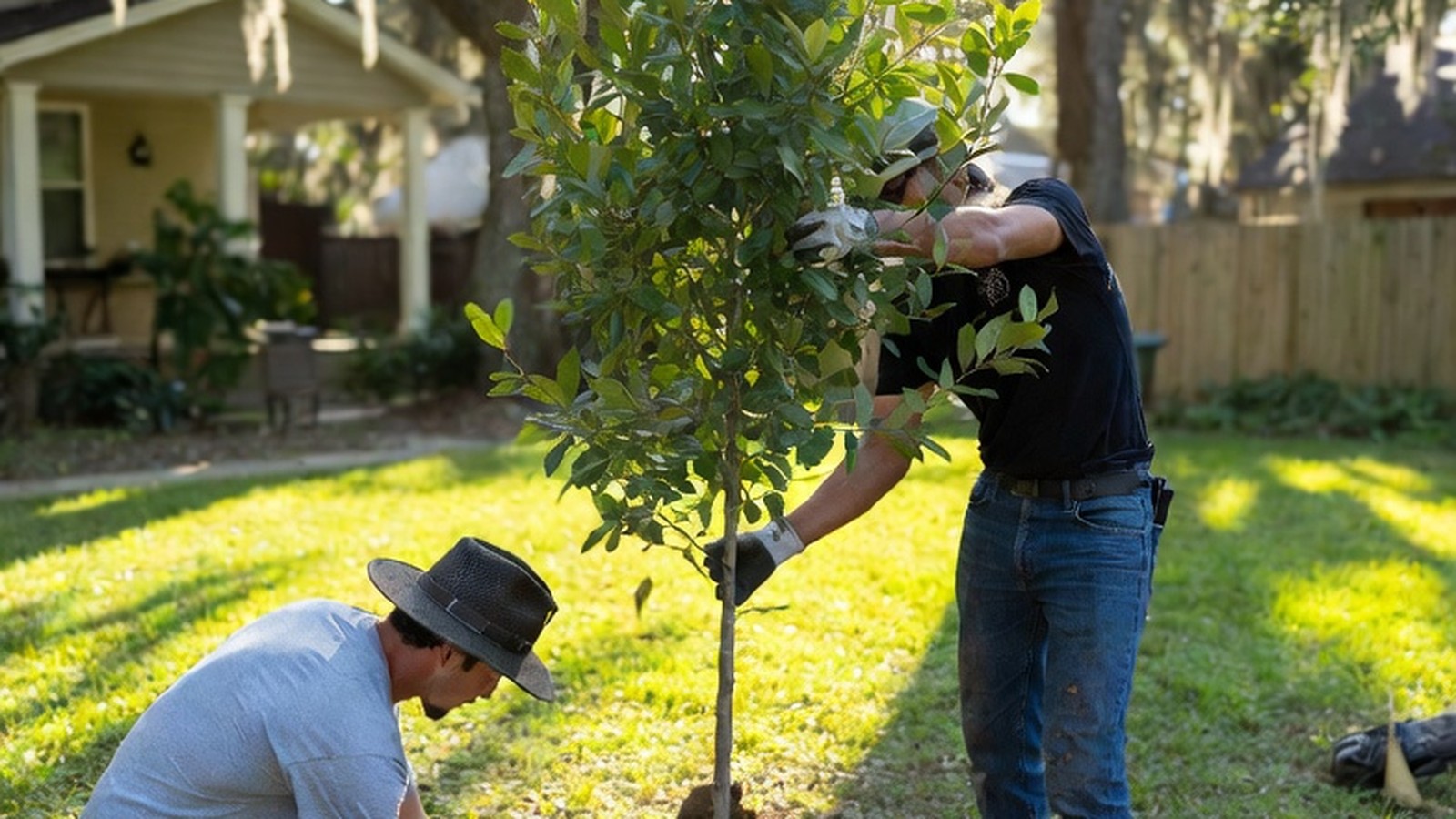
We provide planting consultations and do tree planting throughout the Tallahassee area. Call (850) 570-4074 or request a consultation online.