Eastern Red Cedar in North Florida
Eastern red cedar (Juniperus virginiana) is native to North America and common throughout North Florida and South Georgia. Despite the name, it's actually a juniper, not a true cedar. It's one of the first trees to colonize open fields and disturbed land, a pioneer species that establishes readily on old fields, roadsides, and fence lines.
Identifying Red Cedar
Appearance: Evergreen with dark green to blue-green foliage, pyramidal to columnar form when young, often becoming more irregular with age. Bark is reddish-brown, shredding in long strips. Berries are small, blue-gray, and waxy, a food source for cedar waxwings and other birds.
Growth habit: Ranges from a compact shrub to a tree reaching 40-50 feet. In North Florida, it grows on well-drained sites, uplands, rocky areas, fence rows.
Smell: The wood has the characteristic cedar smell used in closets and chests.
Red Cedar in Landscapes
Red cedar can be a legitimate landscape tree, it's drought-tolerant, native, wildlife-friendly, and evergreen. It provides year-round privacy screening and is highly wind-resistant.
When it's a problem:
- Pioneer species that colonizes open areas, fields, and fence rows, a single unmanaged tree produces berries that birds disperse across the landscape, and seedlings establish readily. In open pastured or agricultural land, red cedar spread can be a significant management issue.
- Dense, low-branching form makes it a hazard in utility corridors and near structures when unpruned.
- On residential lots, volunteer red cedars (grown from bird-dispersed seed) often appear in inconvenient locations, fence corners, under power lines, in hedges.
Pruning and Maintenance
Red cedar can be trimmed and shaped, but with an important limitation: red cedar does not regenerate from old wood. Unlike many deciduous trees, cutting a red cedar branch back past the green foliage zone produces dead stubs, there's no dormant bud that will break to regenerate the branch.
Practical implication: Red cedar can be lifted (lower limbs removed) to raise the crown, and it can be lightly sheared to maintain a specific shape. It should not be heavily reduced or topped, doing so produces dead stubs and ruins the natural form without the tree's ability to recover.
Removal
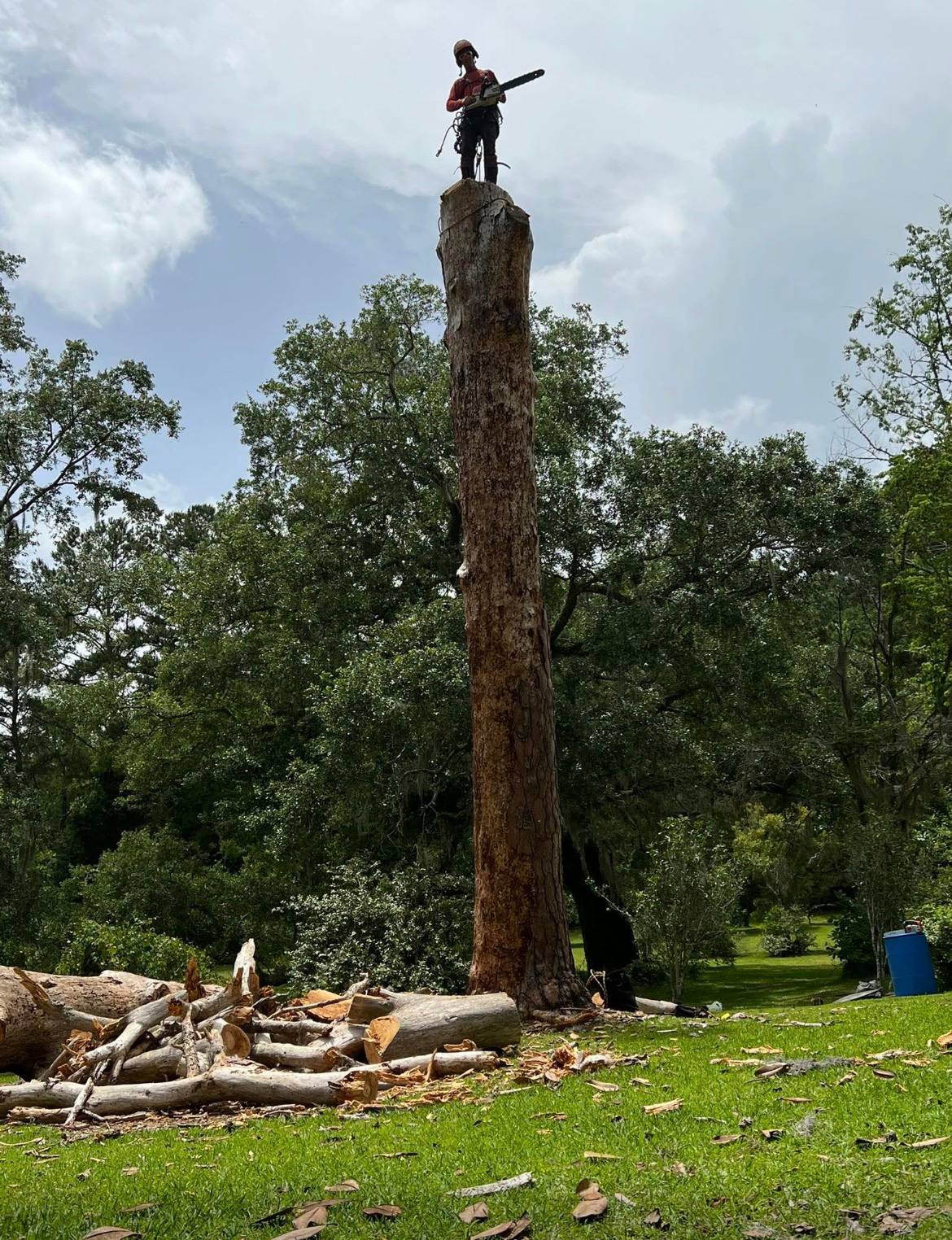
Red cedar wood is dense and resinous. It mills well for woodworking and has a pleasant smell, if you're having a red cedar removed, the wood may be worth keeping for personal use or offering to a woodworker.
Stumps from red cedar can be ground like any other species. Red cedar doesn't resprout from stumps the way some hardwoods do.
Allergy Note
Eastern red cedar is a significant allergen in the South. If you have cedar allergies, large red cedars producing pollen on or adjacent to your property during the January-March pollen season can be a practical consideration, this is a legitimate reason some property owners opt for removal.
Questions about cedar trees on your North Florida property? Call (850) 570-4074 or request a consultation online.