The Wood Decision
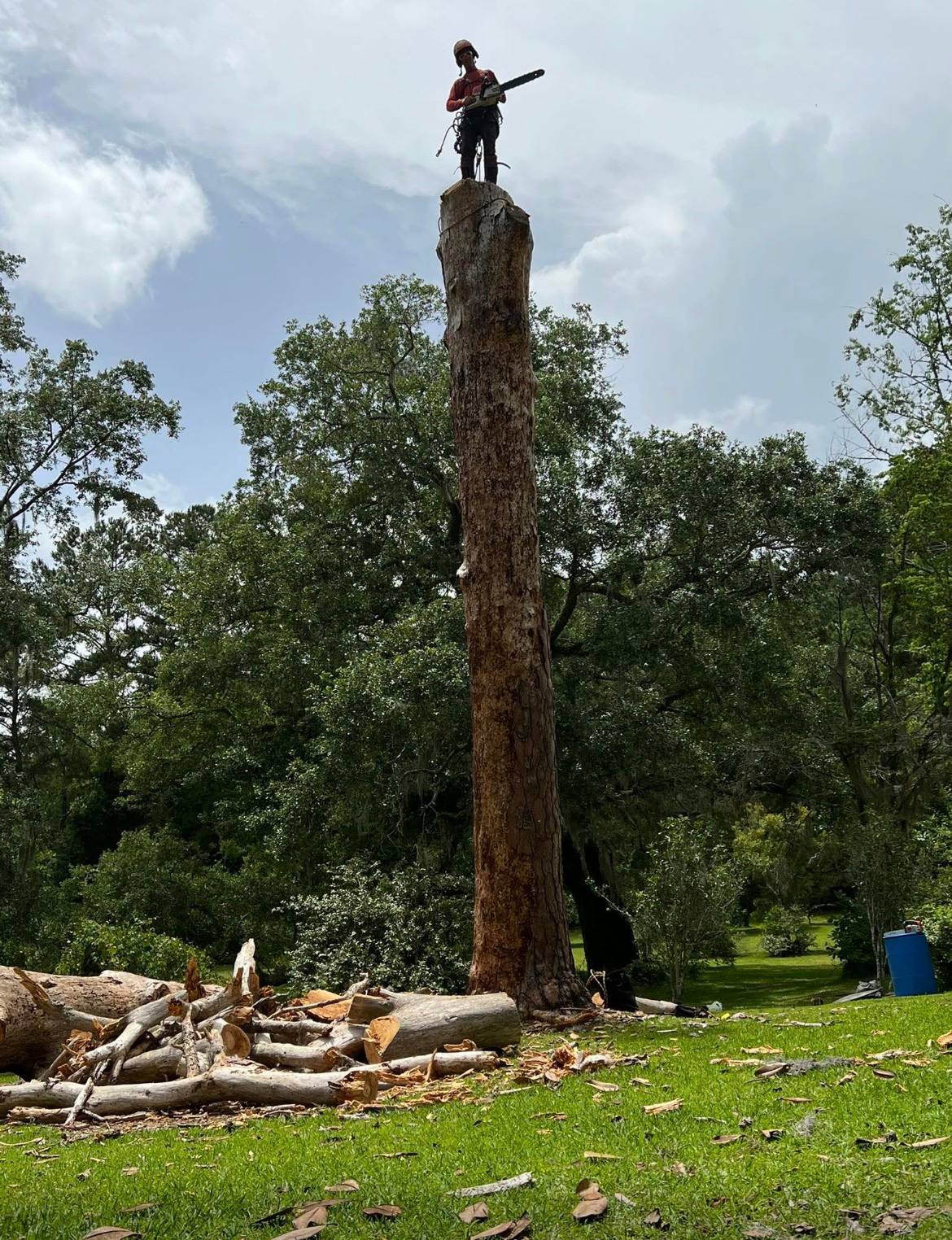
Every tree removal produces logs. What happens to them is something you decide before the crew arrives, or, more often, during the job.
Options range from having everything hauled away, to keeping logs for firewood, to milling valuable timber. The right choice depends on the species, your situation, and how much work you want to take on.
What Makes Good Firewood
Not all wood burns equally well. In North Florida, the most common removal species and their firewood quality:
Excellent firewood:
- Live oak and water oak: Dense, high BTU, burns hot and long with good coals. The premier firewood species in North Florida.
- Pecan: Excellent density and BTU output, pleasant aroma when burning. If you're having a pecan removed, save the wood.
- Hickory: Similar to pecan, very dense, hot-burning, good for smoking meat as well as heating.
Good firewood:
- Red/Winged elm: Dense hardwood, good heat output.
- Sweetgum: Burns reasonably well once well-seasoned; wetter than oak but usable.
Acceptable firewood:
- Slash pine, longleaf pine: High resin content means more creosote buildup in flues. Acceptable for outdoor fire pits and campfires. Not recommended for indoor fireplaces or wood stoves as a primary fuel, use hardwood for that.
Poor firewood:
- Water-soaked or soft-rotted wood: Won't burn efficiently and creates excessive smoke.
- Camphor tree, chinaberry, or invasive species: Some have unpleasant odors when burned; camphor smoke can cause respiratory irritation. Not worth keeping.
Seasoning Matters
Fresh-cut wood is "green", it contains 50%+ moisture by weight and burns poorly, with excessive smoke and low heat output. Wood needs to dry (season) before it burns well.
Hardwoods: 6-12 months minimum for split pieces under good conditions (off the ground, covered from rain but with air circulation). Full seasoning may take 1-2 years for large pieces.
Testing: Well-seasoned wood feels lighter than green wood of the same size, the ends show radial cracks from drying, and it makes a sharp crack rather than a dull thud when two pieces are knocked together.
If you have a wood stove or fireplace you use regularly, the practical approach is to have logs from a removal cut to 16-18 inch lengths (firewood length) and split while fresh, splitting green wood is much easier than splitting seasoned wood. Stack it to season and use it in 6-12 months.
When to Consider Milling
Large-diameter hardwoods from significant trees (live oaks, pecans, large pines) can be milled into lumber or slabs with considerable value. A large live oak can yield slabs and lumber worth thousands of dollars.
This requires:
- Access for a portable sawmill (sawyer with a Woodmizer or similar) to come to your property, or logs transported to a mill
- Logs that are sound: no significant rot or splitting
- Coordination arranged before or during the removal
If you have a large-diameter hardwood coming down and are interested in milling, mention it when you schedule the job. Log placement during removal can be planned to preserve the most valuable wood.
Having the Wood Hauled Away
If you don't want the wood, tell us before the job. Standard options:
- Chip branches and small wood: The chipper handles branches, limbs, and wood under about 8 inches diameter. Chips can be left on your property or hauled.
- Haul logs: We load logs on a trailer for disposal. This is standard for customers who don't want wood.
- Leave logs for later: If you want the logs but aren't ready to deal with them immediately, we can section them and place them where you want them on the property.
Some customers give away logs, a Facebook post or Craigslist listing for free firewood logs almost always finds takers quickly in North Florida.
The Wood Chips
Chips from branches and small wood have value of their own as mulch, see our wood chips guide for what to do with them.
Questions before your removal in Tallahassee? Call (850) 570-4074 or request an estimate online.