North Florida's Climate Advantage
Zone 8b (most of the Tallahassee area) sits at a productive middle ground: cold enough in winter to provide the chilling hours many flowering trees need, warm enough in summer to support species that can't survive further north. This gives North Florida access to both Southern native trees and subtropical species that push the limits from further south.
The best choices for residential landscapes combine seasonal interest with manageable size, structural soundness, and appropriate site adaptation.
Native Flowering Trees: The Best Starting Point
Native trees are adapted to North Florida's soils, rainfall patterns, and climate swings. They support native pollinators, birds, and insects at rates far exceeding non-native alternatives. For any flowering tree planting decision, start with natives before considering non-natives.
Eastern Redbud (Cercis canadensis) The most reliable spring flowering tree in North Florida. Flowers emerge directly from the bark of branches and trunk in late February-March (often before leaves) in a vivid purple-pink display. Small to medium size (15-30 feet), multi-season interest (heart-shaped leaves, fall color, interesting bark and branch structure in winter). Full sun to partial shade. Tolerates both moist and dry soils once established. Excellent as a understory tree or specimen plant. The white-flowered variety 'Alba' is also available and effective.
Fringe Tree (Chionanthus virginicus) White, slightly fragrant, wispy flowers in April-May are distinctive and striking. This is a large shrub or small tree (12-20 feet) that works well as a specimen plant near buildings or patios where the flower display can be appreciated up close. Dioecious, female plants produce small dark-blue fruit attractive to birds. Slow to establish but very long-lived once settled.
Sweetbay Magnolia (Magnolia virginiana) Native magnolia with smaller, intensely fragrant white flowers that appear from spring through summer (a longer flower display than most trees. Semi-evergreen to evergreen in North Florida. Prefers moist to wet soils) excellent for low spots or retention areas where other trees struggle. Size ranges from large shrub to 30-40 feet depending on conditions.
American Plum (Prunus americana) White flowers in early spring before leaf emergence, followed by small tart plums with wildlife value. Small tree (15-25 feet). Adaptable to a range of soils. Works well in naturalistic plantings and woodland edges.
Fringetree / Grancy Graybeard: see Fringe Tree above.
Persimmon (Diospyros virginiana) Subtle flowers (not the show piece), but the fall fruit (deep orange to red persimmons, often persisting on bare branches into winter) provides exceptional ornamental value and significant wildlife interest. Medium tree to 35 feet. Extremely adaptable to poor soils. Worth planting for fall and winter interest even without a showy flower.
Reliable Non-Native Performers
Crape Myrtle (Lagerstroemia) Summer bloom season, available in varieties from 3 to 30+ feet, excellent North Florida performance. See our full crape myrtle care guide for variety selection and proper maintenance. Best ornamental performance when the right-sized variety is matched to the site, not topped annually.
Japanese Magnolia / Saucer Magnolia (Magnolia × soulangeana) Large pink-purple flowers before leaves emerge in late February-March, one of spring's most dramatic flowering tree displays in North Florida. Medium size (20-30 feet). Needs good drainage and prefers full sun. Flowers emerge early and can be damaged by late frost events; this is the main vulnerability in zone 8b.
Tea Olive (Osmanthus fragrans) Technically a large shrub to small tree, tea olive earns its place in the landscape through fragrance rather than flower size. The tiny white-cream flowers are nearly invisible but their fragrance is remarkable, sweet and intense on warm days from fall through spring. Can reach 10-20 feet. Excellent near entries, patios, and windows where the scent can be enjoyed.
What to Avoid (or Choose Carefully)
Bradford Pear / Callery Pear (Pyrus calleryana): White spring flowers but notoriously weak-structured (major limb failures are the norm, not the exception). Invasive in many parts of the Southeast. The ornamental value doesn't justify the structural problems or invasive concern. Better alternatives exist.
Royal Poinciana (Delonix regia): Spectacular red-orange flowers, but barely zone 10, winter-killed in Tallahassee most years. For zone 9b and south.
Mimosa (Albizia julibrissin): Pink flowers in summer, but invasive, short-lived, and weak-structured. See our mimosa removal guide.
Planting Tips for Flowering Trees
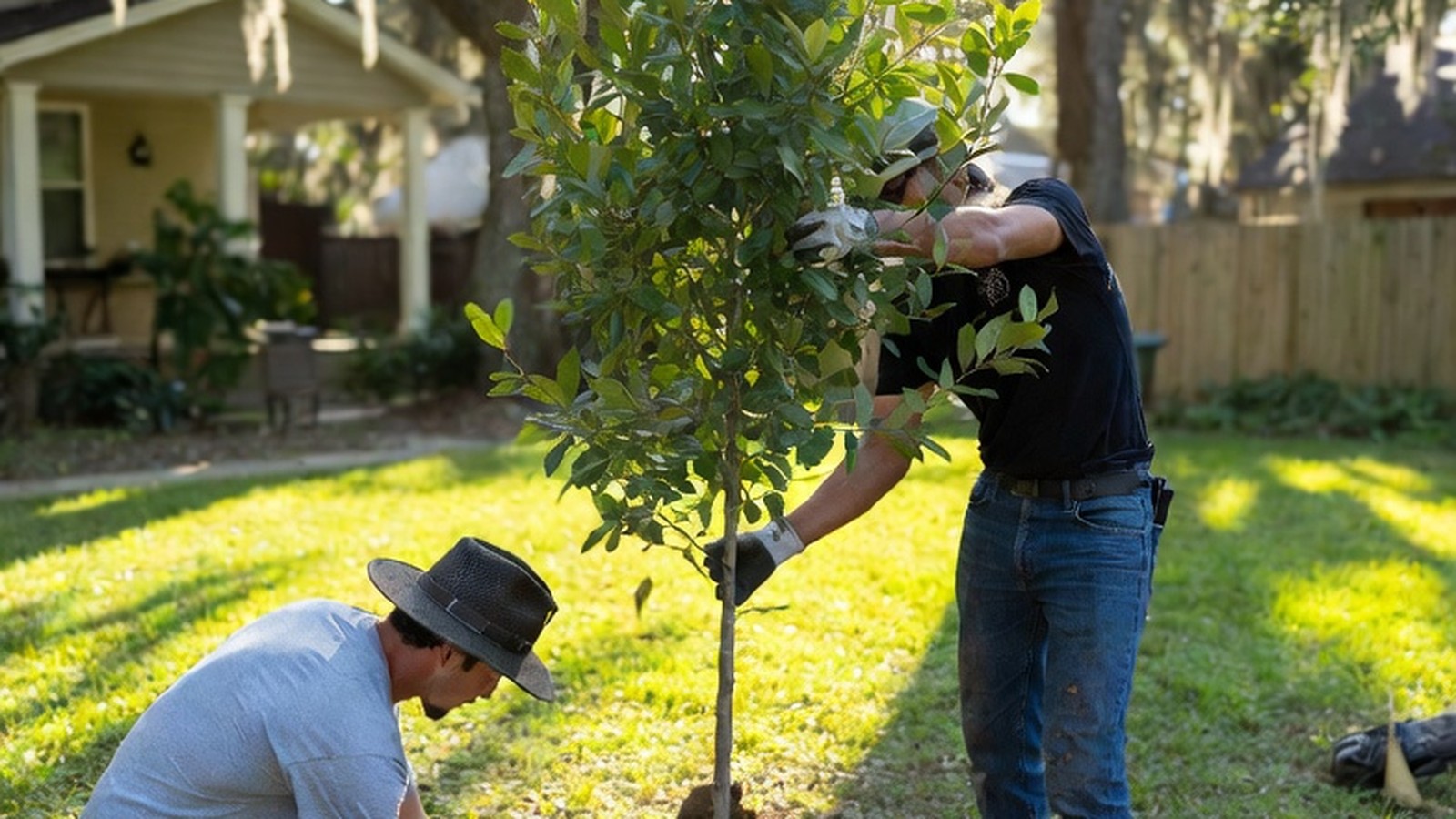
Time your planting: September through November is the optimal window for tree planting in North Florida, soil is still warm for root establishment, air temperatures moderate, and the tree has the winter season to establish before summer heat.
Match size to site: The most common mistake is planting a tree that will outgrow its location. Know the mature size before planting. A 25-foot tree needs at least 15 feet of clear space from structures.
Native plants support native wildlife: Flowering trees in the native plant category support pollinator populations that exotic species often don't. The native pollinators recognize and use native plants at rates that non-natives can't match.
Tree planting service in Tallahassee? Call (850) 570-4074 or request a consultation online.