Not All Hedges Are the Same
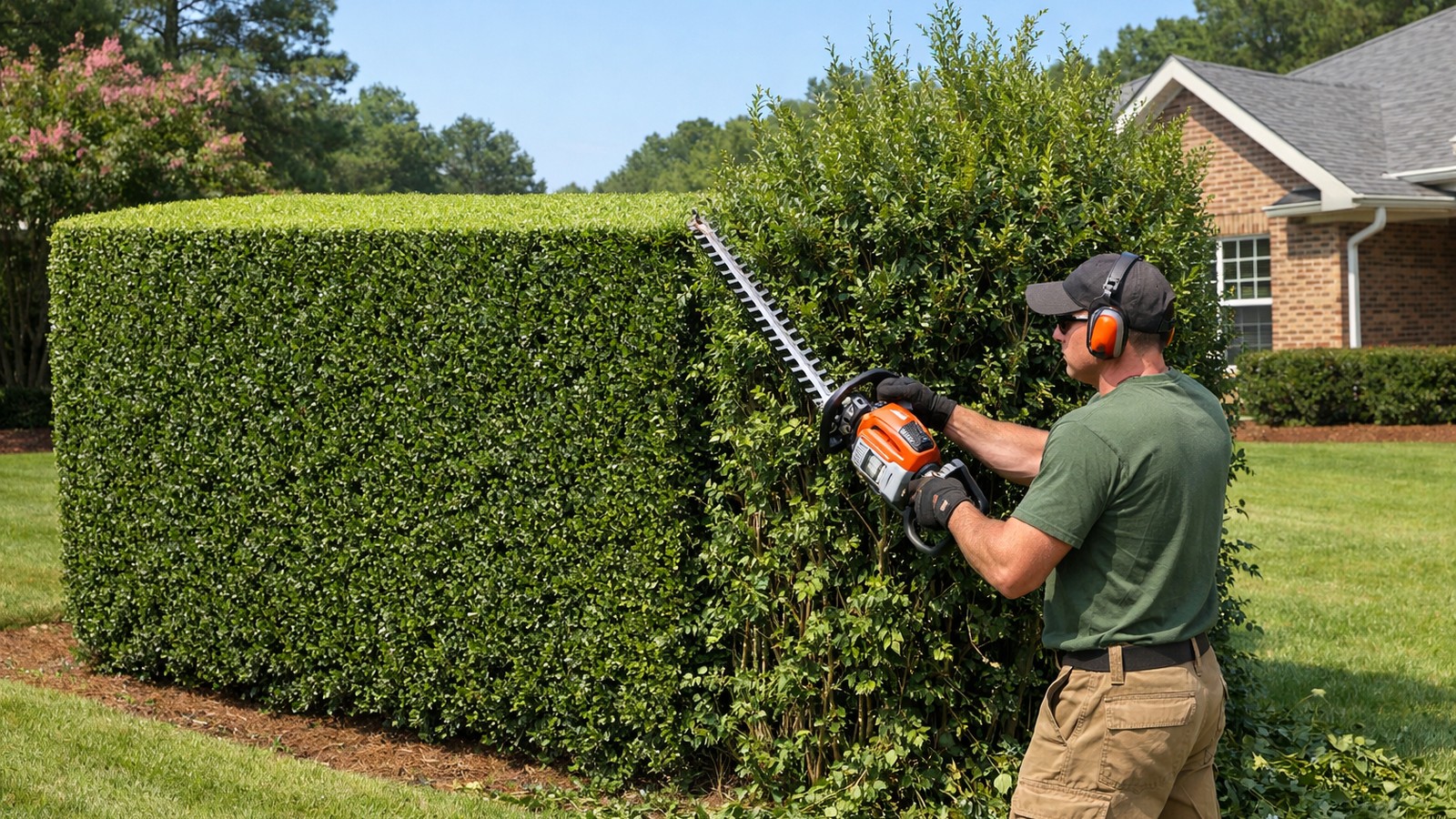
The timing and frequency of hedge trimming depends almost entirely on what you're growing. A wax myrtle and a boxwood in the same yard may need to be trimmed at different times, different frequencies, and in different ways. Getting it wrong produces the same result either way: a hedge that looks stressed, overgrown in the wrong directions, or (worst case) one that dies back or loses its shape permanently.
Here's a practical guide to the most common hedges in Tallahassee and North Florida yards.
Common Tallahassee Hedges and Their Schedules
Ligustrum (Privet)
Timing: Spring through early fall. Avoid major cuts in late fall (October and later), new growth triggered by late trimming can be damaged by cold snaps that hit Tallahassee in December and January.
Frequency: Fast grower, may need 3-4 trimmings per year to maintain a formal shape. Left alone, ligustrum becomes a large, tree-like shrub. It's very forgiving and recovers well from aggressive cuts, but it needs regular attention to stay shaped.
What to know: Ligustrum is one of the most invasive plants in North Florida. Birds eat the berries and spread seeds everywhere. If you have mature ligustrum with berries, trimming before seed set (late spring/early summer) reduces spread.
Wax Myrtle
Timing: Late winter or early spring, before new growth pushes. Wax myrtle is a native, so it's highly adapted to this climate and tolerant of most trim timing.
Frequency: 1-2 times per year is sufficient for most shapes. If you're letting it grow more naturally, once a year is fine.
What to know: Wax myrtle can be trained as a shrub or allowed to develop into a small multi-trunk tree. If you want the tree form, stop cutting it and let the best stems develop. This is a common transition we help homeowners with, it takes a few years but produces a beautiful native specimen.
Indian Hawthorn
Timing: Immediately after spring bloom, typically May in Tallahassee. Indian hawthorn sets next year's bloom buds in summer and fall. If you trim in late summer or fall, you remove the buds and the hedge doesn't flower the following spring.
Frequency: Once a year, right after flowering.
What to know: Indian hawthorn is susceptible to Entomosporium leaf spot fungal disease, especially when stressed by over-trimming or during humid weather. Keep cuts light (never remove more than one-third of the plant at once) and trim when leaves are dry.
Boxwood
Timing: Late spring after the initial growth flush has hardened off. Avoid trimming in late fall (same reasoning as ligustrum, cold damage to new growth).
Frequency: 2-3 times per year for formal hedges. Once in late spring, once in midsummer, and a light cleanup in early fall if needed.
What to know: Boxwood blight (Calonectria pseudonaviculata) is a serious fungal disease present in Georgia and Florida. Symptoms include leaf drop, brown patches, and death of stems. If you see these signs, don't trim until the plant is assessed, trimming spreads the spores on cutting blades. Disinfect blades with diluted bleach between plants.
Viburnum
Timing: Right after blooming in spring. Like Indian hawthorn, viburnum sets buds on old wood, trimming in fall removes next year's flowers.
Frequency: Once a year, post-bloom.
What to know: Several viburnum species do well in North Florida, and they're deer-resistant and native-adjacent. They don't love being maintained as tight formal hedges, give them a little room to show their natural arching form.
Podocarpus (Yew Pine)
Timing: Spring and summer. Tolerates trimming well throughout the growing season.
Frequency: 2-3 times per year to maintain shape.
What to know: Podocarpus is one of the most popular foundation and privacy hedges in Tallahassee. It grows slowly enough to stay manageable and tolerates heavy shearing. A well-maintained podocarpus hedge is dense, dark green, and very effective as a privacy screen.
General Principles
Never trim more than one-third at once. This applies to almost all hedge plants. Removing more than one-third of the plant's canopy at once causes serious stress, it loses too much photosynthetic capacity too quickly. You'll see this manifest as dieback, brown patches, or the hedge failing to fill back in.
Time trims around heat extremes. Trimming in the middle of a North Florida July heat wave stresses plants at the worst possible time. If you're doing major cuts, do them in early morning and make sure the plants get water in the days following.
Sharp tools make a difference. Clean cuts heal faster and are less vulnerable to disease entry than torn cuts. A sharp hedge trimmer or hand shears on smaller hedges produces noticeably better results.
Don't cut into old wood without a plan. Severely over-grown hedges sometimes need to be cut back hard (into old, bare wood) to rejuvenate them. Many species recover from this ("rejuvenation pruning"), but some don't. We assess this before any major renovation.
When to Call Us
For one-time cleanup on an overgrown hedge, or for regularly scheduled trimming, we handle hedges throughout Tallahassee and the surrounding area. If you have hedges that are significantly out of shape and you're not sure whether to renovate them or replace them, we can take a look and give you an honest assessment.
Reed Tree Service serves Tallahassee, Leon County, and all of North Florida and South Georgia. Call (850) 570-4074 for hedge trimming or request an estimate online.