The Silent Threat in Your Yard
Walk through any Tallahassee neighborhood after a storm, and you'll see the aftermath, broken limbs, fallen trees, damaged roofs. But the most dangerous trees aren't always the ones that fell. Often, it's the dead ones still standing that pose the greatest threat to your property and family.
Dead trees, also called "widow makers" by arborists, can fail without warning. Unlike living trees that bend and sway with wind, dead trees are brittle and unpredictable. In North Florida's stormy climate, they're ticking time bombs.
How Trees Die in Tallahassee
Our area's unique conditions create several pathways to tree death:
Storm Damage: Even if a tree survives Hurricane Michael-level winds, internal damage can kill it slowly. Root damage, trunk splitting, and bark loss all compromise a tree's ability to transport nutrients.
Disease: Oak wilt, laurel wilt, and pine beetle infestations are common in North Florida. These diseases can kill mature trees within months, leaving behind structurally compromised wood.
Lightning Strikes: Tallahassee sees frequent summer thunderstorms. Lightning can kill trees instantly or damage their internal structure, leading to delayed death.
Drought Stress: Even our hardy live oaks and pines can succumb to extended dry periods, especially when combined with other stressors.
Warning Signs of a Dead or Dying Tree
With over 10 years serving Tallahassee properties, Reed Tree Service has seen countless hazardous dead trees. Here's what to watch for:
No Leaf Growth: If spring arrives and your tree shows no signs of budding or leafing out, it's likely dead. In March, healthy trees should show clear signs of new growth.
Bark Issues: Peeling, missing, or fungal growth on bark indicates serious problems. Healthy bark should be firmly attached.
Brittle Branches: Dead branches snap easily and often fall without warning. If you can break branches by hand, the tree is compromised.
Mushrooms or Fungi: Growth at the tree's base or on the trunk signals internal decay. The visible fungi are just the tip of the iceberg.
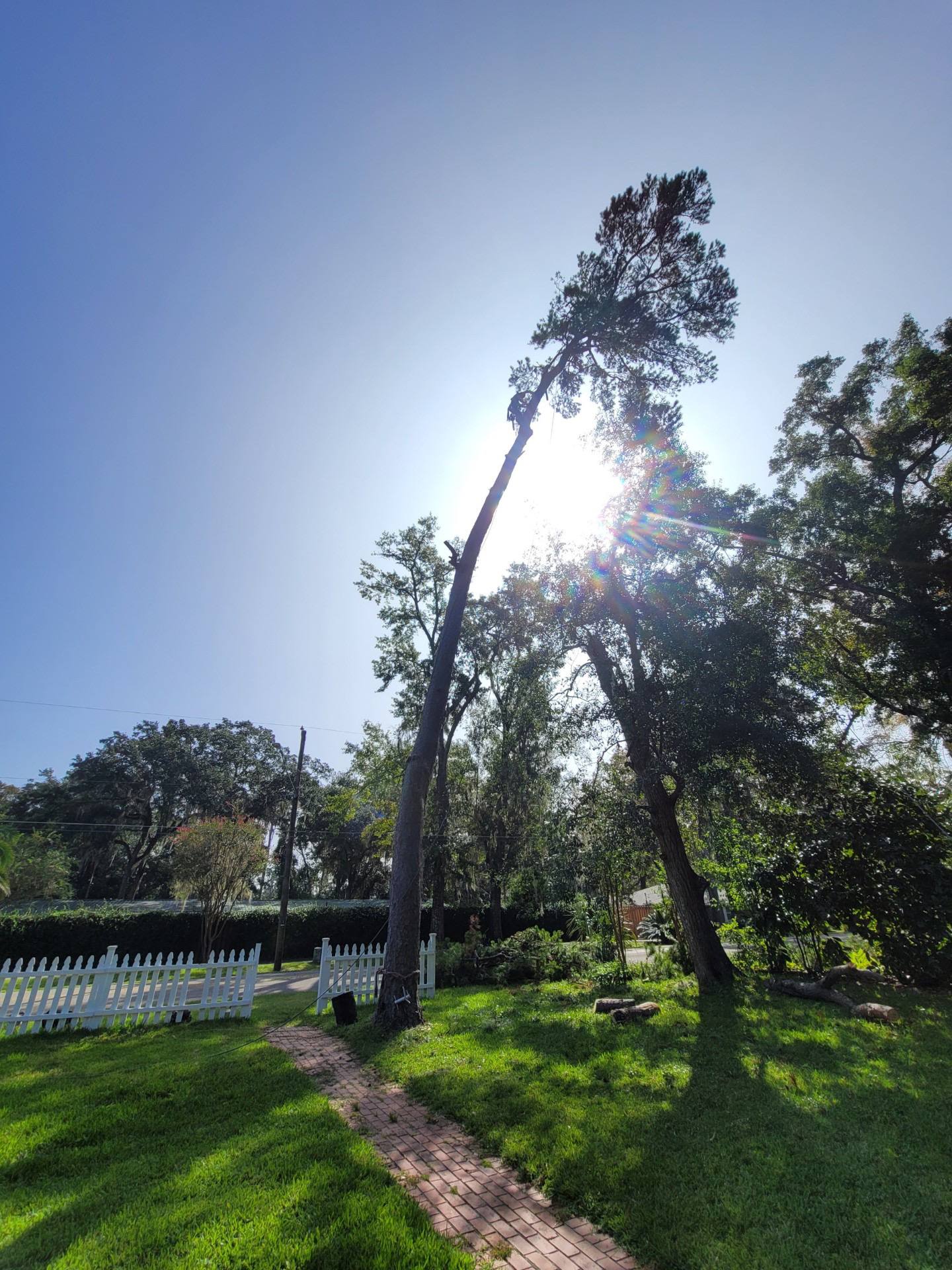
Leaning: A suddenly leaning tree often indicates root failure or internal structural damage.
The Real Risks of Waiting
Dead trees don't improve with time, they only become more dangerous. Here's what you're risking by delaying removal:
Property Damage: A mature live oak can weigh several tons. When it falls, it can crush roofs, vehicles, fences, and power lines. Insurance may not cover damage from a dead tree you knew was hazardous.
Personal Injury: Falling branches or entire trees can cause serious injury or death. Children playing in yards are especially vulnerable.
Utility Disruption: Dead trees near power lines threaten the entire neighborhood's electrical service. Utility companies may hold property owners liable for preventable outages.
Increased Removal Costs: Dead trees become more unpredictable and dangerous to remove over time. Complex removals requiring crane services cost significantly more than straightforward removals.
Why Professional Assessment Matters
Determining whether a tree is truly dead requires expertise. Some trees go dormant longer than others, and stress can mimic death. Owner Joshua Reed and his crew have the experience to distinguish between recoverable trees and genuine hazards.
Professional arborists also understand the complexities of safe dead tree removal. Dead trees are unpredictable, they can split, fall unexpectedly, or crumble during removal. Reed Tree Service uses proper equipment, including crane services when necessary, to remove dead trees safely.
The Tallahassee Advantage
Our canopy city's mature tree population is both a blessing and a responsibility. Those magnificent live oaks that make neighborhoods like Killearn Estates and Betton Hills so beautiful can become serious hazards when they die.
Spring is actually an ideal time for dead tree assessment and removal. With new growth appearing on healthy trees, dead ones become obvious. Weather is mild, making removal safer and more efficient. Most importantly, removing dead trees now prevents damage during summer storm season.
When to Call for Emergency Removal
Some situations require immediate attention:
- Trees leaning toward structures
- Large dead branches hanging over walkways or driveways
- Recent storm damage that's compromised tree structure
- Dead trees near power lines
- Any tree that's dropped large branches recently
Reed Tree Service offers 24/7 emergency tree service because we understand that tree hazards don't wait for business hours.
Taking Action
If you suspect you have a dead or dying tree on your property, don't wait. The longer you delay, the more dangerous and expensive the situation becomes. A professional assessment can give you peace of mind or help you address problems before they become disasters.
Remember, removing a dead tree isn't just about your property, it's about protecting your neighbors, pedestrians, and the broader community. In a city as tree-rich as Tallahassee, we all have a responsibility to maintain our urban forest safely.
Don't let a dead tree become your property's biggest liability. Contact Reed Tree Service at (850) 570-4074 for a professional assessment, or request your free estimate at reedtreeservice.com/free-estimate. Our experienced crew will help you identify hazards and develop a safe removal plan that protects what matters most.