When Winter Weather Strikes North Florida Trees
If an ice-damaged tree is on your house or leaning toward it, get everyone clear and stay away from any downed line. Call Josh at (850) 888-5603 for storm cleanup in Tallahassee.
While Tallahassee doesn't see snow very often, ice storms are a real threat that can devastate our tree canopy. The 2014 ice storm that hit North Florida is still fresh in many homeowners' memories, thousands of trees came down, power lines were destroyed, and entire neighborhoods lost their canopy coverage overnight.
As we move through spring, it's important to understand how ice damage affects trees and what signs to watch for as your trees begin their growing season. Even minor ice accumulation can cause problems that don't show up until months later.
How Ice Damages Trees
Weight Load is the primary culprit. Just a quarter-inch of ice can add significant weight to branches and limbs. Our North Florida trees (especially live oaks, water oaks, and loblolly pines) aren't adapted to handle this kind of loading.
Branch Breakage happens when ice-covered branches can't support the extra weight. Large limbs can snap completely, while smaller branches may bend and crack but remain partially attached.
Crown Splitting occurs in multi-trunk trees when ice accumulates unevenly. The weight can literally split a tree's crown apart, creating dangerous hanging sections.
Root Damage isn't always visible but happens when the entire tree leans or shifts under ice weight, tearing roots and destabilizing the tree's foundation.
Assessing Your Trees After Ice Events
With over 10 years serving the Tallahassee area, Reed Tree Service has seen how ice damage can hide in plain sight. Here's what to check on your property:
Immediate Concerns
- Hanging branches or partially broken limbs that could fall
- Leaning trees that weren't leaning before the storm
- Cracks in major limbs or the main trunk
- Exposed roots where trees may have shifted
- Power line contact from bent or broken branches
Long-Term Issues to Monitor
- Bark damage where branches rubbed against each other
- Crown asymmetry from lost limbs affecting the tree's balance
- Delayed leaf-out in spring, indicating internal damage
- Pest entry points where broken branches create open wounds
Why Professional Assessment Matters
Many homeowners in areas like Killearn Estates, Southwood, and Betton Hills assume their trees "made it through" an ice storm if they're still standing. But ice damage often creates structural weaknesses that don't fail until months later, sometimes during the next thunderstorm or even on a calm day.
Structural integrity issues aren't always visible from the ground. What looks like a small crack in a major limb could be a complete failure waiting to happen.
Proper pruning of ice-damaged branches requires specific cuts to promote healing and prevent decay. Poor cuts can actually make the tree more vulnerable to future storms.
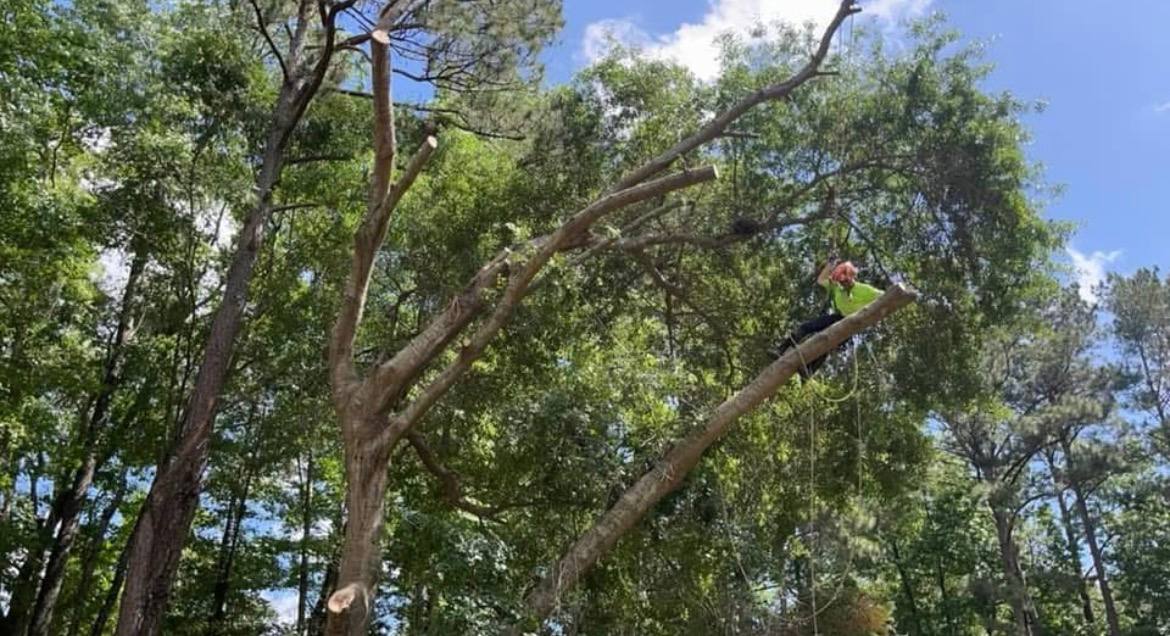
Safety considerations are critical when dealing with damaged trees near homes, power lines, or high-traffic areas. Some trees may need immediate removal, while others can be saved with proper care.
Common Ice-Damaged Trees in Our Area
Live Oaks are particularly vulnerable because of their massive, horizontal branch structure. Ice loading can cause catastrophic limb failures that destroy the tree's iconic canopy shape.
Water Oaks and Laurel Oaks have brittle wood that splits easily under ice weight. These trees often suffer crown damage that affects their long-term health.
Loblolly Pines can lose their tops or suffer branch breakage that makes them unstable. Pine trees don't recover well from major ice damage.
Crepe Myrtles are surprisingly resilient but may need corrective pruning to restore their natural shape after ice damage.
When to Call for Professional Help
Don't wait if you notice any of these signs:
- Large branches hanging or partially attached
- Trees leaning against other trees or structures
- Visible cracks in major limbs or trunks
- Trees that look "different" than they did before the ice
- Any tree damage near power lines
Owner Joshua Reed will look at ice-damaged trees throughout the Tallahassee area and tell you what he sees. We're equipped with cranes for complex removals.
Planning for Future Ice Events
While we can't prevent ice storms, proper tree maintenance can reduce damage when they occur. Regular pruning removes weak branches, and crown thinning reduces the surface area where ice can accumulate.
If you're concerned about ice damage to your trees or want to prepare your property for future winter weather events, Reed Tree Service is here to help. Call us at (850) 888-5603 or request a free estimate at reedtreeservice.com/free-estimate. Josh will look at your trees and tell you what he sees, so you can decide how to keep your property safe and your canopy healthy.