What Residential Land Clearing Covers
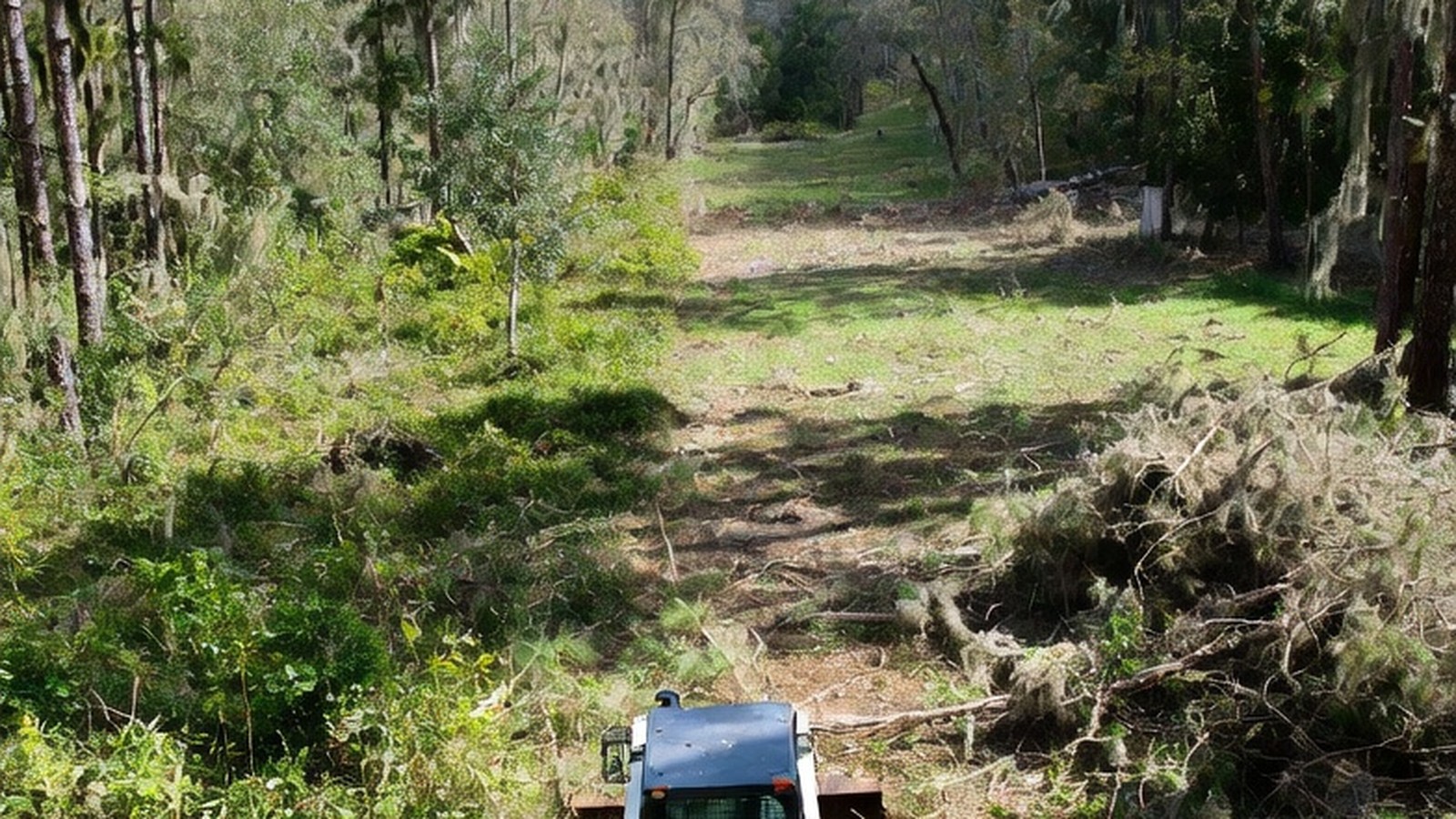
Land clearing encompasses a range of work, from cutting back overgrown brush on a neglected portion of a yard to clearing a wooded lot for construction. The scale varies considerably, but the general categories are:
Brush and vegetation clearing: Removing invasive shrubs, overgrown undergrowth, vines, and small-diameter woody vegetation without necessarily removing mature trees. This is the most common residential clearing job, the back corner that got away, a fence line reclaimed by privet and wax myrtle, or an overgrown easement area.
Selective clearing: Removing specific trees and unwanted vegetation while preserving desirable specimens. Common when preparing a wooded lot for a yard while keeping mature oaks or other valuable trees.
Full clearing: Removing all above-ground woody vegetation from a defined area, typical for lot preparation before construction or for establishing a new lawn where none exists.
Stump removal: May be included in clearing or quoted separately. Stump grinding or excavation addresses what's left after trees are cut.
Common Situations in North Florida
Overgrown lots and neglected areas: North Florida's growing season is aggressive. A wooded or brush-covered area left unmanaged for a few years can become difficult to walk through, let alone reclaim for yard use. Privet, Chinese tallow, wild cherry, and mimosa are common opportunistic species that colonize disturbed areas quickly.
Post-storm recovery clearing: Storm-damaged trees and debris create de facto clearing jobs. After a significant hurricane or windstorm, fallen trees, root plates, and debris need removal before the property can be restored.
Property line restoration: Vegetation that's encroached from an adjacent property or that has grown up along fence lines often needs clearing for both practical access and property maintenance.
Lot preparation: Clearing and grubbing in preparation for building a structure, adding a pool, or establishing a lawn area.
What's Involved: The Process
Assessment and Planning
Before work begins, we walk the site to assess:
- Species and sizes of vegetation to be removed
- Equipment access: can a skid steer or tracked machine get to the work area, or is it hand-clearing only?
- Proximity to structures, utilities, fencing, and anything to be preserved
- Soil conditions, especially relevant for areas with significant root masses
- What to do with material: chip and spread, chip and haul, or log and haul
Access dictates equipment and method. A tight backyard with no equipment access becomes a hand-cutting and hand-carry job, which is more labor intensive than open-access clearing.
Clearing
For typical residential brush clearing, the process generally involves:
- Cutting all woody vegetation at ground level
- Running material through a chipper (on-site) or loading for haul-off
- Grubbing stumps (if included), either with equipment or by grinding
- Final cleanup of the cleared area
Large tree removal within the clearing scope is handled as part of the clearing work, though significant specimens may require separate rigging or equipment setup.
What Happens to the Material
Chip and haul: All material is chipped and the mulch is hauled away. The cleared area is left open.
Chip and spread: Chips are spread over the cleared area or a designated location on the property. This is the least expensive option and leaves you with significant mulch coverage, useful for future garden beds or natural areas.
Log and leave: Large-diameter wood is cut into manageable sections and stacked on the property. Useful if you want firewood or plan to have the wood milled.
Log and haul: Large-diameter wood is removed from the property.
Gopher Tortoises and Native Wildlife
In North Florida, land clearing involves legal considerations beyond permits and property lines. Florida law protects gopher tortoises (Gopherus polyphemus), and clearing activity near known or suspected burrows requires specific protocols. Active burrows must be reported and may require an FWC permit before clearing can proceed.
We identify burrow indicators before beginning clearing work in any area where tortoise presence is possible. Working around protected species without proper protocol creates legal liability and can result in significant penalties.
What Clearing Doesn't Include
Unless specifically agreed upon, clearing typically doesn't include:
- Grading or leveling (separate from clearing)
- Debris from non-plant sources (construction debris, trash, old equipment)
- Lawn installation or seeding
- Re-grading or erosion control measures after clearing
Confirm scope in writing before work begins to ensure expectations are aligned.
Land clearing in Tallahassee and North Florida? Call (850) 570-4074 or request an estimate online.