Understanding Lightning Damage to Trees in Tallahassee
Spring in North Florida brings spectacular thunderstorms, and with them comes one of nature's most destructive forces: lightning. As we head into the peak storm season, Tallahassee homeowners need to understand how lightning affects trees and what steps to take when their prized oaks, pines, or other valuable trees get struck.
Lightning strikes are more common in Florida than anywhere else in the United States, with our area averaging 25+ lightning strikes per square mile annually. The towering live oaks that make Tallahassee "The Canopy City" are particularly vulnerable due to their height and prominence in the landscape.
How Lightning Damages Trees
When lightning strikes a tree, it creates an instantaneous surge of electrical energy that travels through the tree's moisture-conducting tissues. This creates several types of damage:
Bark Explosion: The intense heat vaporizes moisture in the bark and wood, causing it to explode outward. You'll see strips of bark blown off the trunk, often in a spiral pattern from top to bottom.
Internal Damage: Even when external damage looks minimal, lightning can destroy the tree's internal structure. The cambium layer (which transports nutrients) may be severely damaged or killed.
Root System Damage: Lightning energy travels down through the tree and into the root system, potentially killing major roots and destabilizing the entire tree.
Crown Damage: Large branches may be shattered or killed, creating immediate hazards and long-term structural problems.
Immediate Signs to Look For
After a thunderstorm passes through Tallahassee, inspect your trees for these warning signs:
- Bark strips blown off the trunk
- Scorch marks or blackened areas on bark
- Split or cracked trunk running vertically
- Wilted or browning leaves in specific sections
- Hanging or broken branches in the crown
- Exposed wood where bark has been stripped away
- Ground disturbance around the base indicating root damage
When Lightning Damage is an Emergency
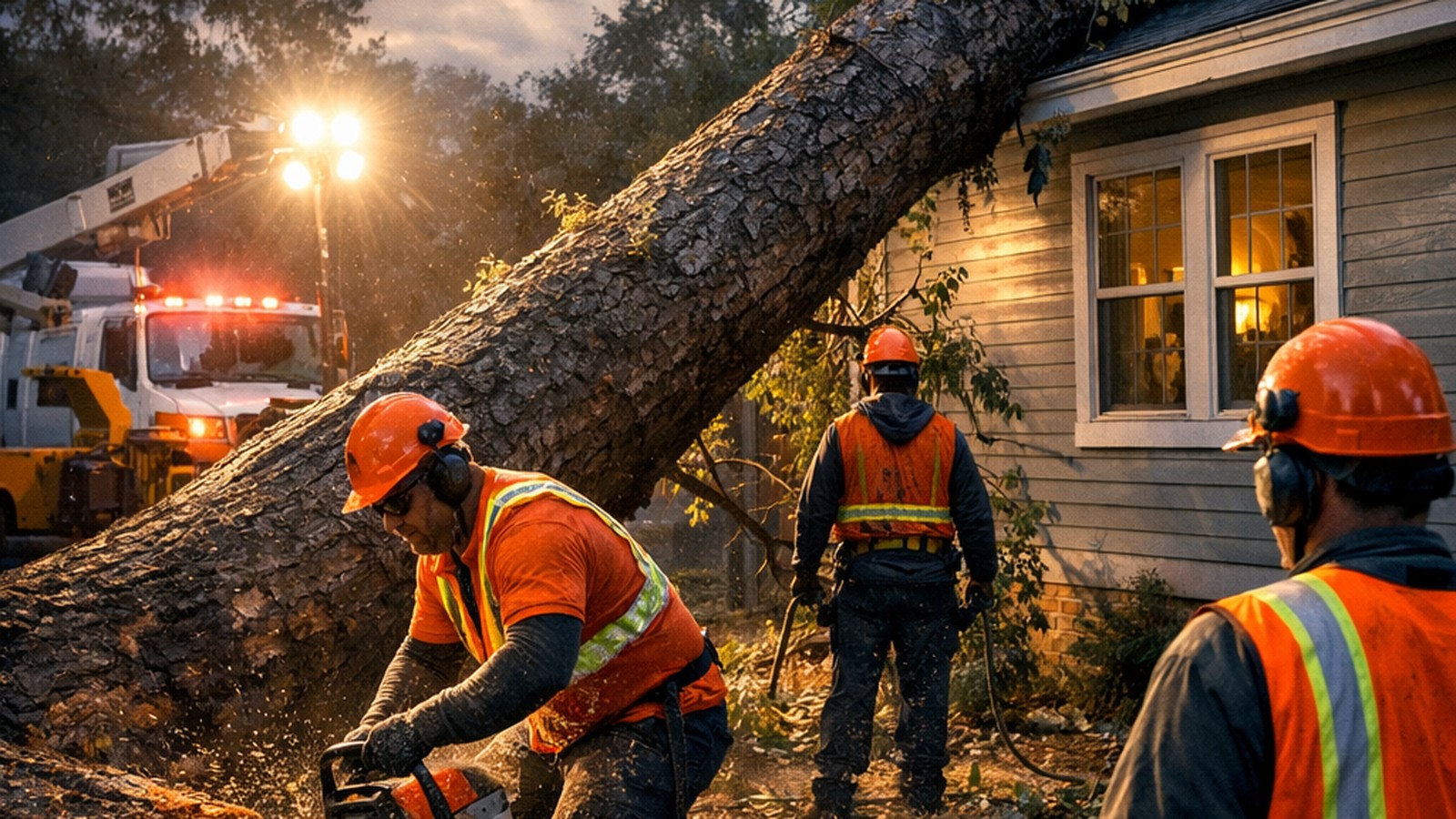
Some lightning damage requires immediate professional attention. Call Reed Tree Service at (850) 570-4074 right away if you notice:
- Large branches hanging over your house, driveway, or power lines
- A tree leaning significantly after being struck
- Major trunk splits that compromise the tree's structural integrity
- Any tree that appears unstable or poses an immediate safety risk
Our emergency tree service is available 24/7 because we know that storm damage doesn't wait for business hours.
Assessment: Can the Tree Be Saved?
Not every lightning-struck tree needs to be removed. With over 10 years serving the Tallahassee area, we've seen trees recover from seemingly devastating lightning damage. The key factors in survival are:
Species Resilience: Live oaks and longleaf pines often survive lightning strikes better than water oaks or loblolly pines.
Extent of Damage: Trees with damage affecting less than 50% of the circumference have better survival odds.
Tree Health: Healthy, vigorous trees recover better than those already stressed by drought, disease, or previous damage.
Time of Year: Spring strikes (like we're experiencing now) give trees the full growing season to recover.
Recovery and Treatment Options
For trees that can be saved, proper treatment is crucial:
Professional Pruning: Remove all damaged, hanging, or dead branches to prevent further injury and disease entry.
Wound Treatment: Clean wounds properly and allow them to heal naturally (avoid tree paint or sealers).
Structural Support: Cables or braces may be needed to support weakened trunks or major limbs.
Enhanced Care: Proper watering, mulching, and fertilization help the tree recover its strength.
Prevention: Protecting Your Valuable Trees
While you can't prevent lightning strikes entirely, you can reduce risk:
- Professional lightning protection systems for extremely valuable specimens
- Proper pruning to reduce wind resistance and eliminate weak branches
- Tree health maintenance to ensure vigorous growth and resilience
- Strategic planting: avoid placing new trees in the highest, most exposed areas of your property
The Tallahassee Advantage
Our North Florida climate actually helps lightning-damaged trees recover. The long growing season, adequate rainfall, and mild winters give injured trees time to compartmentalize damage and generate new growth. Many of the magnificent live oaks along Tallahassee's canopy roads have survived multiple lightning strikes over their centuries of life.
Professional Assessment is Key
Lightning damage often isn't immediately apparent. Internal damage can weaken a tree for months or years before external symptoms appear. That's why professional assessment is so important after any significant storm.
Owner Joshua Reed and his crew have the experience to evaluate lightning damage accurately. We can determine whether a tree can be saved, what treatment it needs, and how to prioritize safety while preserving your landscape investment.
Don't Wait on Lightning Damage
Spring thunderstorms in Tallahassee can be intense and frequent. If you suspect lightning damage to any of your trees, don't wait to have them assessed. Early intervention often makes the difference between saving a valuable tree and losing it entirely.
For professional lightning damage assessment and treatment, contact Reed Tree Service at (850) 570-4074 or request your free estimate at reedtreeservice.com/free-estimate. We're here to help you protect and preserve Tallahassee's beautiful urban forest, one tree at a time.