
Florida and Lightning
Florida leads the nation in lightning strikes per square mile. The Tallahassee area sits at the top of the Florida peninsula, where the Gulf and Atlantic sea breezes converge during summer, creating ideal convective conditions for afternoon and evening thunderstorms.
From June through September, significant thunderstorms occur multiple times per week in Leon County. A large, isolated tree on an open property is a natural lightning target: it's the tallest conductor in the area.
Lightning strikes a significant tree in Tallahassee with some regularity. The results range from partial damage (a single major limb, a strip of bark blown off the trunk) to catastrophic failure (the tree exploding or being killed). A strike can also transmit energy through the root system to nearby structures.
What Lightning Does to a Tree
When lightning hits a tree, it seeks the path of least electrical resistance through the tree's water-conducting tissue down to the ground. The rapid heating of that tissue produces steam, which can blow out sections of bark or split the trunk. The destruction depends on:
- Whether the trunk is wet (wetter = more surface conduction = less internal damage)
- The lightning bolt's characteristics
- The tree's internal structure
Some trees survive strikes with bark damage and continue growing. Others fail immediately. Many appear to survive but die within 1-3 years as the damaged tissue becomes infected with decay fungi.
How Lightning Protection Systems Work
A tree lightning protection system follows the same principles as a building's lightning rod: provide a preferred low-resistance path to ground that bypasses the tree's living tissue.
Components:
- Air terminal (conductor tip) installed at or near the highest point of the tree
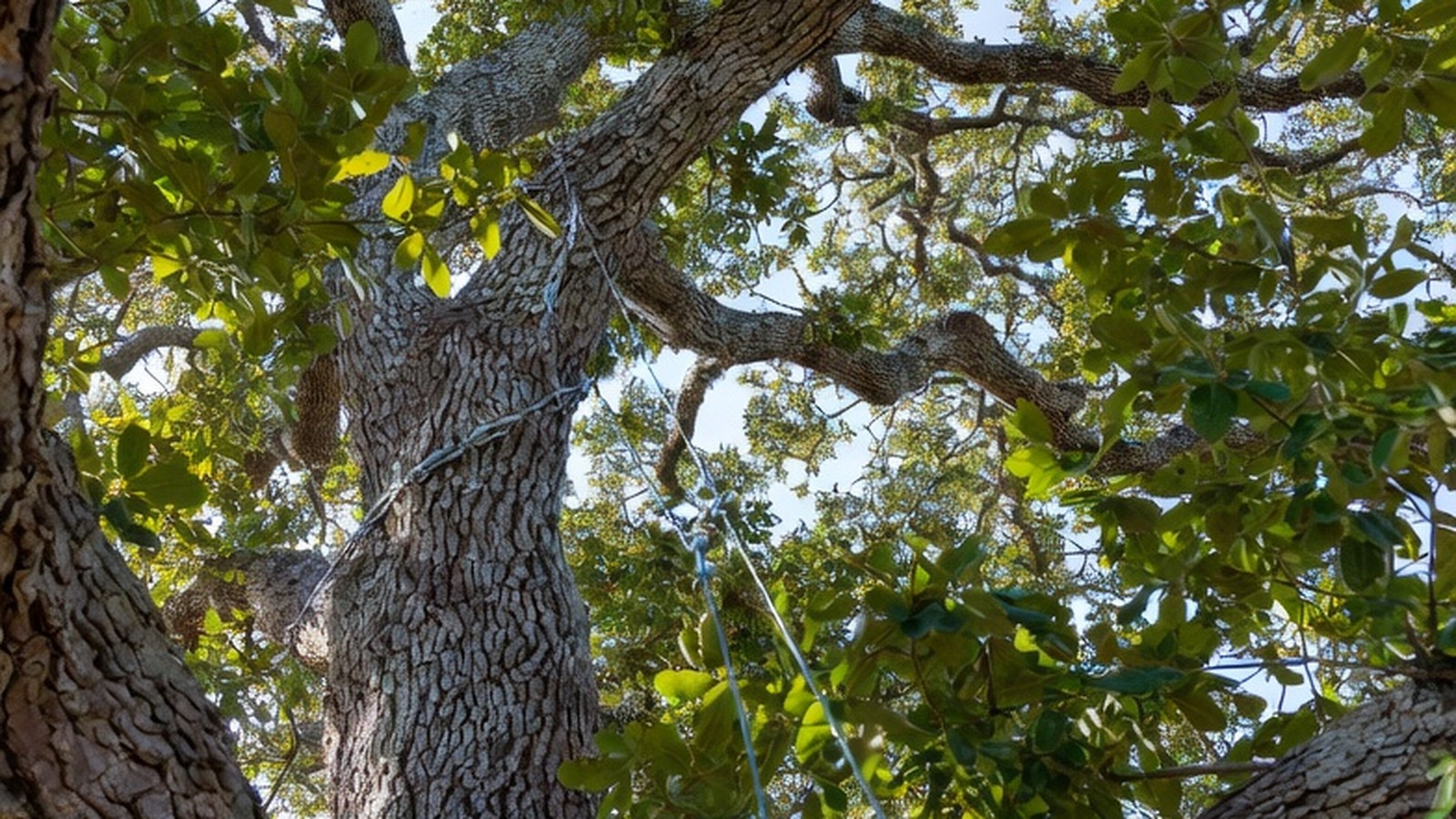
- Copper cable running down the trunk (typically attached at intervals to minimize mechanical damage to the bark)
- Ground electrode driven into the soil at the base, providing a path to ground
When lightning contacts the system, current flows down the cable rather than through the tree's tissue. The system doesn't prevent lightning from striking the tree, it manages where the current goes when it does.
Modern systems also include surge protection to reduce the risk of energy traveling through the root system to nearby structures.
When Lightning Protection Makes Sense
High-value specimen trees. A 150-year-old live oak on a property represents decades of irreplaceable landscape value. A $1,500–$3,000 lightning protection installation is a reasonable investment against that loss.
Trees near structures. A large tree close to a house already creates some structural risk. Lightning protection reduces the probability of a storm-caused failure that damages the structure.
Trees over high-traffic areas. A large oak over a parking area, a pool, or a frequently used patio represents real safety risk in a lightning event.
Trees the homeowner particularly values. For trees with sentimental or design significance (a tree that defines the property) protection can make emotional and practical sense.
When NOT to install it: Smaller, younger trees that can be replaced, trees in decline or with significant structural defects, trees unlikely to attract lightning due to location or size.
System Maintenance
Lightning protection systems aren't permanent set-and-forget installations. As the tree grows, the cable needs to be extended or replaced. Conductors should be inspected periodically for corrosion, broken connections, and adequate ground contact. The system should also be assessed after a lightning event to check for damage.
A poorly maintained or inadequately grounded system may provide false security without meaningful protection. If you have an older system on a tree, have it inspected.
What to Do After a Strike
If a tree is struck:
- Assess for immediate structural failure risk (large splits, major hanging sections)
- Look for evidence of fire in the crown or at the base
- Have an arborist assess the tree within a few days, internal damage may not be visible immediately
Trees that appear largely intact after a strike should be monitored over the next 12–24 months. Lightning-damaged wood is a prime entry point for decay fungi, and a tree that looked fine in July may show significant dieback by the following spring.
Questions about lightning protection for a significant tree in Tallahassee? Call (850) 570-4074 or request an assessment online.