The Lines and the Trees Don't Get Along
Tallahassee is one of the most heavily treed cities in the country. It's also a city built in a network of power lines, utility corridors, and transmission infrastructure that runs through and around all of those trees. The two exist in constant tension.
Trees grow toward power lines for the same reason they grow toward anything: light. Once they're in the line corridor, the problem compounds every growing season. Without active management, a mature oak or sweet gum in a utility corridor is a storm outage waiting to happen, and a fire hazard under dry conditions.
Here's what Tallahassee property owners need to know about line clearing and their role in it.
Who Is Responsible for Line Clearing?
This depends on where the line runs and who owns it.
Transmission lines and main distribution lines are the utility company's responsibility. Duke Energy (formerly Gulf Power), Florida Power & Light, and other utilities maintain right-of-way (ROW) agreements along their major corridors and manage vegetation in those corridors through contracted crews. They handle this proactively, on their own schedule, not yours.
Service drops, the lines running from the utility pole to your house: are more complicated. The utility owns the line from the pole to the point of attachment on your house. But trees on your property that are growing into the service drop are generally your problem. The utility won't come trim your tree because it's near your service drop. That falls to you.
Private lines on private property are fully your responsibility. Any clearing needed is on the property owner.
If you're unsure which applies to your situation, the safest move is to call the utility company first, describe what you're seeing, and ask. They'll tell you what they'll handle and what they won't.
When to Call a Tree Service vs. When to Call the Utility
Call the utility company if:
- A tree is actively contacting a major transmission line
- You see sparking, smoking, or fire near lines
- A tree has fallen on a line
- A line is down on the ground
Do not approach downed lines or trees in contact with active transmission lines. This is immediately life-threatening.
Call us if:
- Trees on your property are growing toward or into your service drop
- A tree is threatening a private utility line (cable, fiber, secondary lines)
- You need trees and brush cleared along a private drive or corridor
- A utility company has notified you that vegetation needs to be cleared on your side
What Line Clearing Work Looks Like
Line clearing near active power lines requires specialized training and specific safety protocols. Our crew works near energized lines using insulated tools and appropriate standoff distances, this isn't work that should be done by general landscapers or homeowners.
The process depends on what's needed:
Directional pruning removes branches growing toward the line while preserving the tree's health and overall structure as much as possible. This is the preferred approach for trees that aren't directly under or in the line corridor, keep the tree, redirect the growth.
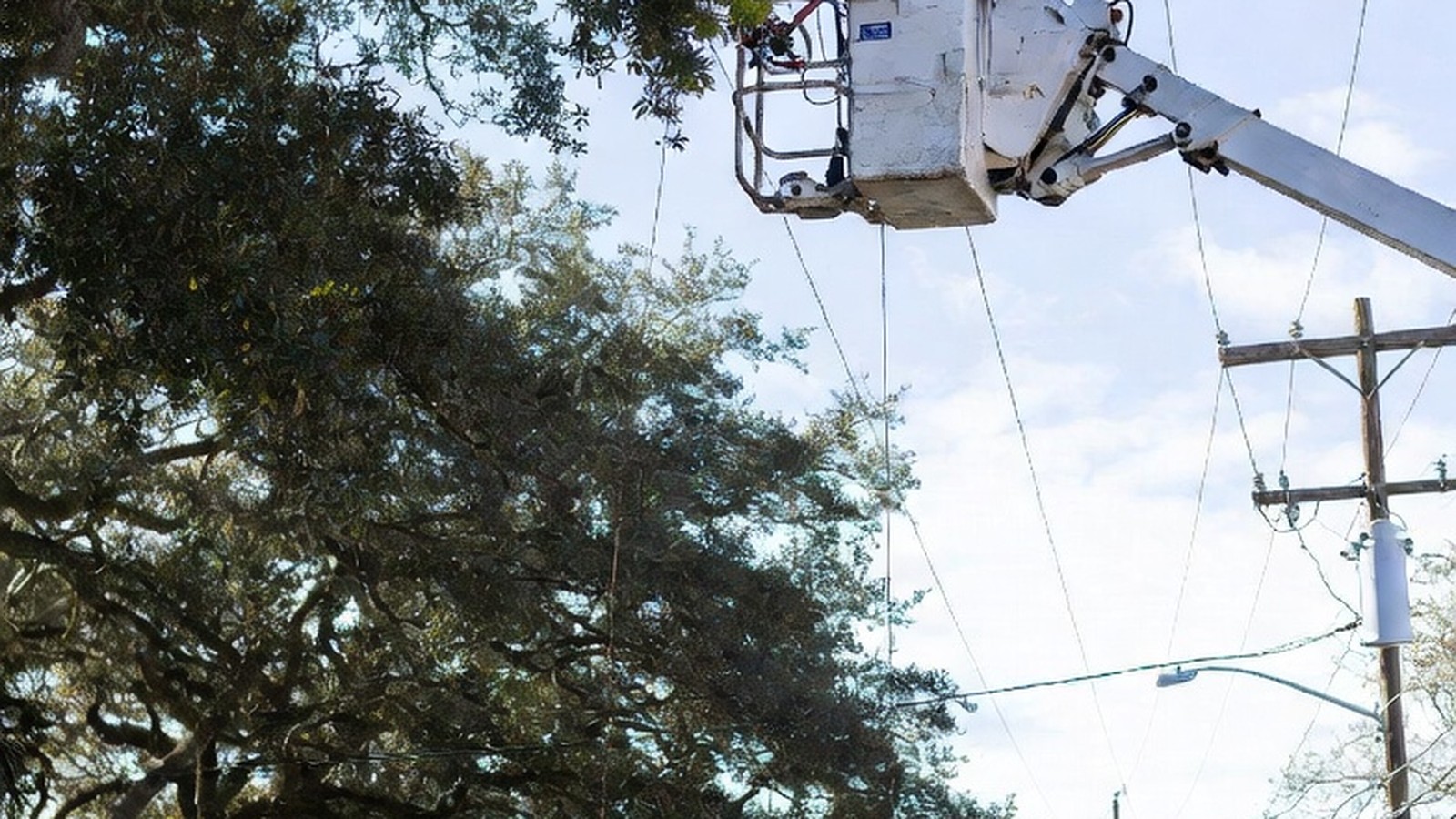
Sectional removal is used when the tree or major limbs need to come out entirely. In a line corridor with limited clearance, this work is done section by section, often with a bucket truck to provide safe access and controlled lowering of sections.
Brush clearing along fence lines, property edges, and private corridors where secondary lines run is typically straightforward clearing work, cutting, chipping, and hauling.
The Timing Issue
Line clearing after a problem is reactive. The branch is already sagging onto the line or the outage has already happened.
The better approach is proactive: if you have a tree that's been growing toward a power line for years and hasn't been maintained, every storm season is a potential event. A dry summer followed by a wet fall followed by a strong wind event is the recipe for a service interruption or worse.
We assess trees near utility lines as part of any property evaluation. If you have trees that concern you, call us before the problem forces the issue.
Service Drop Clearance: A Common Tallahassee Situation
The most common line clearing call we get involves a service drop (the wire running from the utility pole to the house) that's being contacted or threatened by a tree growing alongside the driveway or near the front of the home.
This is almost always a tree on the customer's property that has grown up into a line that was installed after the tree was planted, or a tree that's expanded its canopy over decades to reach a line it was once clear of.
In Leon County's climate, this happens most often with:
- Water oaks: fast growers, broad canopy, common alongside driveways
- Laurel oaks: similar growth habit to water oak, very common in residential Tallahassee
- Sweet gums: grow tall quickly, common along property lines
- Camphor trees: non-native but widespread, often planted near homes before their size was fully appreciated
If any of these describes a tree on your property near your service drop, it's worth an evaluation before the next storm season.
Call (850) 570-4074 for line clearing estimates in Tallahassee, Leon County, and surrounding North Florida. We also serve South Georgia. Request an estimate online, photos of the tree and line situation help us assess quickly.