Yes, in most cases, you do need a permit to remove a live oak in Tallahassee, FL. If your tree has a trunk diameter of 8 inches or larger (measured at breast height, 4.5 feet above the ground), it falls under the City of Tallahassee's Tree Protection Ordinance and cannot be removed without prior approval. Removing a protected live oak without a permit can result in significant fines and mandatory replacement requirements.
Here is what every Tallahassee homeowner needs to know before making a move.
Tallahassee's Live Oak Protection Ordinance: What Homeowners Need to Know
Tallahassee takes its tree canopy seriously. The city's tree ordinance is among the most protective in Florida, and live oaks (Quercus virginiana) sit near the top of the protected list. These are the sprawling, wide-canopied giants you see arching over canopy roads and neighborhood yards across Leon County, and the city has made a formal commitment to preserving them.
The ordinance applies inside Tallahassee city limits. Properties in unincorporated Leon County fall under Leon County Development Services instead, the frameworks are similar but not identical. The City of Tallahassee's Urban Forestry Division handles permits inside city limits at (850) 891-6530.
When Do You Need a Permit to Remove a Live Oak?
Size threshold: Live oaks with a trunk DBH (diameter at breast height) of 8 inches or larger are classified as protected trees. That covers the vast majority of mature live oaks on residential and commercial properties. If you can wrap two hands around the trunk at chest height with room to spare, you almost certainly have a protected tree.
Heritage trees: Live oaks with a DBH of 24 inches or larger carry additional protections as heritage-class trees. Permits for these trees face a higher bar, and replacement requirements are more substantial.
Any significant structural work near protected trees: It is not just about cutting. Construction, trenching, or grading within the root protection zone of a protected live oak also requires city review before work begins. Root zone disturbance during a home addition or driveway project has triggered violations just as often as unpermitted removal.
Significant pruning: Removing more than roughly 25% of a protected tree's live canopy in a single year may require a permit. Major structural cuts (removing large-diameter limbs rather than routine maintenance pruning) fall into this category. The city's arborists draw a distinction between routine maintenance and canopy-altering work.
When Can You Remove a Live Oak Without a Permit in Tallahassee?
There are legitimate exemptions, but they are narrower than most homeowners expect.
Dead or imminently hazardous trees: A live oak that is certifiably dead, or one that presents a documented imminent hazard to people or structures, may qualify for expedited or emergency approval. This is not a blanket exemption for "I think my tree looks bad." The city reviews emergency claims, and the documentation needs to hold up.
Storm damage and emergency removal: If a live oak has failed during a storm and poses an immediate threat to your home or safety, you can proceed with emergency removal without waiting for a permit. However, you are required to notify the city promptly afterward and document the emergency condition. Keep photos before, during, and after.
Routine dead branch removal: Removing dead limbs generally does not require a permit. This is different from removing live growth or making significant structural cuts into the canopy.
Sub-threshold trees: Live oaks smaller than the protected DBH threshold are not covered by the ordinance in the same way. If your tree is a young specimen well below 8 inches DBH, you likely do not need a permit. Still worth a quick check with Urban Forestry if you are unsure.
How to Get a Tree Removal Permit in Tallahassee
The permit process goes through the City of Tallahassee's Urban Forestry Division or, for county properties, Leon County Development Services.
What the process generally involves:
- Contact Urban Forestry at (850) 891-6530 or visit the City's Growth Management Department to initiate the application
- A site inspection, a city arborist will assess the tree's condition, size, and location
- Documentation of your justification for removal (hazard, disease, structural damage, development necessity)
- For removal approvals: a mitigation plan, usually requiring replacement tree planting at a specified ratio
Factor in the timeline. Permit processing takes time, and if you have a project with a scheduled start date, you need to start the permit process weeks in advance, not days. Working with a licensed arborist who handles the permit documentation can move things along faster, we have been through this process many times and know what the city needs to see.
For borderline cases (disputed health, structural risk, heritage tree petitions) a formal written assessment from a licensed arborist carries weight with city reviewers. We provide that documentation as part of our service.
What Happens If You Remove a Live Oak Without a Permit?
Skipping the permit process is not a paperwork technicality, the city enforces this actively.
Consequences can include:
- Fines that have been large enough to make local news in Tallahassee. The city does not treat unpermitted live oak removal as a minor infraction.
- Mandatory mitigation planting at your expense, often at a ratio of multiple replacement trees for each removed tree. Replacement trees must typically meet specific species and caliper requirements.
- Stop-work orders on any associated construction project until the violation is resolved.
- Legal action for significant or repeat violations.
The replacement cost for a heritage live oak can reach tens of thousands of dollars when you factor in caliper size requirements, installation, and monitoring. The permit process is manageable by comparison.
Working with a Licensed Tree Service in Tallahassee
If you have a live oak you are concerned about (whether it needs removal, significant trimming, or just an assessment) the right starting point is a professional evaluation, not a chainsaw.
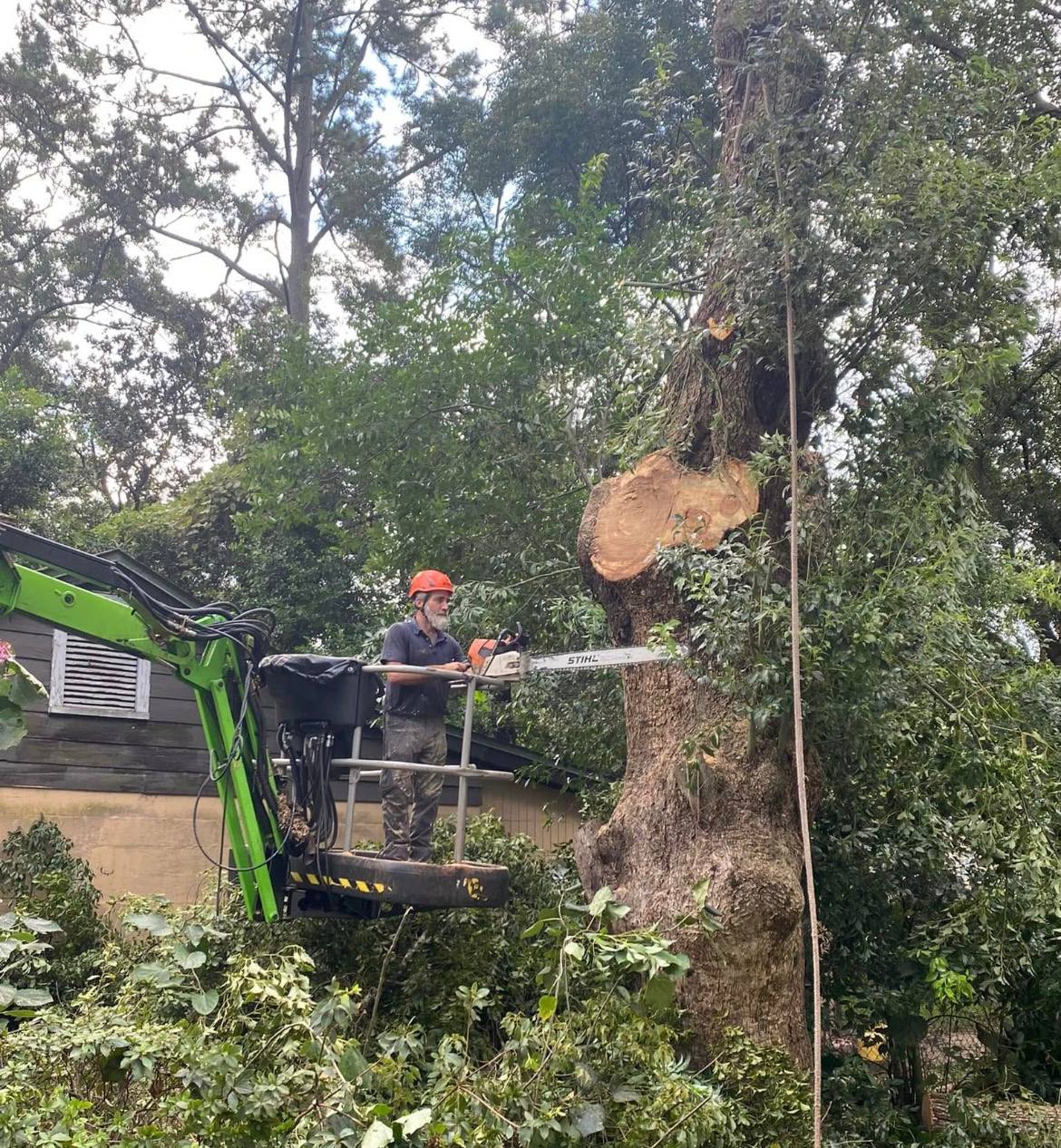
At Reed Tree Service, we know the City of Tallahassee and Leon County permit process. We have pulled permits for protected tree removal across the area and know what documentation the city arborists need. When you call us about a live oak, our first step is always to assess whether a permit is required and walk you through the process before any work begins.
We will not start work on a protected tree without permitting being clear. That protects you from violations, and it is the right way to do the job.
If you are dealing with emergency tree service (a storm-damaged oak that is threatening your home right now) we will respond quickly, help you document the emergency properly, and handle the city notification process with you.
Ready to get a straight answer on your live oak? Call or text us at (850) 570-4074. We will tell you what we see, what the permit situation looks like, and what it will take to resolve it. Request a free assessment and we will come take a look.