Mulch Done Right Is Remarkable
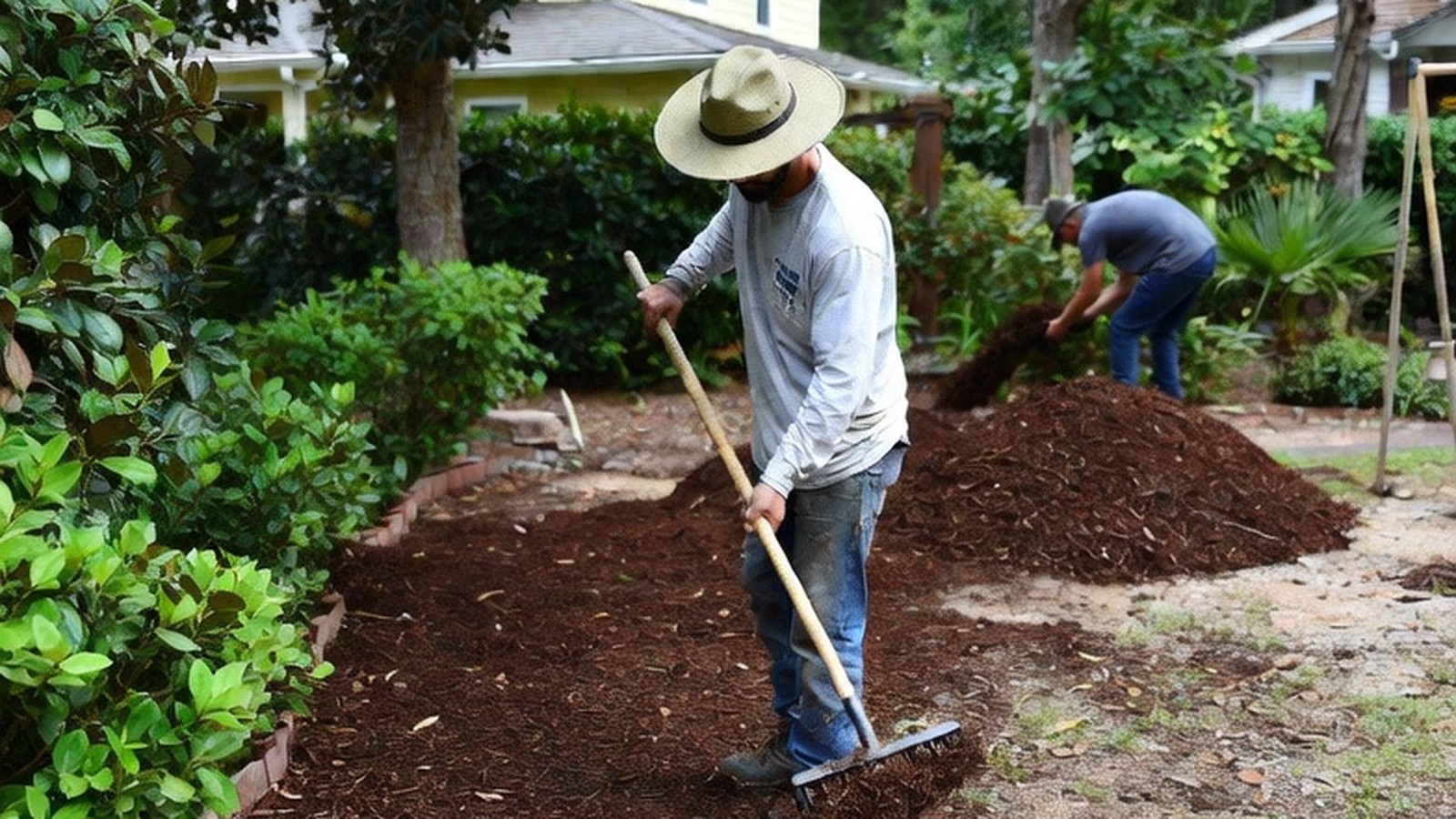
A 3-4 inch layer of organic mulch extending out into a tree's root zone is one of the highest-value things you can do for tree health. It:
- Retains soil moisture (often cuts irrigation needs in half)
- Moderates soil temperature
- Suppresses weeds that compete with roots
- Feeds soil biology as it decomposes
- Prevents compaction from foot traffic and lawn equipment
- Protects surface roots from mower damage
Done correctly, mulching mimics the duff layer in a natural forest floor, exactly what a tree's root zone expects.
Done wrong, mulch actively harms the tree. And mulching is done wrong constantly across North Florida landscapes.
The Mulch Volcano
The most common mistake: mulching against the trunk in a mounded pile, the "mulch volcano." You see this everywhere. The shape looks intentional and tidy, which is probably why landscapers keep doing it.
The problem:
It buries the root flare. The area where the trunk transitions to the root system needs to stay exposed to air. Covering it with mulch traps moisture against bark that isn't designed for prolonged burial. Over months and years, the bark and cambium under the mulch decay. The tree weakens invisibly until it shows decline symptoms or fails.
It promotes girdling roots. Roots growing through mounded mulch against the trunk circle the trunk at the wrong depth. Girdling roots strangle the tree over years.
It harbors pests. The moist, enclosed environment at the base of a mulch volcano is hospitable for rodents that gnaw bark, fungal pathogens, and decay organisms.
What a proper mulch ring looks like: Flat application (not mounded), 3-4 inches deep, extending as far out into the root zone as practical, ideally to the drip line or beyond. 3-6 inches of clear space around the trunk base. Not a volcano. Flat.
Too Deep
Three to four inches is the target for organic wood chip mulch. More than 4-5 inches creates its own problems:
- Oxygen can't penetrate to the root zone effectively
- The mulch layer itself can become hydrophobic, repelling water rather than absorbing it
- Deep mulch creates anaerobic conditions that favor pathogens
If you've inherited a bed with 8+ inches of old mulch, don't just add more on top. Pull back the excess before adding fresh material.
Fresh Dyed Mulch Against New Plantings
Brightly dyed mulch (red, black) is purely aesthetic. The dyes themselves are generally considered safe, but these mulches:
- Are often made from wood waste that may include treated or recycled wood
- May have been sterilized in ways that reduce the beneficial biological activity that makes mulch valuable
- Don't provide the same gradual decomposition benefits as natural wood chips from fresh wood
For tree health purposes, undyed wood chip mulch (or mulch from a recent removal job) is better than decorative dyed mulch.
Not Refreshing Mulch
Organic mulch decomposes. After a year or two in North Florida's climate, the original mulch layer has broken down significantly. The remaining layer may be thin and matted.
Inspect mulch depth periodically and add material when it's decomposed below 2 inches. Don't pile new mulch on top of matted, compacted old mulch, break up the old layer first to maintain good aeration.
Using the Wrong Material
Mulch type matters:
Wood chips (natural, from hardwood or softwood): Best for trees. Decompose into organic matter that improves soil structure. Long-lasting.
Bark nuggets: Aesthetically popular but decompose more slowly and provide less benefit than wood chips. Fine for landscape beds; not ideal for tree root zones.
Rubber mulch: Does not decompose, does not feed soil biology, can get hot in direct sun, and provides none of the organic benefits of natural mulch. Not recommended for use around trees.
Rock and gravel: Reflects heat upward (harmful in Florida's summer), doesn't decompose, provides no organic benefit. Not appropriate for tree root zones.
The Ideal Mulch Ring Setup
- Clear weeds and existing ground cover from the area
- Apply 3-4 inches of natural wood chip mulch
- Extend from the trunk outward, further is better, at least to the drip line for young trees
- Leave 3-6 inches clear space at the trunk base (no mulch touching the bark)
- Keep flat, no mounding
Refresh annually or as the layer decomposes.
Questions about mulching or tree care in Tallahassee? Call (850) 570-4074 or request a consultation online.