Does North Florida Have Fall Color?
Visitors from temperate climates are sometimes surprised to find fall color in North Florida, it exists, but it's later, subtler, and less dramatic than the Northeast. Tallahassee and North Florida's fall color peaks in November and sometimes into early December, weeks behind the traditional foliage belt.
The live oaks that dominate the landscape are evergreen or semi-evergreen, they're not part of the fall color picture. But other species do change.
Species That Provide Fall Color in North Florida
Sweetgum (Liquidambar styraciflua): The most reliable and dramatic fall color in North Florida. Sweetgum turns yellow, orange, red, and purple, often with multiple colors on the same tree. Peak color typically comes in November. The tradeoff: spiky seed balls are a consistent nuisance. Not ideal for lawns or play areas, but planted in the right spot, sweetgum gives genuine fall color.
Red maple (Acer rubrum): Native to North Florida, red maples turn yellow, orange, and red in fall. The color intensity varies by individual tree and year, some red maples are spectacular, others are unremarkable. Red maple is also a fast grower and tolerates moist conditions well.
Shumard oak (Quercus shumardii): One of the better-behaved fall-color oaks for North Florida. Turns red in fall, is long-lived, and handles the region's climate and soil conditions well. Often recommended as a substitute for northern oaks that struggle in Florida's soils.
Sassafras (Sassafras albidum): Native understory tree that turns yellow, orange, and red. Usually a smaller tree in North Florida's landscapes but provides reliable color.
Winged sumac (Rhus copallinum): Native shrub/small tree with outstanding crimson-red fall color. Typically multi-stemmed, used as a naturalistic planting or hedge. Very reliable color in November.
Persimmon (Diospyros virginiana): Native persimmon turns golden yellow in fall. Also produces small orange fruits that attract wildlife. Excellent native choice.
Bald cypress (Taxodium distichum): Technically deciduous, bald cypress turns rust-orange in fall before losing its needles. Striking against evergreen backgrounds.
What Doesn't Change
The dominant live oaks, water oaks (which are somewhat deciduous but not for color), and pines are not fall color contributors. Most of the landscape stays green or brown through winter rather than turning color.
Timing
Peak fall color in the Tallahassee area typically arrives in late October through December, about 4-6 weeks behind New England. Weather affects timing: cold snaps accelerate color; warm falls delay it.
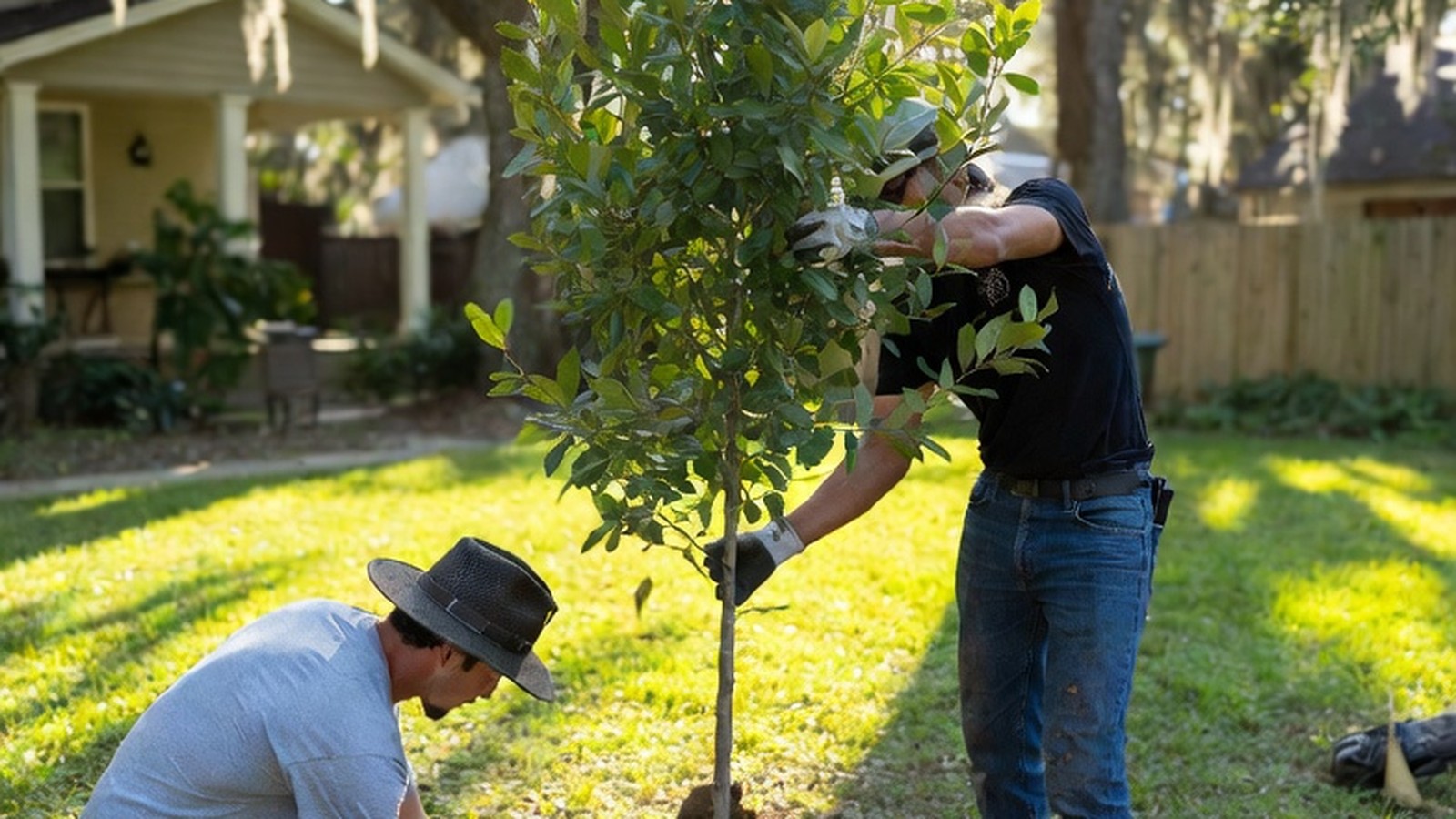
Interested in planting trees for fall color? Call (850) 570-4074 or request a consultation online.