Why Natural Privacy Works in North Florida
Tallahassee's climate (long growing seasons, high humidity, mild winters) creates excellent conditions for establishing dense, fast-growing privacy screens. The right plants in the right location can achieve meaningful screening in 3-5 years.
The challenge: North Florida experiences occasional hard freezes that eliminate truly tropical options, summer drought that stresses shallow-rooted species, and high humidity that creates disease pressure for plants not adapted to the region.
Here's what actually works for privacy in the Tallahassee area.
Evergreen Trees for Tall Screens
Southern Red Cedar (Juniperus virginiana): The most durable native evergreen for privacy in North Florida. Dense, dark green foliage, cold-hardy to zone 2, drought-tolerant once established, and relatively fast-growing for an evergreen. Can reach 40-50 feet at maturity. Excellent privacy screen planted 6-8 feet apart. Naturally columnar form means it screens well without taking excessive width.
Leyland Cypress: Extremely fast-growing (3-4 feet per year), dense habit, popular for quick screening. However: not particularly drought-tolerant, prone to disease in North Florida's humidity (Seiridium canker is a significant problem in the region), and has a short functional lifespan, many Leyland cypress screens planted 15-20 years ago are in decline. Consider this a medium-term solution rather than a permanent one.
Eastern Red Cedar: Native, extremely tough, excellent wildlife habitat value. Slightly less formal than Leyland but far more durable. Plant at 8-10 foot spacing for an informal screen that will be fully effective in 5-7 years.
Southern Wax Myrtle (Morella cerifera): Fast-growing native shrub/small tree reaching 10-15 feet. Semi-evergreen (may drop some leaves in cold winters but recovers quickly). Dense growth, adapts to wet or dry conditions, excellent habitat value. Suckers from roots to form a thicket if allowed, either a feature or a problem depending on your preference. Good for 6-12 foot screening needs.
Mid-Height Screening Options (6-15 feet)
Viburnum species: Several viburnums perform well in North Florida. Viburnum obovatum (Walter's viburnum) is native, dense, and handles full sun. Viburnum odoratissimum (sweet viburnum) grows 10-15 feet and is widely available. Plant 4-6 feet apart for a solid hedge.
Ligustrum (Japanese/Chinese Privet): Dense, fast-growing, readily available, and makes an effective screen. Note that privets are considered invasive in parts of the Southeast. If you're near natural areas, this is worth considering before planting, native alternatives like wax myrtle provide similar function without the ecological concern.
Elaeagnus: Tough, fast-growing, works in poor soils and part shade. Produces small fragrant flowers in fall. Somewhat aggressive but effective screening without the invasive concern of privet. Good for difficult spots.
What to Avoid
Leyland cypress in low spots or areas with poor drainage: These trees are already prone to Seiridium canker in North Florida humidity; wet conditions accelerate the problem dramatically.
Plants marketed as "instant screening" in large box sizes: Large B&B plants in 15-gallon containers often establish more slowly than smaller, younger plants, the root ball size relative to canopy means they suffer more transplant stress. A 3-gallon wax myrtle often catches up to a 15-gallon specimen within 2-3 years.
Bradford pears for screening: Not effective for privacy and problematic for other reasons. Avoid entirely.
Spacing and Planning
The general rule: final mature width of the species, divided by 2, gives the planting spacing for full screen effect. For most privacy applications in residential settings:
- Tall columnar species (red cedar): 6-8 feet apart
- Broader evergreens (wax myrtle, viburnum): 4-6 feet apart
- For quick effect: tighter spacing, then thin later as plants fill in
Plant in a straight line or staggered double row depending on depth available. Double-row staggered planting creates the densest screen the fastest.
Planting and Establishment
September through February is the ideal planting window for privacy screens in North Florida, the cooler temperatures reduce transplant stress, and plants can establish root systems before summer heat arrives.
Water the first growing season consistently, even drought-adapted native species need irrigation while establishing. Mulch the planting bed heavily (3-4 inches of wood chips) to retain moisture and reduce weed competition.
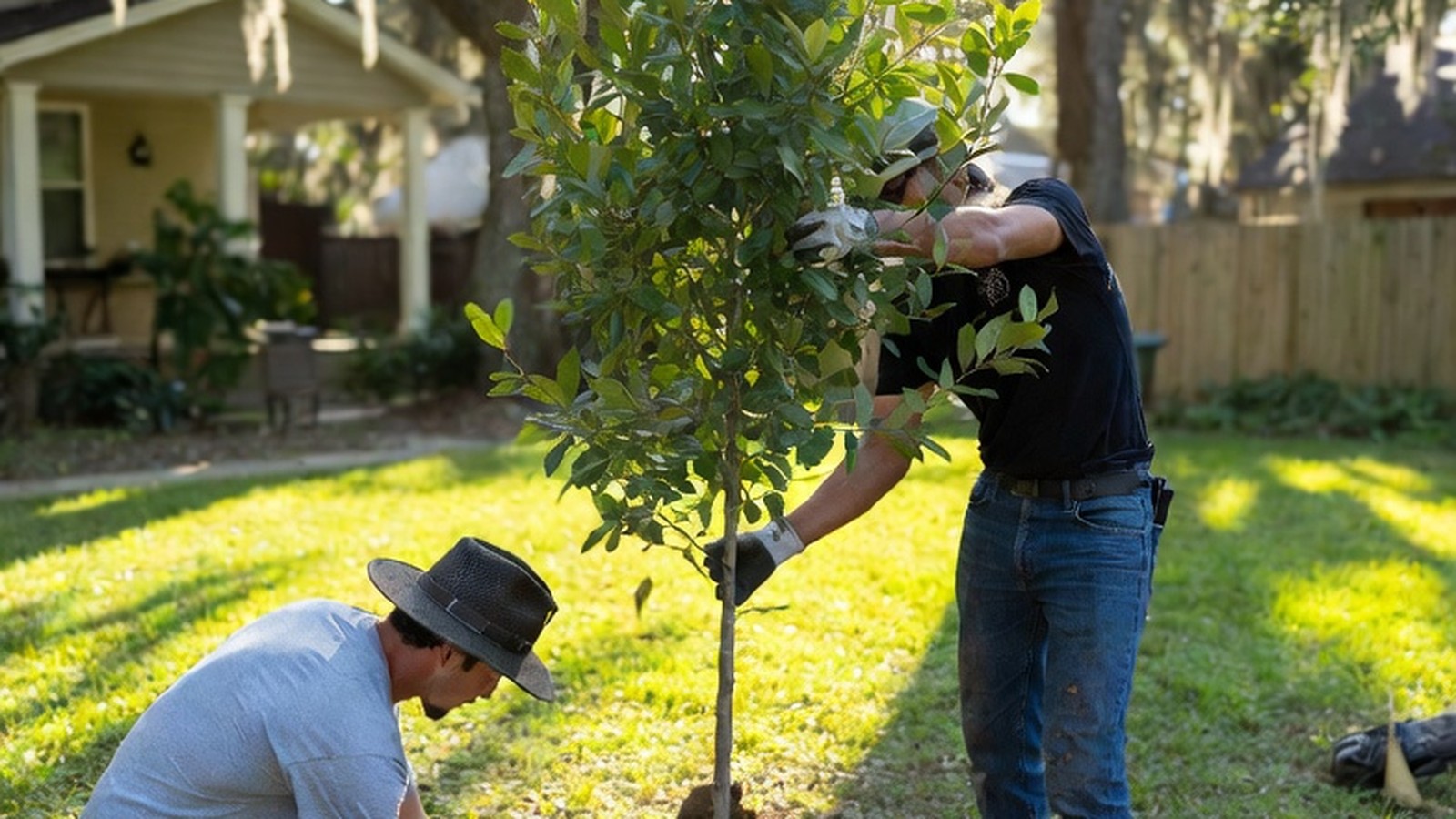
We plant privacy screens as part of our tree planting services. If you want a professional assessment of what will work for your specific situation (screening need, sun exposure, soil conditions) call us for a consultation.
Call (850) 570-4074 or request a planting estimate online.