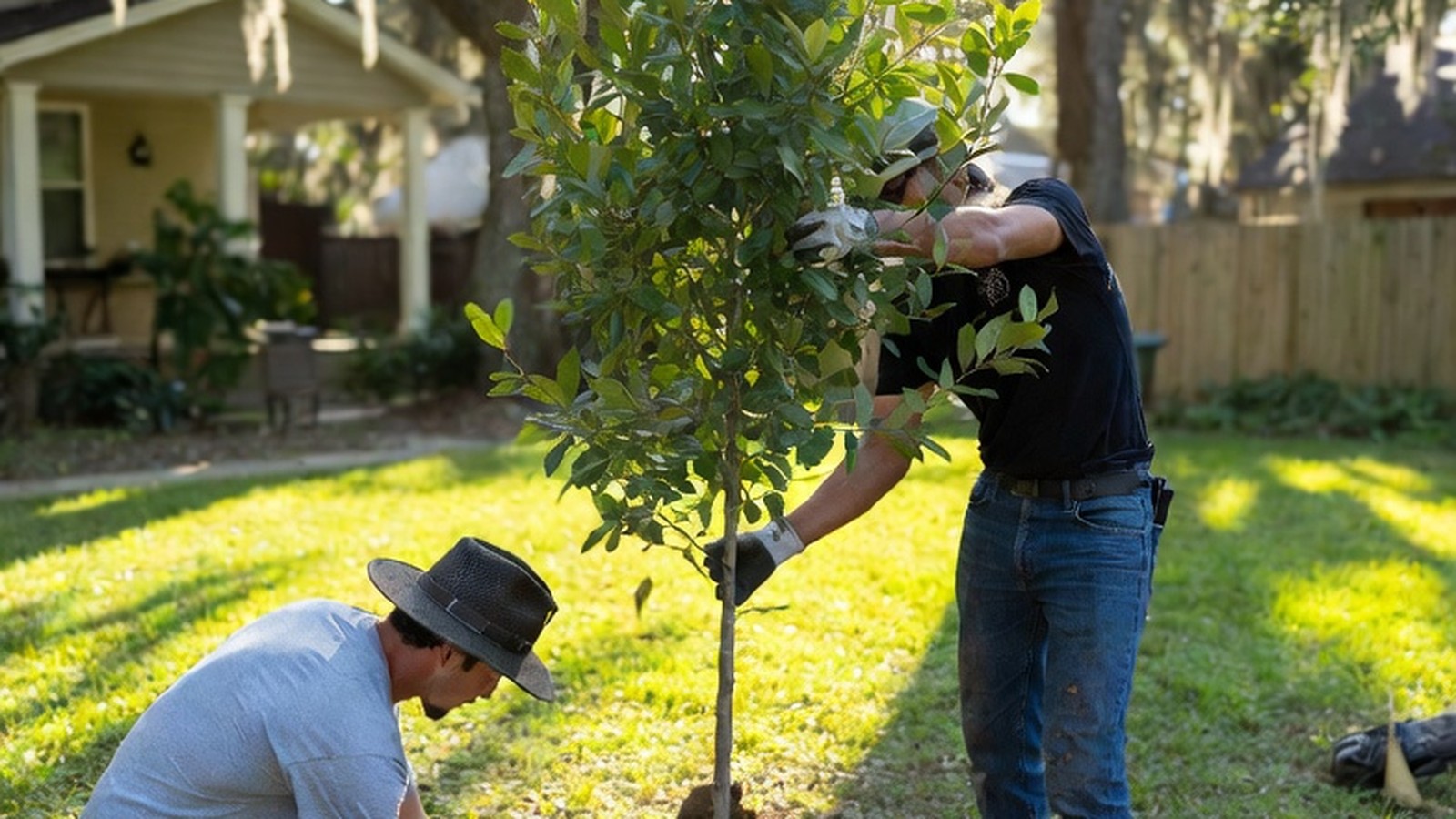
The Replanting Opportunity
Tree removal creates a gap in the landscape, and often a better opportunity than the original planting, because you now know:
- What grew there before (and why it was removed)
- The actual site conditions: sun, drainage, soil
- What the space looks like without the tree, what's needed functionally
- What you want: shade in a specific direction, privacy screen, ornamental, wildlife value
Taking a few minutes to think through replanting before choosing a tree saves considerable trouble later.
Address Why the Previous Tree Was Removed
This matters because many replanting failures repeat the original problem:
Removed for utility conflict? Don't replant with a species that will grow into the same lines. Choose a species whose mature height is well below the utility elevation.
Removed for structural failure or disease? Consider whether the same species would have the same vulnerability in that location. Some locations (wet soil, poor drainage, high wind exposure) are genuinely unfavorable for certain species.
Removed because it was invasive? The previous tree may have been mimosa, Chinese tallow, or chinaberry, planted by a previous owner without understanding the consequences. Replace with a native or non-invasive species.
Removed because it outgrew the space? Choose a species with a mature size appropriate to the location. The mature size of the tree at planting time is the most commonly ignored specification.
Site Conditions First
Before selecting a species, assess what you're working with:
Sun: Full sun (6+ hours direct), partial shade (3-6 hours), or full shade. Most trees require full sun for best growth; shade-tolerant species exist but are fewer.
Drainage: Does water stand in that spot after heavy rain? Is it well-drained sandy soil? Poorly drained sites need species adapted to wet feet or periodic flooding.
Space: How much space does the mature tree have? Measure the distance to structures, other trees, utility lines, and the property line. The tree's mature crown spread should fit comfortably within that space.
Soil: North Florida's soils range from well-drained sandy soils to heavier clay soils, particularly in areas with pine flatwoods transition. Knowing your soil type helps match species.
Recommended Species for Common Situations
Large shade trees for open areas
Live oak (Quercus virginiana) (the most durable, long-lived, and ecologically valuable large shade tree for North Florida. Needs space) mature crown spread 60-80+ feet. Not for tight spaces or near structures. For the right location, nothing compares.
Laurel oak (Quercus laurifolia), similar to live oak but semi-evergreen, faster growing, shorter lifespan (60-80 years). Good native shade tree for sites too constrained for a live oak spread.
Southern red oak (Quercus falcata), large native deciduous oak, good fall color, excellent wildlife value.
Southern magnolia (Magnolia grandiflora), large evergreen, beautiful white flowers. Requires management of ongoing leaf drop.
Medium trees for suburban lots
Eastern redbud (Cercis canadensis), native, spring flowers, heart-shaped leaves, fall color. 15-30 feet. Excellent performer in North Florida.
Crape myrtle (Lagerstroemia), choose the right-sized variety for the space. 3-30 feet depending on cultivar. Summer flowers, good bark structure in winter.
American holly (Ilex opaca), native evergreen, red berries, excellent wildlife value. 20-40 feet. More vertical than spreading.
Sweetbay magnolia (Magnolia virginiana), native, fragrant flowers spring through fall, tolerates wet conditions. 15-35 feet.
Trees for wet or poorly drained sites
Bald cypress (Taxodium distichum), native, exceptional longevity, beautiful fall color, tolerates periodic flooding. Large tree (50-70 feet).
Pond cypress (Taxodium ascendens), similar to bald cypress but more compact.
Red maple (Acer rubrum), native, adaptable to wet conditions, spring flowers, fall color.
Small trees for tight spaces or under lines
Eastern redbud: mentioned above, also works under utility lines Yaupon holly (Ilex vomitoria), native, can be kept small, versatile Fringe tree (Chionanthus virginicus), native, distinctive white flowers Wax myrtle (Morella cerifera), native large shrub/small tree, fast, versatile, wildlife value
When to Plant
In North Florida, the best planting window is October through February. Cooler air temperatures reduce water stress, soil is still warm enough for root development, and the tree has fall and winter to establish before summer heat arrives. Spring planting is second-best. Avoid summer planting when possible.
Tree planting service in Tallahassee? Call (850) 570-4074 or request a consultation online.