What Spanish Moss Actually Is
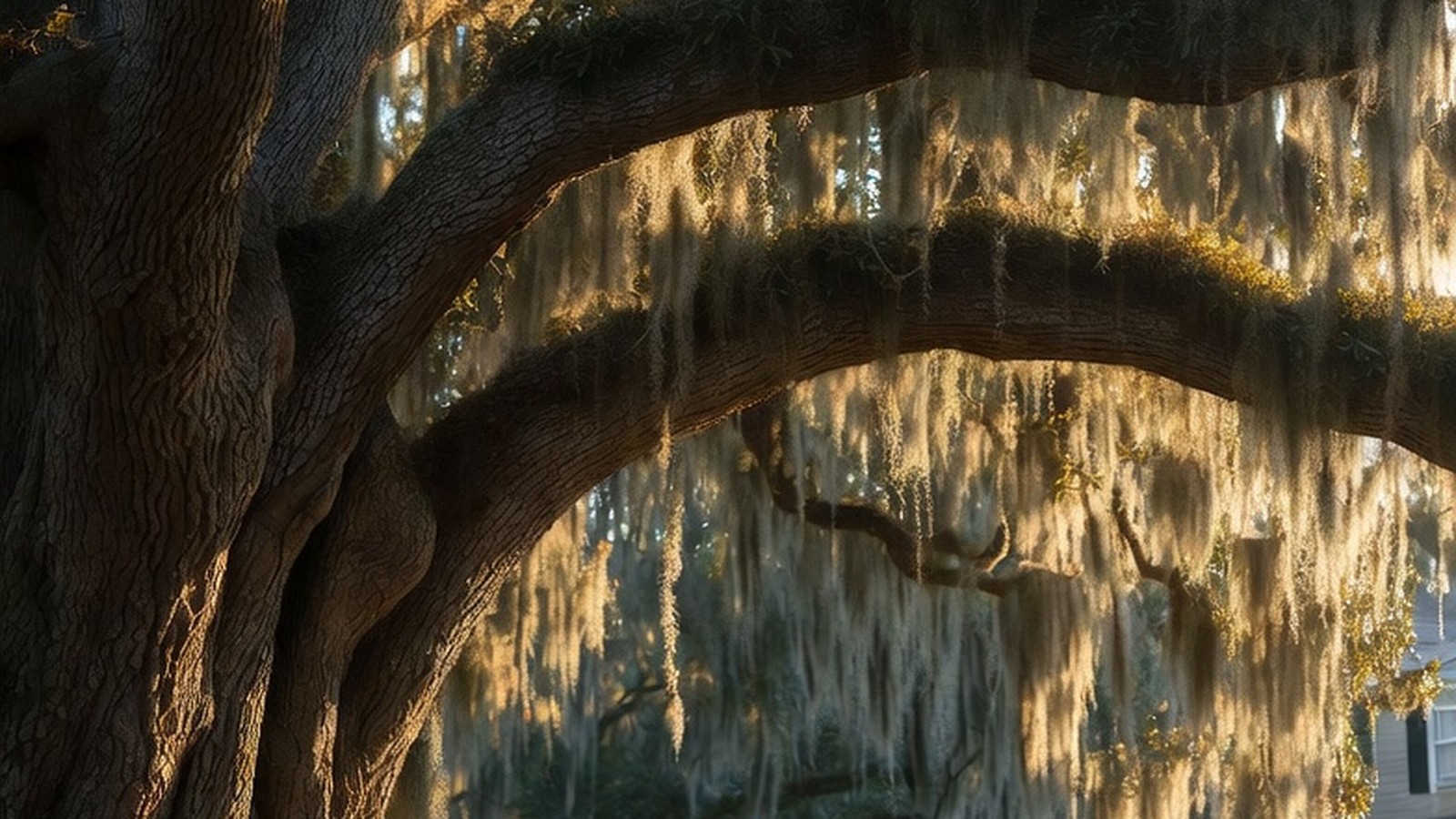
Spanish moss (Tillandsia usneoides) is not a moss. It's a bromeliad, a flowering plant in the same family as pineapples and many ornamental air plants. It's also not a parasite.
Spanish moss is an epiphyte: it grows on a host (typically trees, fences, power lines, or other structures) for physical support but derives no nutrients from the host. It gets everything it needs from the air: water from rain and humidity, nutrients from dust and airborne particles, light from the sun.
This is the key fact that contradicts the widespread belief that Spanish moss "kills trees" or "chokes" them: it has no physical connection to the tree's living tissue. There are no rootlets penetrating the bark. No feeding relationship. No extraction of the tree's water or nutrients.
Does Spanish Moss Hurt Trees?
Not directly. Because it's not a parasite, the Spanish moss itself isn't extracting anything from the tree.
Indirectly, there are considerations:
Weight in storm events: Spanish moss absorbs water and becomes significantly heavier when wet. A heavily draped tree in a tropical storm carries substantially more wind load than the same tree without moss. In strong storms, this can contribute to branch failures. Extremely heavy accumulations in the crown are worth reducing for this reason alone.
Shading: Dense accumulations of Spanish moss can reduce light reaching leaves in the interior and lower portions of the crown. This isn't usually a significant issue for healthy, full-canopy trees, but may be relevant for trees already in reduced health.
Disease concealment: Heavy moss can make it harder to visually inspect bark for disease symptoms, cracks, or structural problems. This is a practical consideration for tree assessment, not a cause-and-effect issue.
Why Trees With Heavy Spanish Moss Sometimes Decline
This is where the confusion comes from. Spanish moss tends to accumulate most heavily on trees that are already in decline, declining health means the crown is thinning, which lets more light reach interior branches, which the moss thrives in.
So: you see heavy Spanish moss, and the tree is declining. The casual conclusion is that the moss caused the decline. In most cases, it's the reverse, the decline created conditions favorable to moss accumulation.
Trees in full health with dense canopies typically have less Spanish moss than trees with thinning crowns. When you see extreme moss loading on a tree, look at the tree's overall health first.
When Spanish Moss Removal Makes Sense
Aesthetic reasons: Some property owners simply don't like the look or want to reduce it. Removal is straightforward, pulling or cutting the hanging strands. Note that it will regrow; this isn't a permanent solution unless conditions that favor dense growth (declining canopy, high humidity exposure) are addressed.
Pre-storm preparation: Reducing heavy accumulations before storm season lowers the wind-load and weight risk during high-wind events.
Hazard assessment: If you're trying to inspect a tree for structural issues or disease, clearing heavy moss from the area you're examining helps.
Young or newly planted trees: Significant moss accumulation on a small or newly planted tree can shade the limited leaf area meaningfully. Reducing moss on young trees makes more sense than on established mature trees.
What to Actually Worry About
If you have a North Florida live oak covered in Spanish moss and you're concerned about the tree's health, the moss probably isn't the problem. Investigate:
- Soil compaction from foot traffic, equipment, or parking in the root zone
- Root damage from construction, trenching, or grade changes
- Oak decline or disease: check for fungal conks at the base, dieback in the crown, bark abnormalities
- Girdling roots from deep planting or nursery production issues
- Drought stress: root zones in drought conditions, especially in sandy soils
- Paving over roots: hardscape installed over the root zone
Spanish moss is a beautiful characteristic of North Florida's landscape. For most trees, it's coexisting, not competing. When a tree is declining, the cause is almost always in the roots, the vascular system, or the site conditions, not in the Spanish moss.
Questions about tree health in Tallahassee? Call (850) 888-5603 or request an inspection online.