What Does Stump Grinding Actually Cost Around Here?
If you've been searching for stump grinding prices in Tallahassee and getting nothing but vague "call for a quote" answers, you're not alone. Most tree companies won't publish numbers online. We will.
Typical residential stump grinding in the Tallahassee area runs $75–$300+ per stump, depending on size. Here's how that breaks down:
| Stump Size (diameter at base) | Typical Price Range |
|---|---|
| Small (under 12 inches) | $75 – $125 |
| Medium (12–24 inches) | $125 – $200 |
| Large (24–36 inches) | $200 – $300 |
| Extra-large / multi-trunk (36+ inches) | $300 – $500+ |
These are Tallahassee market prices as of 2026. Urban and suburban jobs are typically faster to access and quote than rural properties. Expect the lower end for a simple backyard slash pine stump and the higher end for a mature live oak with a wide root flare.
What Drives the Price?
Stump Diameter
The biggest factor, by far. Grinding is priced per inch of diameter in most cases because a wider stump means more cutting passes, more time, and more wear on the machine. A 10-inch pine stump is a 20-minute job. A 36-inch live oak stump is a two-hour job with a heavy commercial grinder.
Root System Depth and Spread
A stump that flares wide at the base (common on live oaks and water oaks) takes longer to grind because the surface area is larger than the diameter alone suggests. Deep-rooted species also require grinding down further to reach a clean finish. Standard grinding depth is 4–12 inches below grade. If you need deeper (for a new structure's footprint or a new planting hole), that adds to the price.
Site Access
Can the grinder physically reach the stump? A stump in an open backyard with a wide gate is simple. A stump wedged against a fence, next to an A/C unit, under a deck overhang, or in a tight side yard may require a smaller track-mounted grinder (slower) or extra setup time. Slope also matters, steep terrain limits how a machine can be positioned.
Number of Stumps
Multiple stumps on the same visit usually get a per-stump discount. Mobilizing equipment to a site is a fixed cost whether you grind one stump or five. A homeowner clearing a row of five medium-sized oaks will pay meaningfully less per stump than someone with a single small stump.
Stump Grinding vs. Stump Removal. What's the Difference?
These terms get used interchangeably online, but they're not the same job.
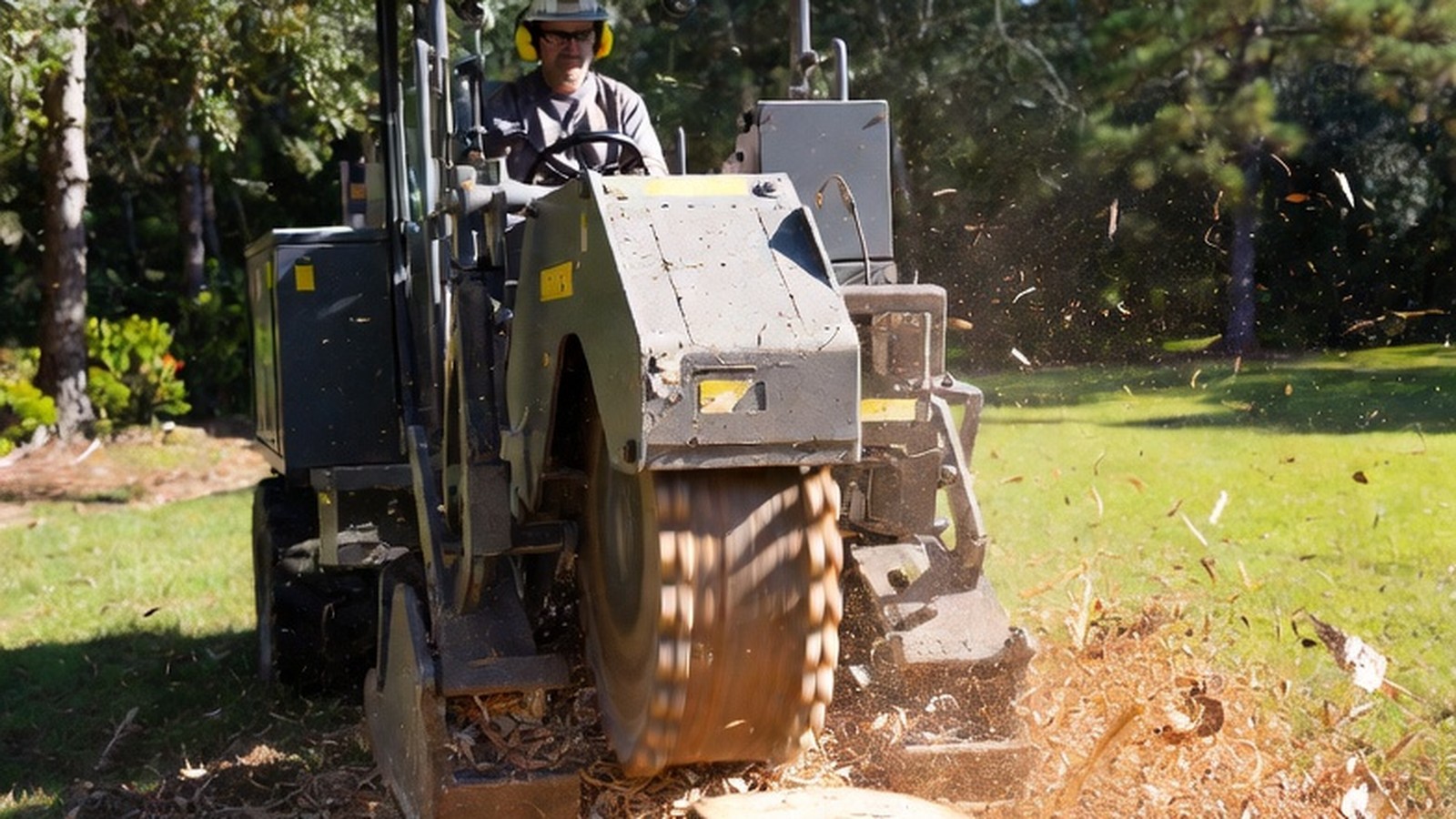
Stump grinding means a machine cuts the stump down to several inches below grade, turning the wood into chips. The root system stays in the ground and slowly decays over the following years. The chips are typically left on site to fill the cavity. This is what most homeowners need and what most Tallahassee tree companies offer.
Stump removal (also called stump extraction) means physically pulling the entire root ball out of the ground, trunk, lateral roots, everything. This requires an excavator or large skid steer and leaves a significant hole that needs to be backfilled. It's the right call when you're installing a structure directly over the root zone, or when root decay is a concern for a new planting. It costs considerably more, typically 2x–4x a grinding job for the same stump, and causes more disruption to the surrounding landscape.
For most residential jobs in Tallahassee (after a tree removal, before a landscaping project, clearing a tripping hazard) grinding is the right choice and the more economical one.
What the Grinding Process Looks Like
If you've never had a stump ground before, here's what to expect:
- The grinder is walked or driven into position over the stump.
- The cutting wheel works back and forth across the stump surface, taking it down in layers.
- A small-to-medium stump takes 15–45 minutes. A large hardwood stump can take 1–2 hours.
- What's left is a cavity filled with wood chips and fine grindings, typically 4–12 inches deep.
- You spread the chips level, top with soil if you're seeding, or use the chips as mulch elsewhere in the yard.
The wood chips don't need to be hauled away. Most homeowners leave them in the cavity and either add topsoil on top or let the chips compact down over a few months before seeding. If you want the chips removed, that's usually available for an additional fee.
North Florida Tree Quirks That Affect the Job
Tallahassee's tree mix is different from central or South Florida, and it matters for grinding quotes:
Live oaks are the biggest consideration. They have a pronounced root flare at the base that can extend 2–3 feet in diameter beyond the trunk, even on a medium-sized tree. That flare all has to be ground down. A live oak stump almost always prices at the high end for its diameter category.
Slash pines are the easiest stumps we grind. The wood is dense but the root system is relatively deep and straight rather than wide-spreading. A slash pine stump grinds clean and fast.
Laurel oaks: one of the most common street trees in Tallahassee, tend to go hollow as they age. A hollow stump actually grinds faster because there's less material, but it can be unpredictable (the machine can drop into a void). We adjust technique accordingly.
Sweet gums are a double job. The stump itself isn't particularly difficult, but the root system puts up aggressive sucker growth after cutting. Grinding the stump below grade is the only reliable way to stop the sprouts.
When Should You Grind a Stump?
Right after a tree removal. It's the natural time, the crew and equipment are already on site. Most companies offer a discount on same-day grinding.
After storm damage. If a tree came down in a storm and the stump was left, grinding it keeps the area safe and clears the site for any repair work.
Before landscaping or construction. Putting a new bed, slab, fence, or addition near a stump? Grind it first. Root systems that are left to decay underground can create voids that cause settling, and standing stumps limit where you can plant.
When the hazard has gone on long enough. Stumps are trip hazards, lawn-mower killers, and pest habitats. If there's a stump that's been sitting for years, that's a good enough reason.
Should You Rent a Grinder Instead?
Stump grinder rentals from equipment yards in Tallahassee typically run $150–$200 per day for a walk-behind machine, or more for a larger unit. On paper, that's cheaper than hiring out. In practice, there are real tradeoffs:
- The machines are physically demanding and genuinely dangerous. The cutting wheel operates at high RPMs and the machine bucks during operation. This is not an exaggeration, rental stump grinders send operators to urgent care regularly.
- Consumer-rental machines are underpowered for large hardwood stumps. They'll work on a small pine. They'll struggle for hours on a 24-inch live oak. A commercial grinder is faster and more effective.
- The learning curve is steeper than it looks. Grinding efficiently without damaging surrounding roots, pipes, or structures takes practice. Rental customers often end up with a partially-ground stump that's actually harder to finish.
For a small, easy-access pine stump on a weekend project, a rental might make sense. For anything larger than 12 inches, a mature hardwood, or a tight-access situation, the math usually works out in favor of hiring a pro when you factor in your time and the risk.
FAQ: Stump Grinding in Tallahassee
How long does stump grinding take?
Most residential stumps take 15 minutes to 1.5 hours. A small pine or ornamental tree stump is on the faster end. A large live oak or multi-trunk specimen can run 2 hours or more. If you're getting multiple stumps done in one visit, budget time for setup and repositioning between each one.
Do I need a permit to grind a stump in Tallahassee?
Generally, no, stump grinding on private residential property doesn't require a permit in Leon County. The exception is if the stump is within a public right-of-way or if the original tree removal required a permit (which applies to some heritage-sized trees under Tallahassee's tree canopy ordinance). If you're unsure, we can advise during the estimate visit.
Will stump grinding kill the roots?
Grinding removes the stump and the major surface roots, but the deeper lateral roots stay in the ground. Without the trunk, the root system can no longer photosynthesize and will slowly die and decay over the following years. For most species, this also stops sucker growth. Live oaks and sweet gums occasionally produce one season of sprouting from lateral roots after grinding, but it typically stops on its own.
How deep do you grind a stump?
Standard grinding is 4–8 inches below grade, deep enough to mow and plant turf over. If you need the area ready for a new tree planting, a raised bed, or a concrete pour, we can grind deeper (10–14 inches). That takes more time and is priced accordingly. Let us know the end use when you request the quote and we'll grind to the right depth.
Can I plant grass over a ground stump?
Yes, but give it time. The cavity left after grinding is full of wood chips, which are high in carbon and low in nitrogen, they can tie up soil nitrogen as they decompose, which is hard on new turf. Best practice: remove most of the chip material, backfill with topsoil, and let the area settle for 2–4 weeks before seeding. Alternatively, use the wood chips as mulch elsewhere and fill the cavity entirely with topsoil before seeding.
Get a Stump Grinding Quote in Tallahassee
Reed Tree Service grinds stumps throughout Tallahassee, Leon County, and surrounding North Florida and South Georgia communities. We handle everything from single-stump residential jobs to multi-stump land-clearing projects.
Call or text (850) 570-4074 for a quote, or submit a free estimate request, a photo of the stump helps us give you an accurate number without a site visit.
We also offer complete tree removal services if the tree is still standing, and we can schedule stump grinding at the same time to get everything done in one visit.
Learn more about our stump grinding service.