"I'll Just Leave the Stump. It's Not a Big Deal"
We hear this a lot. After a tree comes down, the immediate crisis is handled and the stump just… sits there. It's not hurting anyone. Maybe the grass will grow over it eventually. Maybe you can put a flowerpot on it.
Here's the honest breakdown of what actually happens when you leave a tree stump in your yard.
What Happens to a Stump Over Time
First, it takes forever to rot. People assume a stump will break down in a few years. In North Florida's heat and humidity, some stumps do decay relatively quickly, but a large hardwood stump (live oak, water oak, pecan) can sit in your yard for 10 to 20 years before it's gone. The root system extends far beyond what you can see, and it all has to decay too. In the meantime, it's a permanent feature of your landscape.
Then the carpenter ants and termites move in. Decaying wood is exactly what these insects need. A rotting stump is an established colony of wood-destroying insects one good growing season away from your fence, your deck, or your home's framing. Especially in Leon County's humid climate, the proximity of a large wood-rot habitat to your structure is something to take seriously.
And the mushrooms. The same fungal growth that accelerates a stump's decay will produce visible mushrooms, often repeatedly, every rainy season. If you have pets or small children who put things in their mouths, this matters. Many species of fungi that grow on decaying hardwood are toxic if ingested.
The root system keeps growing (for a while). After most trees are cut, the stump and root system remain alive for months or longer, pushing new sprouts called suckers. These grow from the base of the stump and from the lateral roots, sometimes appearing several feet away from the main trunk. If you don't grind the stump, you'll be cutting these sprouts regularly for years. Live oaks and sweet gums are especially aggressive about this.
It's a hazard. A stump at ground level (or slightly below ground level after it sinks a bit) is a trip hazard, a lawn mower blade hazard, and a clearance problem for any vehicles on the property. We've repaired stump damage done by riding mowers far more times than we'd like to admit.
What Stump Grinding Actually Does
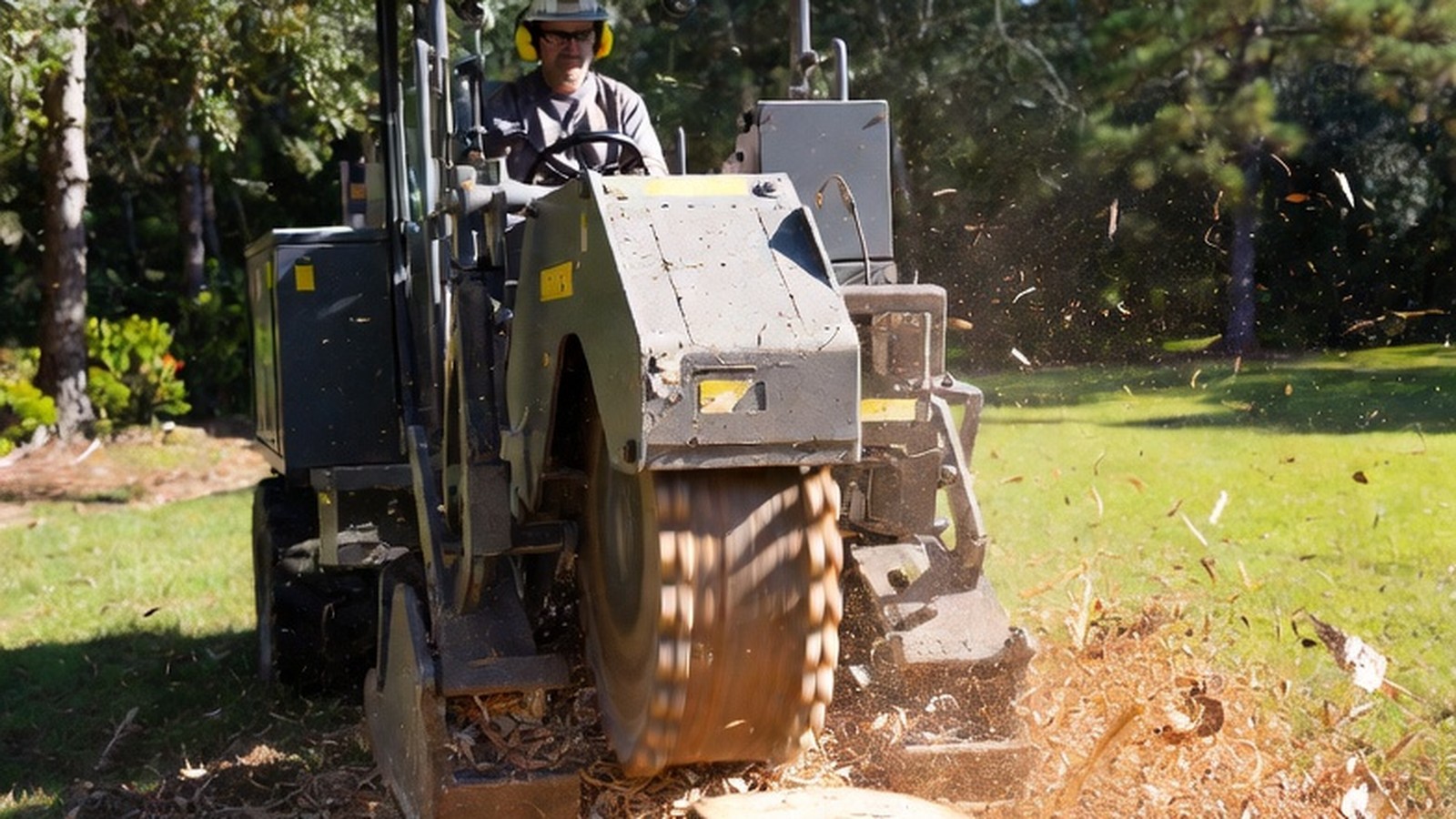
Stump grinding removes the stump and the major surface roots down to several inches below grade. Our grinders cut the wood into fine chips as they work through the stump, the resulting material can be left as mulch, added to a compost pile, or hauled away.
The grinding process:
- Takes 15 minutes to a few hours depending on stump size
- Leaves a hole filled with wood chips that can be backfilled and seeded
- Eliminates the sucker growth (the root system will slowly die off without the trunk)
- Makes the area mowable and usable immediately
We grind stumps as part of tree removals or as standalone jobs. If you've had a tree taken down by another company and the stump was left behind, give us a call, we do stump-only jobs throughout Tallahassee, North Florida, and South Georgia.
When to Do It
Sooner is generally better. Once the stump starts decaying, the grinding process can be messier and the root system less predictable. Fresh stumps grind cleanly. Old, soft stumps tend to crumble unpredictably.
If you're planning to replant in the same area, you'll need the stump removed and the area reconditioned anyway.
How Much Does Stump Grinding Cost?
Stump grinding is priced based on the diameter of the stump at the base. A small stump (under 12 inches) is significantly less expensive than a large one (24+ inches). Most residential stumps fall somewhere in between.
The easiest way to get an accurate number is to call us or submit a photo through our estimate form. We can often give you a firm quote from a photo. Request a free estimate and include a photo of the stump if you can.
We serve Tallahassee, North Florida, and South Georgia. Call (850) 570-4074 for stump grinding estimates or request one online.