
Why Summer Is the Hardest Time for New Trees
North Florida summers are hot, humid, and punctuated by afternoon thunderstorms that deliver water in large amounts but often with significant dry intervals between events. For an established tree, this is manageable. For a newly planted tree that hasn't yet developed the root system to draw on soil moisture reserves, it's a survival challenge.
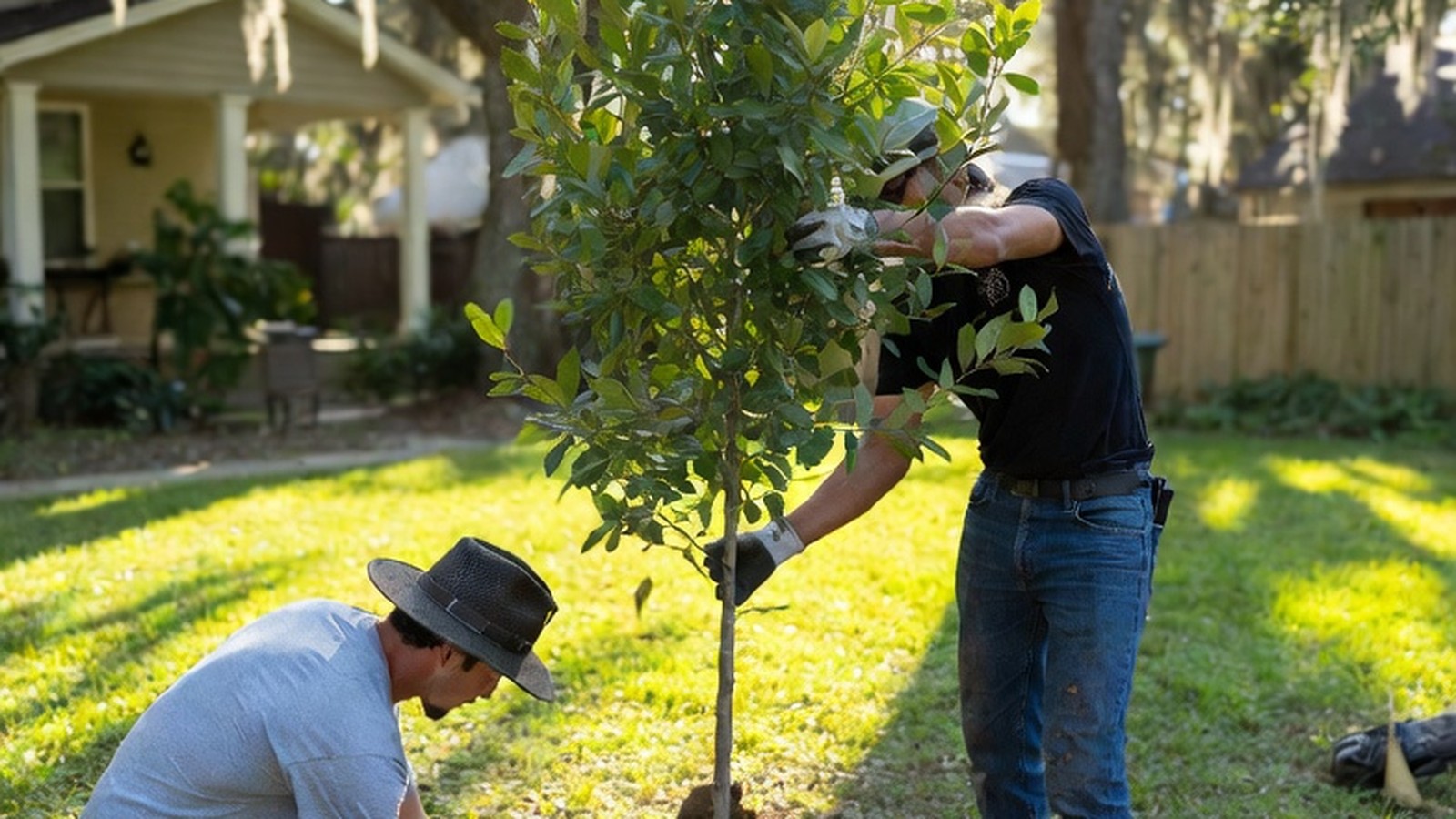
New trees (regardless of size at planting) establish root systems slowly. The general rule is one year of establishment per inch of trunk diameter at breast height. A 2-inch caliper tree needs approximately two years of careful post-planting support before it's drawing on the landscape like a fully established tree.
If you planted in spring or if a tree was planted in the past growing season, summer is when that establishment period gets tested.
The Water Problem: Understanding How New Trees Dry Out
A common misconception is that afternoon thunderstorms handle summer watering for new trees. The reality is more complicated:
The root ball is the limiting factor. A newly planted tree's roots are largely confined to the original root ball from the nursery container. That root ball (say, 24 inches in diameter) dries out faster than the surrounding soil and faster than rain can recharge it. Even after a significant thunderstorm that saturates the lawn, the root ball may be significantly drier than the surrounding soil within 48 hours.
Sandy soils drain quickly. North Florida's common sandy and sandy loam soils have excellent drainage, which means water moves through the root zone quickly. What's saturated this morning may be approaching dry by tomorrow afternoon.
Heat load matters. Ambient temperature, sun exposure, and wind all increase the evapotranspiration demand on a new tree. A tree planted in full sun with western afternoon exposure is losing water through its leaves faster than one planted in partial shade.
Watering Properly
Water the root ball, not just the lawn. Apply water directly over the root ball at the base of the tree. A sprinkler hitting the lawn nearby may not be delivering meaningful water to where the roots are.
Deep, infrequent watering beats frequent shallow watering. Apply 1-2 gallons per inch of trunk caliper at each watering, delivered slowly enough that it soaks in rather than running off. Let the root ball approach (but not reach) dry before watering again. This encourages root development downward and outward rather than keeping a perpetually moist surface.
Frequency in summer: For most newly planted trees in Tallahassee summer conditions, watering every 2-3 days is a reasonable starting point during extended dry periods (no significant rainfall in the past 48 hours). After significant rain events, skip the next watering cycle and check soil moisture before resuming.
Check soil moisture, not the calendar. Push a screwdriver or finger into the soil at the edge of the root ball (not the center). Moist but not saturated = good. Bone dry = needs water. Soggy = hold off.
Water timing: Early morning is best, reduces evaporation loss and fungal disease risk compared to evening watering.
Mulch Is Not Optional
A 3-4 inch ring of mulch over the root ball area (extending 2-3 feet from the trunk) is the single most effective thing you can do to help a new tree survive summer:
- Reduces soil temperature significantly (can be 10-15°F cooler than bare soil)
- Reduces evaporation from the root zone, extending the time between required watering
- Prevents compaction from foot traffic and rain impact
- Suppresses competing grass and weeds from the root zone
Correct mulch placement: Flat ring extending outward, NOT piled against the trunk. Mulch against the trunk traps moisture and promotes rot at the base. The trunk base should be visible.
Signs of Heat and Drought Stress
Watch for:
- Leaf wilting in afternoon, recovering overnight: early water stress, increase watering frequency
- Leaf wilting that doesn't recover overnight: more severe stress, water immediately and assess root ball moisture
- Leaf scorch (brown margins), heat or moisture stress; also check for reflected heat from pavement
- Leaf drop: significant stress response; tree is dropping leaves to reduce water demand
Some afternoon wilting is normal for newly planted trees during the hottest weather, even when watering is adequate. What's concerning is wilting that doesn't recover or progresses from day to day.
What Not to Do in Summer
Don't fertilize stressed trees. Fertilizer pushes new growth, which increases water demand. A tree that's struggling to maintain its existing leaves doesn't need encouragement to produce more. Wait until the tree is established and healthy before any fertilization.
Don't prune during establishment unless removing dead or damaged material. Pruning removes leaf area and stresses the tree. Wait until the tree has established.
Don't plant in the hottest months if avoidable. If you haven't planted yet, late September through early November is a better window, soil is still warm enough for root development, heat load drops significantly, and the tree has cooler weather to establish before summer returns. But if the tree is already in the ground, work with what you have.
When a Tree Isn't Going to Make It
Sometimes newly planted trees don't establish. Signs of failure:
- Wilting that progresses despite watering
- Leaves turning uniformly yellow or brown without seasonal reason
- No new growth after several weeks in active growing season
- Bark that's dry, cracking, or pulling away from the wood
If a tree doesn't appear to be establishing despite appropriate care, an assessment can determine whether the issue is water management, planting depth, root ball problems, soil conditions, or other factors.
Newly planted trees in Tallahassee? Call (850) 570-4074 or request a consultation online.