The Sweetgum Situation
Sweetgum (Liquidambar styraciflua) is one of North Florida's native hardwoods, common in mixed forest, along stream corridors, and widely present in residential yards and neighborhoods. It has genuine appeal: distinctive star-shaped leaves, excellent fall color that's unusual for North Florida, and a good canopy structure.
It also produces spiny seed balls (gumballs) in large quantities. These drop from fall through winter, create slip hazards on hardscapes, are painful underfoot on lawns, and are generally the main reason sweetgum generates more calls for removal than almost any other native tree.
The question for most property owners: manage and keep, or remove?
The Gumball Problem
A mature sweetgum can produce thousands of gumballs per season. Each is a woody, spiny sphere about 1-1.5 inches in diameter. They:
- Create serious slip hazards on decks, walkways, and driveways
- Are painful when stepped on barefoot on lawns
- Are difficult to rake: they don't bag cleanly and can clog mowers
- Persist for years on the ground if not collected
Fruitless sweetgum varieties: There are cultivated sweetgum varieties (Liquidambar styraciflua 'Rotundiloba' and others) that produce little to no fruit. If you're replacing a sweetgum and want to keep the ornamental value without the gumballs, planting a fruitless variety is an option. Existing trees cannot be converted to fruitless types.
Ethephon treatments: A plant growth regulator (ethephon) can be applied when trees are flowering in spring to reduce fruit set. Results are variable, it's not 100% effective, application timing is narrow, and it must be repeated each year. This is a management option, not a permanent solution. Consult with an arborist about whether this makes sense for a specific tree.
Gumball cleanup tools: Specialized lawn rollers, nut gatherers, and vacuum systems can make cleanup more manageable, but they're an ongoing maintenance commitment for as long as you keep the tree.
Other Sweetgum Drawbacks
Aggressive surface roots: Sweetgum develops significant surface roots as it matures. These interfere with mowing, create trip hazards, damage hardscapes, and limit what can be planted in the root zone.
Size: Sweetgum is a large tree, 60-75+ feet at maturity in appropriate conditions. It needs significant open space. Sweetgums planted in tight spots near structures are problematic for both roots and canopy.
Wildlife value (positive): Sweetgum is a native species that supports native wildlife. The seed balls are food for a range of bird species including goldfinches, pine siskins, and purple finches. This wildlife value is part of why some property owners keep them despite the maintenance burden.
When Sweetgum Removal Makes Sense
Removal is often the right call when:
- The tree is positioned where gumballs consistently fall on high-traffic hardscapes (walkways, driveways, decks, patios)
- Surface roots are causing hardscape damage or creating ongoing maintenance issues
- The tree is positioned too close to the house and will create conflicts as it grows
- The canopy or root system is already causing problems with structures
- The property owners want a lawn that's usable without constant cleanup
- The tree is in decline for other reasons
When to keep it:
- The tree is in a location where gumballs aren't a significant problem (away from hardscapes and lawn areas)
- The property values the wildlife benefit and fall color
- The tree is healthy and positioned appropriately
Sweetgum Removal: What's Involved
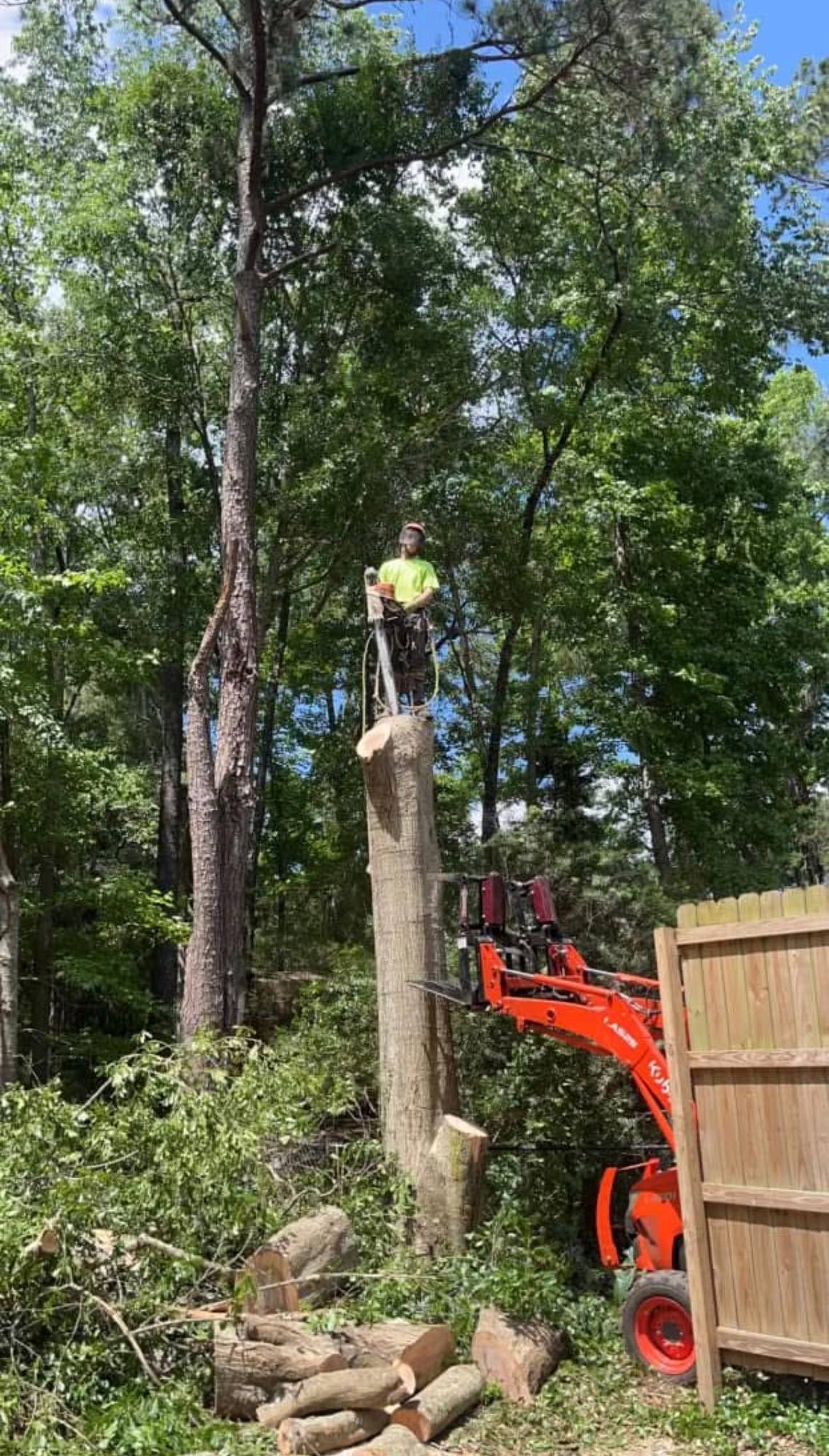
Sweetgum is a medium to large hardwood removal. The wood is dense and the trunk can be significant on older trees. The root system extends considerably from the trunk; stump grinding is recommended after removal to prevent the persistent surface roots from continuing to grow.
Sweetgum removal in Tallahassee? Call (850) 888-5603 or request an estimate online.