What Makes Tallahassee Different
Driving Miccosukee Road, Centerville Road, or Meridian Road in Tallahassee is a different experience than driving through most American cities. The live oaks forming tunnels over the road (some of them 200 years old) aren't just aesthetically striking. They're a defining feature of the city's character and a genuine ecological asset.
Tallahassee has more miles of canopy road than any other city in the country. That's not an accident. It reflects decades of decisions (by the city, by property owners, and by the arborists and tree crews who work on these trees) to protect and maintain something worth protecting.
We work on trees in this city every day. We think about the canopy a lot.
What Creates a Canopy Road
A true canopy road requires the right trees in the right locations, given enough time to grow together overhead. Tallahassee's canopy roads are dominated by live oaks (Quercus virginiana), a species uniquely suited to this role.
Live oaks are:
- Extremely long-lived (200+ years in the right conditions)
- Broadly spreading rather than upright (canopies easily span 80-100 feet)
- Semi-evergreen, providing year-round cover
- Deep-rooted enough to anchor against Florida's hurricanes (though not immune to wind damage)
- Naturally inclined to grow outward and form interlocking canopies with neighboring trees
The live oaks on Tallahassee's historic canopy roads were largely planted in the late 1800s and early 1900s, or are descendants of cleared native forests that were never fully removed. The trees on Miccosukee Road include specimens estimated at 200-300 years old.
You cannot replant a 200-year-old tree. The canopy roads we have are irreplaceable within any human planning horizon.
The Threats
Canopy roads face several ongoing stresses:
Development pressure. As properties along canopy roads are developed or redeveloped, construction equipment, grade changes, and impervious surface addition can damage root systems that extend well beyond individual lots. Trees weakened by construction damage decline over years, often visibly failing a decade after the event that caused the damage.
Utility conflicts. Power lines running under or through canopy road trees require regular trimming. When trimming is done poorly (topping, heavy removal on one side) the structural and aesthetic damage is significant and long-lasting.
Storm damage. North Florida's hurricane and tropical storm activity poses ongoing risk to canopy road trees. Large, old live oaks with decay or structural defects are more vulnerable than young, healthy specimens.
Invasive species and disease. Laurel wilt (spread by ambrosia beetles) threatens laurel oak and other Quercus species. While live oaks have shown more resistance than water oaks to some diseases, they're not immune to stress-related decline.
Soil compaction and grade changes. Decades of traffic and development adjacent to canopy road trees has compacted soils and, in some cases, raised grades, both of which compromise root function.
How the City Protects Them
Tallahassee has one of the more active urban forestry programs in Florida. The canopy road designation under city ordinance provides specific protections:
- Trees along designated canopy roads require permits for removal and significant trimming
- Development proposals affecting canopy road trees undergo review
- The city maintains a canopy roads management plan
Leon County has parallel protections for canopy roads in unincorporated areas.
These protections exist because the city has recognized what it would lose without them. Canopy roads directly affect property values, tourism, and quality of life, there's substantial economic value in the canopy, not just aesthetic value.
What Good Stewardship Looks Like
If you own property along or adjacent to a canopy road (or anywhere in Tallahassee with significant live oaks) good stewardship means:
Not topping. The ISA position on topping is unambiguous: it's harmful, accelerates decline, and produces structurally weak regrowth. On large, old live oaks, topping can be a death sentence.
Protecting root zones during construction. Before any construction or improvement project, establish protection zones for significant trees. Keep equipment, materials, and grade changes out of the critical root zone. This is both legally required for permitted trees and practically necessary if you want the tree to survive.
Proactive structural assessment. Old trees have old wood, some of it decayed, some of it with structural defects that aren't visible from the ground. A professional assessment of mature canopy road trees can identify issues that are manageable now, rather than discovering them when a branch fails.
Pruning for structure, not for clearance. The right clearance pruning removes specific conflicting branches in ways that preserve the tree's natural structure. The wrong approach (removing large amounts of wood from one side, making large cuts at stubs) causes lasting damage.
Why We Care About This
We work on trees in Tallahassee because it's our service area. But we also live here. The canopy is part of why Tallahassee is what it is.
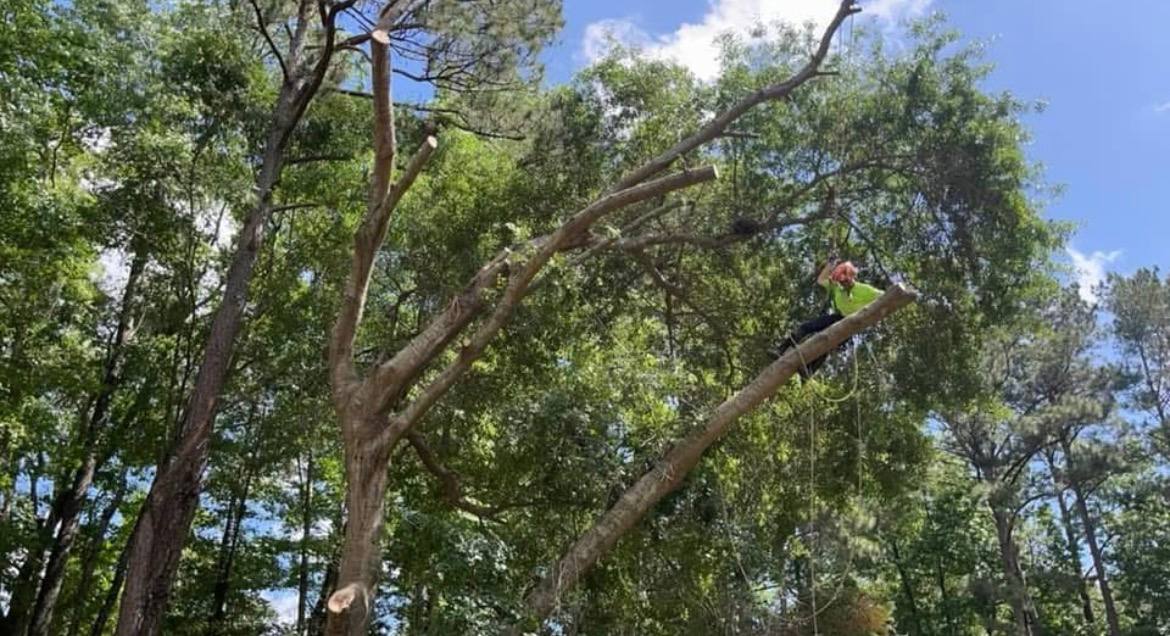
When we take on a pruning job on a 150-year-old live oak, we're aware of what it represents. We're not just moving wood. We make cuts that are right for the tree, not just convenient. We don't make promises we can't keep about how a tree will look afterward. And we tell customers honestly when a tree has problems that are worth addressing versus when something is structurally fine.
That's not a sales pitch. It's just how we approach this work.
Questions about a tree on your property in the Tallahassee area? Call (850) 570-4074 or request an assessment online.