The Worst Time to Figure This Out Is Right Now
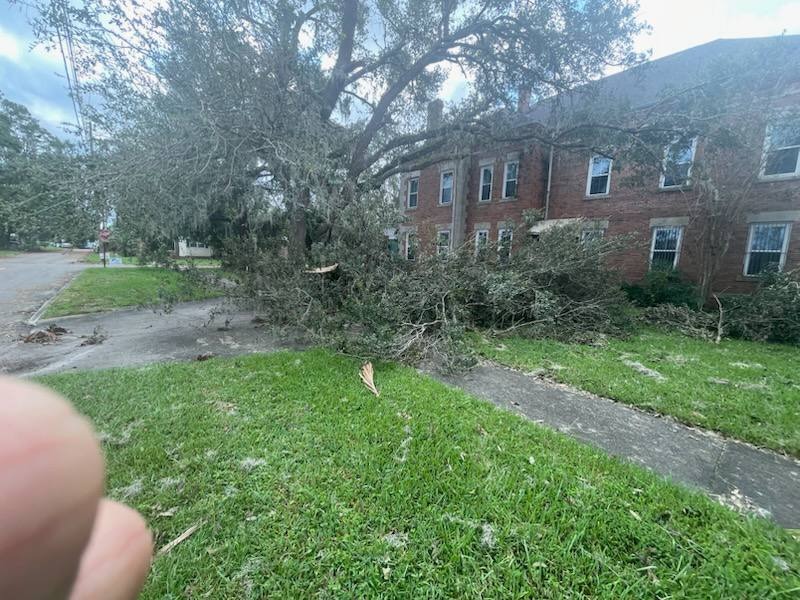
If you are reading this because a tree just fell on your house or landed on your car, here is what you need to do. Fast, in order.
If you are reading this before anything has happened, bookmark it. Tallahassee gets tropical storms, afternoon lightning events, and the occasional named hurricane that pushes through. Trees fall on houses here. Knowing the steps ahead of time means you don't have to think clearly when you're standing in your kitchen staring at a hole in your ceiling.
Step 1: Get Everyone Out From Under the Tree
Before anything else, do not stay near the area where the tree came down. This means:
- Get out of any room where the tree has breached the roof or walls.
- Do not go back in to grab belongings yet.
- Keep everyone, including pets, away from the impact zone.
The reason: a tree that has come down once is not done moving. The trunk may shift. The section lodged in your roof can slip further. Secondary branches can fall. Until a crew has assessed and stabilized the situation, the area under and around the impact is not safe to walk under.
If the tree is on a car: do not try to drive the car out. Do not lean into the car to get items from inside. A tree resting on a car can shift or slide when the car moves.
Step 2: Check for Gas Lines and Electrical Hazards
A falling tree can damage exterior gas lines or sever electrical service lines coming into your home.
If you smell gas: get everyone out immediately, go to the street, and call your gas company's emergency line (TECO/Peoples Gas: 877-832-6747). Do not re-enter until they clear it.
If the tree brought down power lines: treat every line on the ground as live, even if the power appears to be out in your neighborhood. Call 850-224-2166 (Tallahassee Utilities/TECO) and stay at least 30 feet back. Electricity can arc through wet grass and ground.
If you are not sure: turning off the main breaker at your electrical panel is a reasonable precaution if you can do it safely (the panel is typically outside or in a garage area away from the impact zone).
Step 3: Document Everything Before You Touch Anything
Your insurance claim depends on documentation. Before any cleanup begins:
- Take photos and video of the tree, the impact point, the damage to the structure, and the surrounding area.
- Photograph the car from multiple angles if a vehicle is involved.
- Do not move any debris, cut any branches, or allow anyone to begin clearing until you have thorough documentation.
This matters more than it sounds. Insurance adjusters work from the evidence you provide. A few minutes of thorough documentation can prevent disputes about what was damaged and how.
Step 4: Call Your Insurance Company
Call your homeowner's insurance carrier as soon as the safety and documentation steps are done. Most policies have 24-hour claims lines. Report the incident and get a claim number.
A few things to know about how tree-on-house insurance typically works:
- Damage to your structure (roof, walls, exterior) is typically covered under your homeowner's policy, subject to your deductible.
- Emergency tree removal that is necessary to prevent further damage is typically covered as well. Keep every receipt.
- The tree itself (removing it from your yard if it fell but didn't hit anything) may or may not be covered depending on your policy. Ask specifically.
- Fallen trees on a car are usually covered under comprehensive auto insurance, not homeowner's.
Your insurer will likely send an adjuster. They may also recommend or require you to use a specific contractor. You are generally not required to use their vendor for tree removal, you can choose your own licensed and insured company.
Step 5: Do NOT Try to Remove the Tree Yourself
We hear about this. Someone is dealing with a fallen tree on their roof and they decide to get up there with a chainsaw and start cutting.
Do not do this for two reasons.
First, a tree lodged in a roof is under load. When you cut a section free, the load redistributes, and the remaining sections can move suddenly and violently in a direction you are not expecting. This has injured people badly.
Second, every cut you make before the insurance adjuster sees the scene is a piece of evidence you are removing. Your documentation may show a tree through a roof. The adjuster who arrives two days later needs to see what actually happened.
The one exception: if a limb is actively blocking a gas meter or utility that needs to be accessed by an emergency responder, follow their instructions. Otherwise, hold off.
Step 6: Call a 24-Hour Tree Service
Reed Tree Service is available 24/7 for emergency calls in Tallahassee and North Florida. Call or text: (850) 570-4074.
When you call an emergency tree service, tell them:
- Whether the tree is on a structure or vehicle
- Whether there are any power lines involved
- Approximately how large the tree is
- Whether the roof or structure has been breached (so we know whether a crane is needed)
Emergency removal of a tree from a house often requires a crane or specialized rigging to lift sections off without causing additional damage to the roof. A crew that shows up with chainsaws and no rigging equipment can make the situation worse. Ask what equipment they are bringing before you confirm.
What the Emergency Removal Process Looks Like
When a professional crew arrives at a tree-on-house job, here is the sequence:
- The crew foreman assesses the load, where the tree is bearing, where it is stressed, what direction sections will move when cut.
- Rigging is set up to control each section as it is removed, rather than letting it drop onto the structure.
- For major sections on a roof, a crane may be positioned to lift the trunk off cleanly rather than cutting it in place.
- Once the tree is off the structure, the crew secures the damaged area with tarps to prevent additional weather damage until repairs can be made.
- Debris is cleared from the property. Note: debris hauling and stump grinding are quoted separately as add-ons, not included automatically.
The goal is to get the tree off the structure without making the existing damage worse, which takes different skill and equipment than a standard tree removal job.
Reed Tree Service: Available Day or Night in Tallahassee
Reed Tree Service has been handling emergency tree removal in Tallahassee and North Florida since 2016. We are fully licensed and insured, and we have the rigging equipment and crane access for jobs that require it.
When a tree falls on your property, speed matters, but so does doing it right. A crew that rushes the job and drops sections onto your roof causes a separate damage claim.
Call or text anytime: (850) 570-4074. We pick up for emergencies. You can also request an estimate online for non-emergency tree work.