Why Growth Rate Matters When Planting
When you plant a tree, you're making a multi-decade investment. Understanding the growth rate of what you're planting sets realistic expectations for when you'll have meaningful shade, how soon the tree will need professional maintenance, and how the tree will fit your property over time.
North Florida's warm climate, adequate rainfall, and long growing season produce faster growth than most of the country, but growth still varies dramatically by species.
Fast-Growing Species (3+ feet per year under good conditions)
Water oak (Quercus nigra): One of the fastest-growing oaks in the region. Can gain 3-5 feet per year in good conditions. Produces shade quickly, a planted sapling is a meaningful shade tree in 10 years. The tradeoff: shorter lifespan (50-75 years) and tendency to develop decay in mature specimens.
Sweetgum (Liquidambar styraciflua): Very fast, 3-4+ feet per year. Beautiful fall color (unusual in North Florida), but produces abundant spiky seed balls that many homeowners find troublesome. Not recommended for lawns or high-traffic areas.
Eastern cottonwood (Populus deltoides): Among the fastest trees in North Florida. Grows rapidly in moist conditions, but brittle wood and short lifespan make it a poor choice for most residential plantings.
Laurel oak (Quercus laurifolia): Fast-growing semi-evergreen oak, common in North Florida. Shorter-lived than live oak but produces canopy quickly.
Medium-Growing Species (1.5-3 feet per year)
Live oak (Quercus virginiana): 1.5-2 feet per year in good conditions. Slower than water oak, but the investment is extraordinary, live oaks are 400-600+ year trees. Planted today, they become defining landscape features in 20-30 years and landmark trees in 50-100.
Southern magnolia (Magnolia grandiflora): 1.5-2 feet per year. Evergreen, striking flower. A planted magnolia becomes a significant tree in 15-20 years.
Crape myrtle: 1.5-2+ feet per year (multi-trunk form). Very fast to establish as a flowering specimen. Multi-season interest.
Bald cypress (Taxodium distichum): 2-3 feet per year in moist conditions. Excellent long-term investment in appropriate sites.
Slow-Growing Species (Under 1.5 feet per year)
Longleaf pine (Pinus palustris): Notoriously slow-growing in the juvenile stage, spends years as a grass-like seedling before putting on height. Once established, growth accelerates, but longleaf is not a quick-gratification tree. Worth planting for its ecology and longevity, not speed.
Practical Note
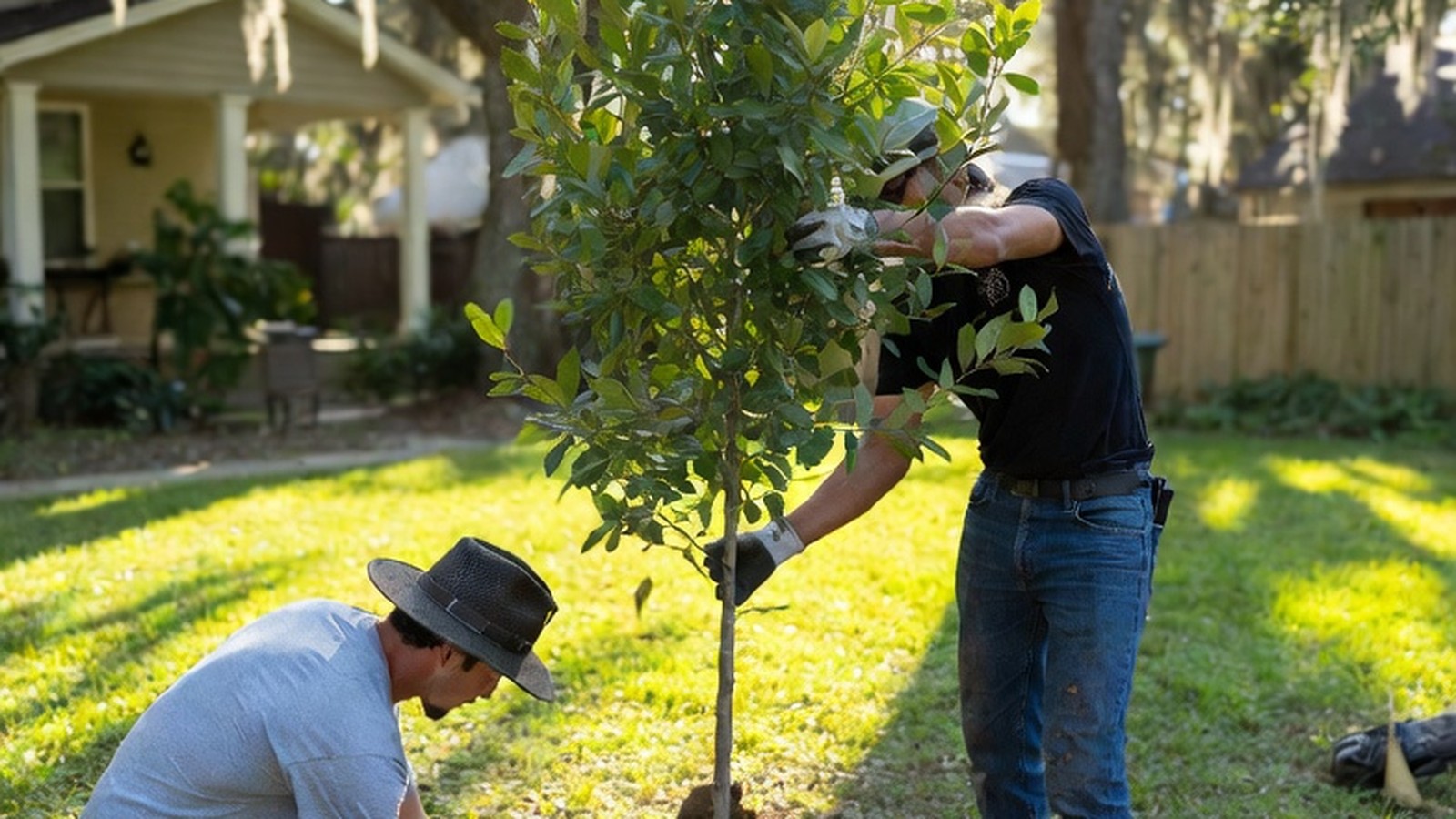
Growth rates are highly site-dependent. A live oak in excellent soil with adequate water may outperform the averages; the same species in compacted, poorly-drained soil will underperform. Proper planting technique (correct depth, adequate watering the first 2-3 years, appropriate mulching) is as important as species selection for achieving good growth rates.
Help selecting and planting the right trees for your property? Call (850) 570-4074 or request a consultation online.