A Question We Get Constantly
"My neighbor's oak is dropping limbs in my yard. Can I make them take it down?"
"My tree is leaning over the fence. Am I responsible if something happens?"
"Roots from the tree next door are coming under my fence and lifting my pavers. What can I do?"
These are among the most common calls we get, and the answers depend on Florida law, what's actually going on with the tree, and what you want to do about it.
The Basic Rule in Florida
Under Florida law, you have the right to trim branches and roots that extend over the property line onto your property (up to the property line) as long as that trimming doesn't cause the tree to die or severely damage it. This is sometimes called the "self-help" rule.
What this means practically: if your neighbor's branches are hanging into your yard, you can hire a tree service to cut them back to the property line. You generally don't need your neighbor's permission to do this.
What this doesn't mean:
- You can't enter your neighbor's property to do the trimming without their permission
- You can't cut back so aggressively that you kill the tree
- You're not entitled to have your neighbor pay for the trimming (in most cases, see negligence below)
- You can't demand the neighbor remove the entire tree just because branches overhang
Who Owns the Tree?
The tree belongs to whoever owns the land it's rooted in. If the trunk is entirely on your neighbor's side of the property line, it's their tree, even if major branches extend over your property. If the trunk straddles the property line, it's legally a "boundary tree" owned jointly by both neighbors, and neither party can remove or significantly alter it without the other's consent.
When there's ambiguity about where the property line runs relative to the trunk, a survey is the definitive answer.
Is the Neighbor Responsible for Damage?
This is the key question most people actually want answered. The general rule in Florida: a property owner isn't automatically liable for damage caused by a healthy tree that falls or drops limbs.
Where liability attaches: If the tree was demonstrably dead, diseased, or hazardous, and the neighbor had notice of the condition (either actually knew, or a reasonable person should have known), they may be liable for resulting damage.
"Notice" is the key word. If you've sent your neighbor a written letter (keep a copy) saying "your tree is dead/diseased and I'm concerned about the risk to my property," and they take no action, and the tree then damages your property, you're in a much stronger legal position than if you never said anything and just expected them to act.
Practical advice: If you believe a neighbor's tree is hazardous, document it and notify them in writing. Send a certified letter if you want the strongest documentation. This creates the notice element that matters for liability.
Roots Under the Property Line
Root encroachment is its own category. Florida courts have generally held that you can sever encroaching roots at the property line (the same self-help rule as branches). However, if severing the roots would kill or seriously damage the tree, this gets into more complicated legal territory.
Root damage to structures (foundations, pavers, pipes) is treated differently. If a neighbor's tree roots have damaged your property, consult a property attorney, this is a factual and legal question specific to your situation.
What We Do and Don't Do
When you hire us to trim branches overhanging your property from a neighbor's tree:
- We work on your side of the property line only
- We make cuts that are structurally appropriate for the tree's health, we don't top or recklessly cut in ways that damage the tree
- We haul away the trimmed material
We won't: Enter a neighbor's property without their permission. Make cuts that would likely kill or severely damage the tree (this creates liability for you).
If you want work done on the neighbor's side of the property line, you need their cooperation. Many neighbors are willing to coordinate, especially if you're clear that you're simply managing the shared situation rather than being aggressive about it.
When the Situation Is a Hazard
If a neighbor's tree has visibly dead or failed structural elements hanging over your property, structure, or vehicles, the stakes are higher. You can:
- Notify the neighbor in writing about the specific hazard
- Document with photos and dates
- If they take no action and the hazard is severe, contact Code Enforcement for the City of Tallahassee or Leon County, depending on where you are, they may be able to compel action on a documented hazard
For truly urgent situations (a large dead limb directly over your home) this is worth escalating faster rather than waiting.
Our Role in Neighbor Situations
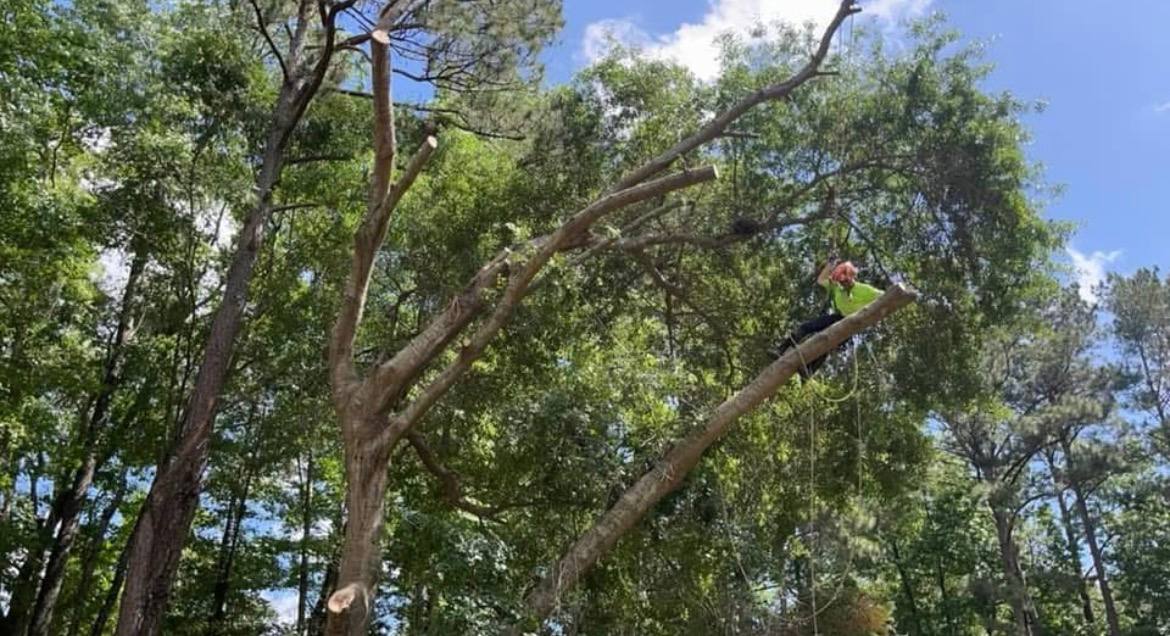
We regularly do work that involves property lines, trimming from one side, documenting tree condition, and advising homeowners on what they're actually dealing with. A professional assessment gives you accurate information to present to a neighbor or include in any written notice.
If you have a tree situation involving a property line and aren't sure what you can or should do, call us. We'll tell you what we're looking at and what your practical options are.
Call (850) 570-4074 or request an assessment online. We serve Tallahassee, Leon County, and all of North Florida and South Georgia.
Note: This post is informational and does not constitute legal advice. For legal questions about property rights and liability, consult a Florida property attorney.