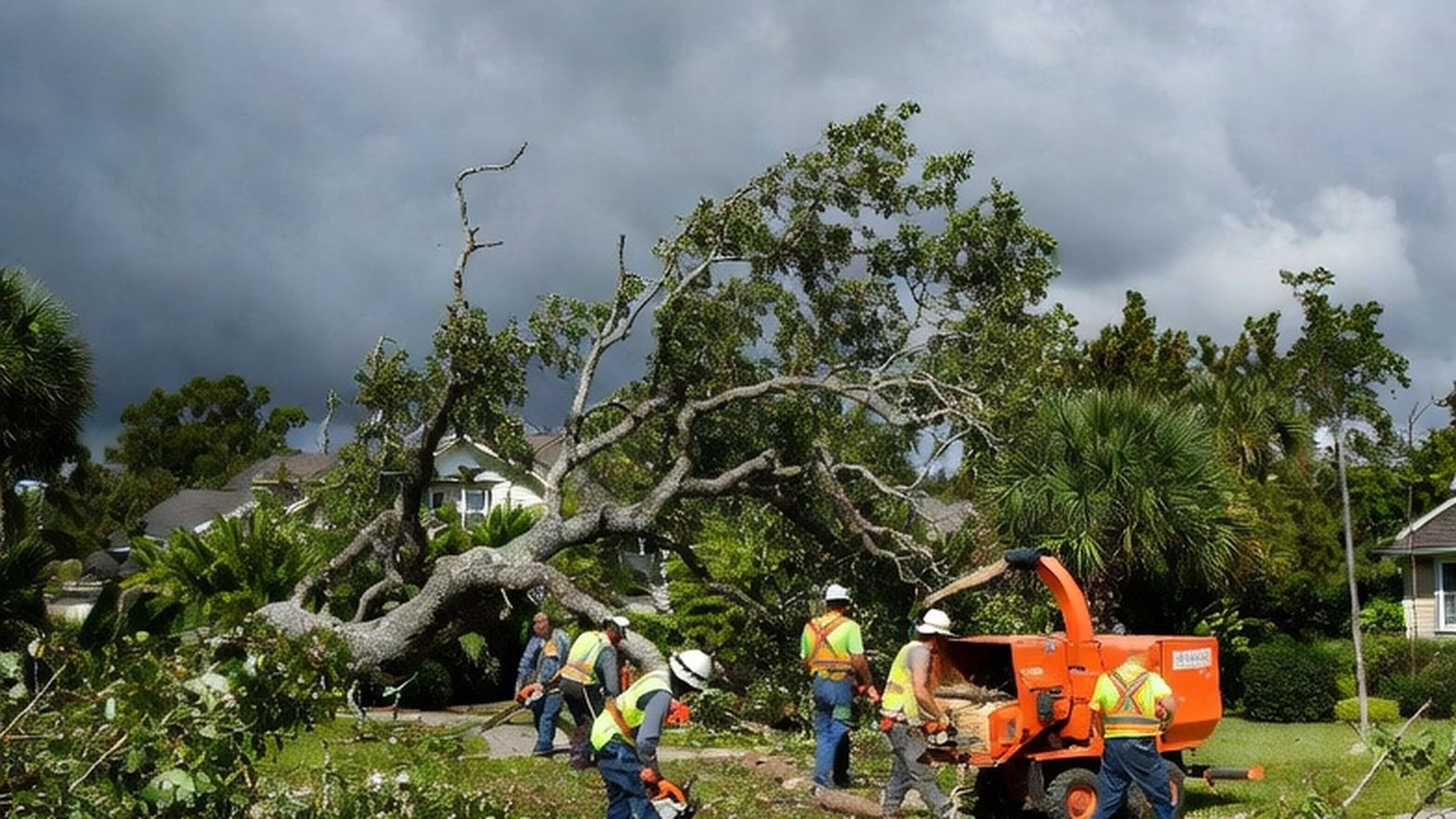
A Tree Just Hit Your House. Here's the Order of Operations.
After a storm drops a tree on your structure, emotions run high and decisions get made fast, often in the wrong order. Here's what to do, sequentially.
1. Safety first. Don't go under the tree or into the damaged area until you're certain it's structurally stable. If the tree is still resting on the roof or walls, sections can shift. If any lines are down nearby, stay away, downed lines aren't always visible.
2. Call your insurance company before calling anyone to remove the tree. This is the step people most commonly skip. Insurance adjusters need to see the damage as it occurred. If you call a removal company first and the tree gets cut up and hauled away before an adjuster sees it, you've potentially complicated your claim. Call your insurer, report the damage, and ask how quickly an adjuster can be dispatched.
3. Document everything before anything moves. Photos and video from multiple angles. The whole tree, the root ball or break point, where it landed, every point of contact with your structure, the damage to the structure. More is better. Cloud-sync these immediately.
4. Protect the structure from further damage. Florida homeowners have a legal obligation to mitigate ongoing damage. If rain is coming in through a hole in the roof, tarp it. If a window is broken, board it. Document these protective measures too, they're generally reimbursable. Keep receipts for any emergency materials.
5. Then call a tree service. Once the adjuster has been out (or given you the green light), you can proceed with removal.
What Florida Homeowners Insurance Typically Covers
Homeowners insurance in Florida generally covers:
Damage to your structure. If a tree from your yard (or your neighbor's yard) falls and damages your home, fence, or other covered structure, the damage to the structure is typically covered under the "dwelling" portion of your policy, minus your deductible. This applies regardless of whose tree it was.
Removal of the tree from the structure. If the tree is resting on a covered structure, removal of that tree (or the portion of it in contact with the structure) is typically covered. The limit varies by policy, often $500–$1,000 per tree.
What's usually NOT covered:
- Removal of trees that fell but didn't hit a structure (just fell in the yard)
- Damage to the tree itself
- Removal of hazard trees that haven't fallen yet
- Damage from trees that were obviously dead or diseased before the storm (insurers may argue negligence)
Every policy is different. Read your declarations page. If you're unsure what your policy covers, call your agent before the storm season starts, not during it.
The Neighbor's Tree Question
A common situation: your neighbor's tree falls on your property and damages your fence or shed. Who pays?
In Florida, your homeowner's insurance generally covers the damage to your property regardless of where the tree came from, you file on your own policy. Whether you can recover from your neighbor's liability coverage depends on whether the tree was clearly dead or hazardous and whether the neighbor knew about it. If they had no notice of a problem, they're generally not liable. If you sent them a written notice about a hazard tree months ago and have documentation, that's a different situation.
Consult your insurance agent on specifics. The practical answer for most people: file with your own insurance, let them sort out subrogation if applicable.
What to Expect From the Adjuster
When the adjuster arrives, show them everything, every point of contact between the tree and the structure, any secondary damage (gutters, HVAC unit, fencing). Ask them specifically what the claim will cover before they leave. Get their name, the claim number, and the contact info for the claims department in writing.
If the initial settlement offer seems low, you can:
- Request a re-inspection
- Hire a public adjuster (they work on commission from the settlement, worthwhile for large claims)
- Invoke your policy's appraisal clause if there's a dispute about the value of the damage
Don't sign anything releasing the insurer from further claims until repairs are complete and you're satisfied with the outcome.
Estimates and Documentation for Your Claim
When you need a tree removal estimate for insurance purposes, the estimate needs to itemize:
- The number and approximate size of trees/sections to be removed
- Whether any equipment (crane, bucket truck) is required
- Debris disposal method and whether stump grinding is included
We provide detailed written estimates that work for insurance documentation. If your insurer wants specific information formatted a certain way, let us know, we've done this enough to know what adjusters need.
Preventive Documentation: Before the Storm
If you want to protect yourself ahead of storm season:
Photograph your property now. Document the condition of your large trees and your structures. Dated photos establish baseline condition and show what was there before a storm. This matters if an insurer ever tries to claim pre-existing damage.
Get written evaluations of hazard trees. If a certified arborist evaluates a tree as healthy and the tree later fails in a storm, that documentation supports your claim. If a hazard tree is identified and you address it, that demonstrates you were not negligent.
We can do property evaluations and provide written assessments of tree condition. This isn't just good risk management, it's documentation that protects you.
We Work With Storm Damage Regularly
After significant storm events in the Tallahassee area, we handle emergency removals, roof-load removals, and post-storm debris cleanup throughout Leon County and the surrounding area. We also serve South Georgia after hurricane-path storms and severe weather events.
If you're in the middle of a storm damage situation right now, call us first, we'll help you think through the order of operations.
Call (850) 570-4074 for emergency storm damage response and removal estimates throughout Tallahassee, North Florida, and South Georgia. Request an estimate online, photos help us assess and respond faster.