Why Trees Matter for Wildlife
A single large native oak supports hundreds of insect species, which in turn support birds, bats, and other insectivores. The entomologist Doug Tallamy's research has documented that native oaks support over 500 species of caterpillars and butterflies. Non-native ornamentals support a fraction of that.
In North Florida, the diversity of native tree species is remarkable, and many of them are excellent yard trees that also happen to function as biodiversity engines. Here's what to plant if wildlife value is a priority.
The Oaks: Foundation of North Florida's Food Web
Live Oak (Quercus virginiana): The single highest-wildlife-value tree for the region. Supports hundreds of insect species, provides year-round evergreen cover for birds, produces acorns that are a critical food source for deer, squirrels, woodpeckers, jays, and many other species. Extremely long-lived, a tree planted today is a wildlife asset for centuries. The most universally recommended choice.
Water Oak (Quercus nigra): Deciduous, fast-growing, prolific acorn producer. High wildlife value. The caution: it's shorter-lived and prone to decay at the center, making it a better choice for open areas than near structures.
Laurel Oak (Quercus laurifolia): Similar wildlife profile to water oak, common in North Florida hammocks and residential areas.
For any oak, plant where it can reach maturity, give it room. A crowded oak in a too-small space never reaches its wildlife potential.
Fruiting Trees for Birds
American Holly (Ilex opaca): Native, evergreen, produces red berries in winter when food is scarce. Major food source for cedar waxwings, mockingbirds, bluebirds, and many other birds. Dioecious, needs male and female trees for berry production. Grows 20-40 feet.
Persimmon (Diospyros virginiana): Native, produces fruit that sustains birds and mammals through fall and winter. Tolerant of poor, sandy soils. A tough, low-maintenance native that punches above its weight for wildlife.
Dahoon Holly (Ilex cassine): Native Florida holly, tolerates wet areas better than American holly. Dense red berry clusters are valuable winter bird food.
Eastern Red Cedar (Juniperus virginiana): Dense evergreen with small blue berries (technically cones) that cedar waxwings actively seek. Also provides excellent nesting and roosting cover. One of the most wildlife-friendly conifers for the region.
Cavity-Nesting Trees
Dead and dying trees (snags) are extraordinarily valuable for cavity-nesting birds: woodpeckers, owls, bluebirds, wood ducks, and Carolina wrens all depend on natural cavities. If you have a dead tree in a safe location (away from structures and paths) consider leaving it as wildlife habitat rather than removing it.
For the wildlife-minded homeowner: not every dead tree is a threat. A dead tree in an open area of your yard supports more wildlife as a snag than it would as mulch.
Pollen and Insect Resources
Longleaf Pine (Pinus palustris): The foundational tree of North Florida's native ecosystem. Supports multiple specialist insect species and provides critical habitat for the red-cockaded woodpecker (federally threatened). Longleaf pine restoration is an active conservation priority in the region. Slow to establish, but once past the grass stage (3-5 years), grows steadily. A meaningful ecological choice.
Sweetbay Magnolia (Magnolia virginiana): Native, semi-evergreen, sweetly fragrant flowers. Supports specialist moths and butterflies; berries eaten by birds.
Beautyberry (Callicarpa americana): Technically a shrub, but produces vivid purple berries in late summer that birds eagerly consume. Native, low-maintenance, and striking in the landscape.
Planting Principles for Wildlife Yards
Native species outperform non-native for wildlife support, typically by large margins. A standard Bradford pear supports almost no insects; a native wild plum supports dozens. Choose natives where you can.
Diversity beats monoculture. A yard with 5 species of native trees supports more wildlife than the same yard with 5 specimens of one species. Mix species that provide different resources at different times.
Layers matter. Natural habitats have structure: ground layer, shrub layer, understory, overstory. A yard that replicates these layers (even roughly) is more wildlife-friendly than a traditional lawn-and-tree combination.
Leave some messiness. Leaf litter, brush piles, and snags provide habitat. A perfectly maintained yard is largely sterile. Small concessions to natural structure make a real difference.
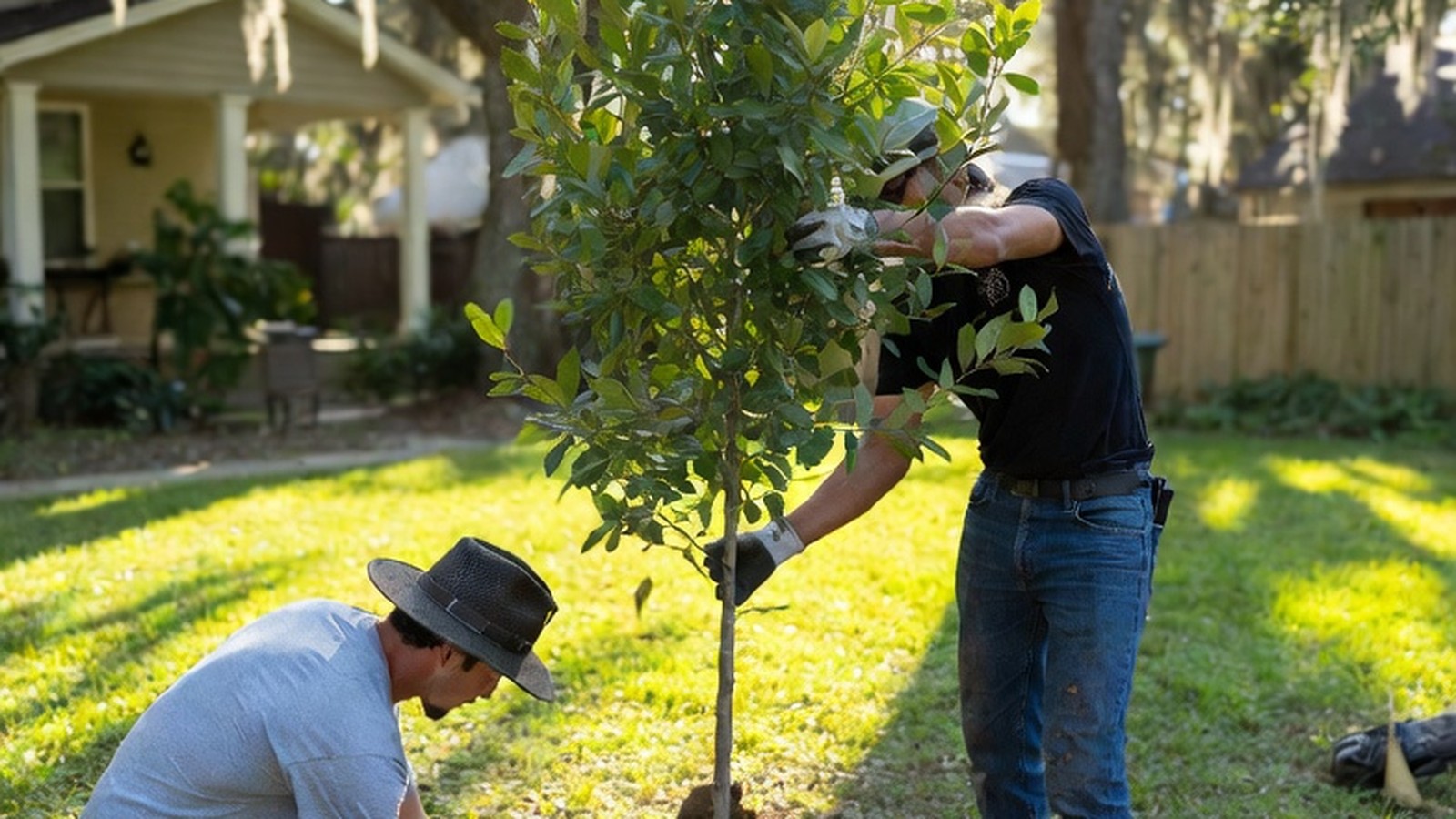
Interested in planting wildlife-supporting trees in the Tallahassee area? Call (850) 570-4074 or request a planting estimate online.