
Most New Tree Deaths Are Watering Failures
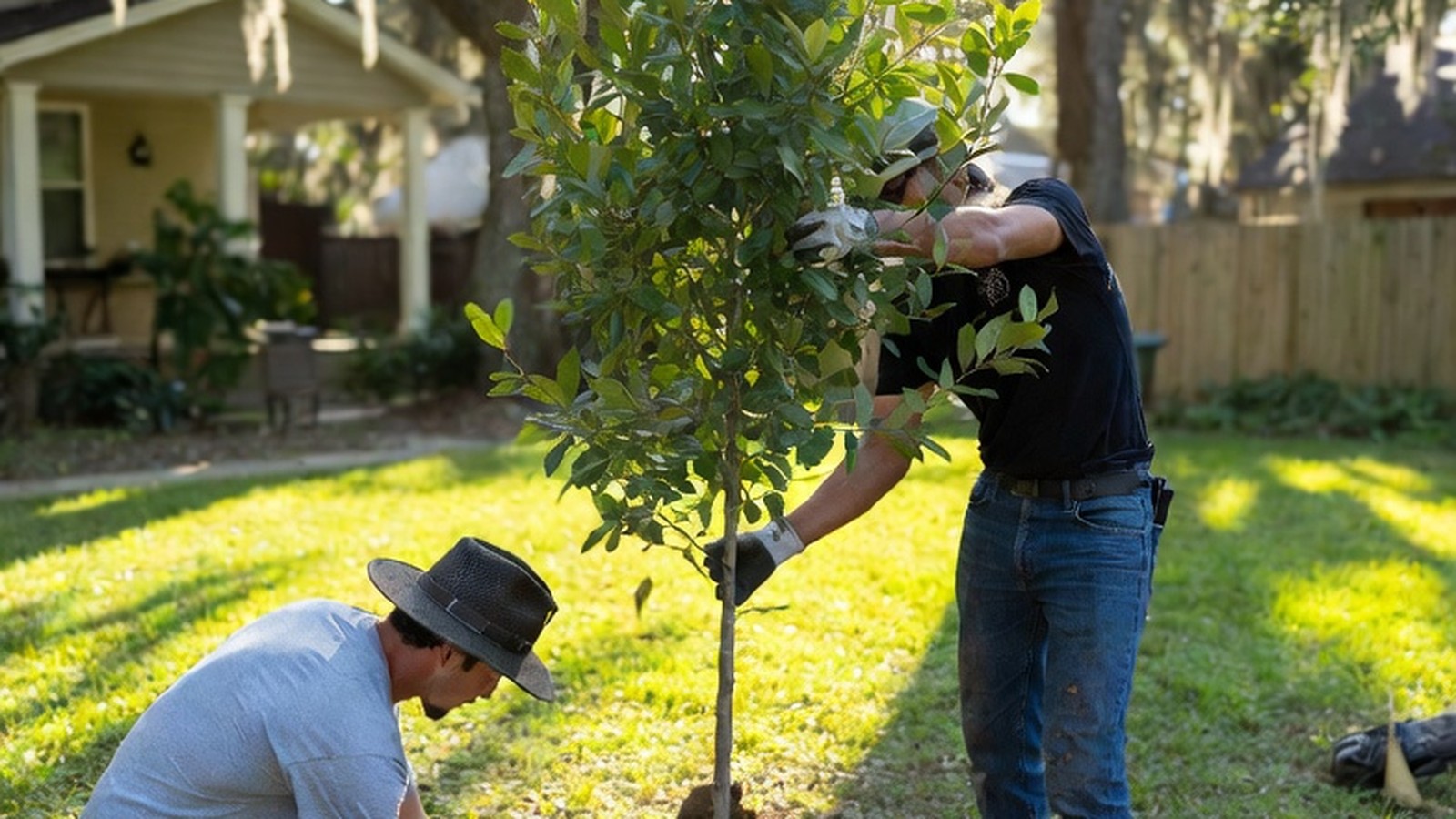
Tree establishment is the most vulnerable phase of a tree's life. A tree that will grow for 50 years and never need supplemental irrigation still needs careful watering for its first two growing seasons while it develops a root system capable of supplying the whole tree.
In North Florida's sandy, well-drained soils, this is particularly true. Water moves through the root zone quickly. The wet season helps, but the dry season (roughly October through May) can stress a newly planted tree enough to cause failure, sometimes subtly, with gradual decline over 2–3 years.
The First 2 Weeks: Critical Establishment
The two weeks immediately after planting are the highest-risk period. The tree has been removed from its growing environment, its root ball is small relative to its canopy, and it has no time yet to extend roots into the surrounding soil.
Watering protocol for weeks 1–2:
- Water deeply every 2–3 days in warm weather; every 3–5 days in cool weather
- Water the root ball directly (the area within a foot or two of the trunk) not the surrounding soil at this stage
- A 5-gallon slow drip takes about 5 minutes to deliver and gets water to the root zone without runoff
A slow drip at the base of the tree is significantly more effective than overhead sprinklers during this phase.
Months 1–3: Root Extension Phase
The tree is beginning to extend roots outward into the surrounding soil. The root zone expands, but it's still limited compared to the canopy's water demand.
What to do:
- Reduce frequency slightly: every 3–4 days in dry weather (May–October), every 5–7 days in cooler, wetter conditions
- Begin watering slightly wider than just the root ball, out to the drip line (roughly where the canopy ends)
- Watch the tree for drought stress signals: wilting during the heat of the day is normal; wilting that doesn't recover by evening means the tree needs water
If you're planting in summer (June–August, which we generally discourage but sometimes can't avoid), maintain the Week 1–2 protocol for longer before backing off.
The Wet Season Adjustment
During Tallahassee's wet season (roughly June through September), natural rainfall may handle much of the watering work, but don't assume this. A week of afternoon thunderstorms doesn't mean a newly planted tree has been adequately watered.
Check: After a rain, dig down 4–6 inches near the root ball. If the soil is moist at that depth, the tree got enough. If it's still dry at 4 inches down, supplement with irrigation.
Sandy soils drain fast enough that even heavy rain may not penetrate deeply if the surface crust is dry or the rain was brief.
The Dry Season: Your Biggest Risk
October through May is when North Florida gets most of its drought periods. This is the season that kills more new trees than summer heat.
Dry season protocol:
- Water deeply every 5–7 days if there's been no significant rain
- Don't let new trees go more than 2 weeks without water during the first two growing seasons
- Mulching the root zone to 3–4 inch depth (keeping mulch away from the trunk) dramatically reduces moisture loss
How to Tell If You're Under-Watering
Early signs of water stress in newly planted trees:
- Leaf curl or wilting that doesn't recover by evening
- Yellowing leaves (can also indicate overwatering or nutrient issues, see below)
- Premature leaf drop
- New growth that emerges and then dies back quickly
How to Tell If You're Over-Watering
Yes, this is possible, especially in heavy clay areas of Leon County. Over-watered trees show:
- Yellowing leaves that don't respond to additional water
- Soggy soil that doesn't drain between waterings
- Root rot smell near the base
- New growth that looks small and pale
In sandy soils, overwatering is less common than underwatering. In lower areas with clay, it's a real risk.
The Mulch Factor
Mulching newly planted trees is as important as watering. A 3–4 inch layer of wood chips or bark mulch over the root zone:
- Reduces surface evaporation dramatically
- Moderates soil temperature
- Reduces weed competition for water
- Improves soil structure over time
Avoid: Piling mulch against the trunk (the "mulch volcano"). Mulch should be kept back 4–6 inches from the trunk to prevent bark decay.
When Can You Stop Supplemental Watering?
A tree is considered established when its root system has extended far enough into the surrounding soil to supply the tree's water needs without supplemental irrigation.
General timeframe for North Florida:
- Small trees (under 2-inch caliper at planting): 1 growing season
- Medium trees (2–4-inch caliper): 2–3 growing seasons
- Large trees (4+ inch caliper): 3+ growing seasons
This is why fall planting is often recommended, a fall-planted tree gets a full winter and spring to extend roots before facing its first summer without being brand-new.
When We Plant, We Talk Through This With You
Tree planting without clear watering instruction is a setup for failure. When we plant for you, we walk through the specific watering schedule for the species and size, and we talk through what signs to watch for and when to call us if something doesn't look right.
We plant trees throughout Tallahassee, North Florida, and South Georgia. Call (850) 570-4074 or request an estimate online. We'll get the right tree in the right place and make sure it survives.