What Crown Cleaning Is
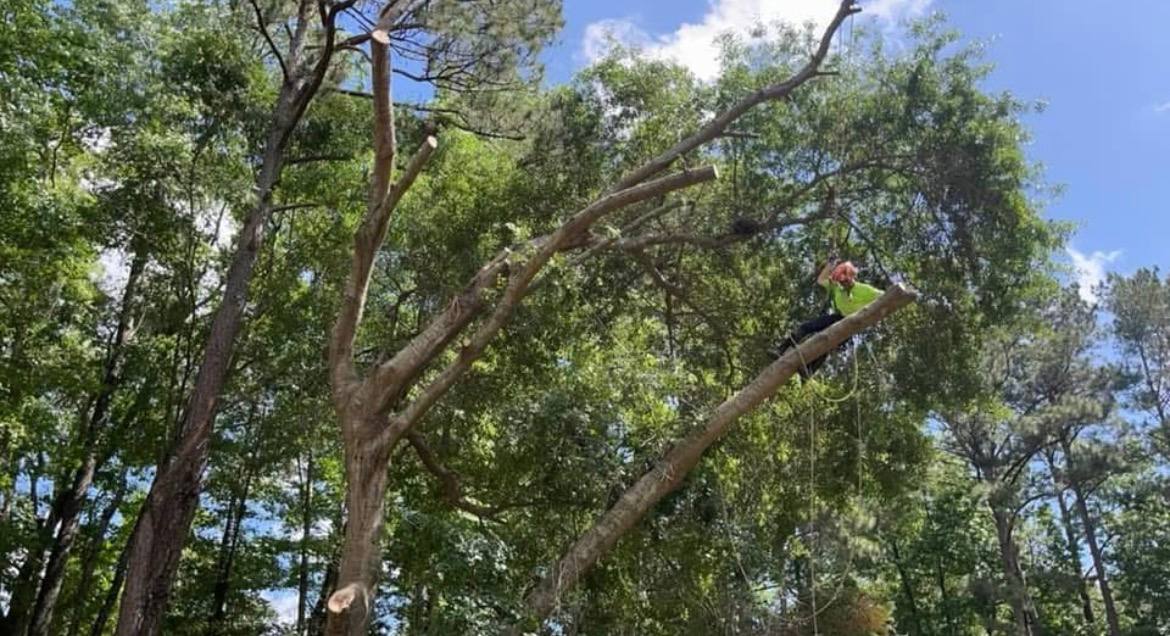
Crown cleaning is the selective removal of specific categories of branches from within a tree's canopy:
- Dead and dying branches: Branches that have died, are in active decline, or show signs of imminent failure
- Diseased branches: Branches with disease, pest damage, or decay that risks spread to the rest of the tree
- Crossing and rubbing branches: Branches growing in directions that cause contact with other branches, the rubbing creates wound tissue and potential disease entry points
- Weakly attached branches: Branches with acute attachment angles, included bark, or structurally weak attachment at the trunk or major scaffold limb
Crown cleaning does not change the overall size or shape of the tree. It removes problem material from within the existing canopy structure.
How Much Deadwood Is Normal?
Some deadwood in a tree's canopy is normal and expected. Trees shed branches as a natural process, lower branches that get shaded out die back, and minor interior branches die throughout a tree's life.
What's not normal:
- Significant deadwood in the upper canopy: dying back from the top suggests systemic stress (root problems, disease, bark beetles in pines)
- Dead scaffold limbs: major structural branches that have died indicate serious problems
- Rapid increase in deadwood over 1-2 years, a change in condition, not steady-state normal
For North Florida live oaks and water oaks, some interior dead twig material is always present. What matters is the quantity, location, and whether it represents a change from prior condition.
Why It Matters
Safety. Dead branches fall. A dead limb in the canopy (particularly on a tree over a structure, driveway, or pedestrian area) is a falling hazard. Dead wood loses structural integrity over time and becomes unpredictable.
Tree health. Diseased and dying branches can harbor pathogens and pests that spread to healthy tissue. Removing them reduces the infection reservoir.
Structural improvement. Crossing and rubbing branches create chronic wound tissue at contact points. Removing them early prevents the wound from developing into a disease entry point.
Appearance. A crown-cleaned tree looks more open, structured, and cared-for than one with accumulated dead material throughout.
How Often Is Crown Cleaning Needed?
For most mature landscape trees in North Florida (live oaks, water oaks, laurel oaks, southern magnolias) a crown cleaning every 2-4 years is a reasonable maintenance cycle.
Trees under stress (drought, root disturbance, disease) accumulate deadwood faster and may need attention more frequently.
Young trees in the early establishment period don't typically need crown cleaning, formative pruning for structure is more appropriate early in a tree's life.
What Crown Cleaning Is Not
Crown thinning (reducing overall canopy density by removing live branches) is different from crown cleaning. Thinning changes the canopy's density and wind resistance. Crown cleaning removes only dead and problem material.
Crown reduction (reducing the overall size of the canopy) is also different. Proper crown reduction follows specific pruning techniques that maintain tree structure. Crown cleaning doesn't reduce canopy size.
Topping (cutting branches back to stubs regardless of branch structure) is not crown cleaning and should not be used on any tree. See our tree topping guide.
Crown cleaning for your Tallahassee trees? Call (850) 570-4074 or request an estimate online.