

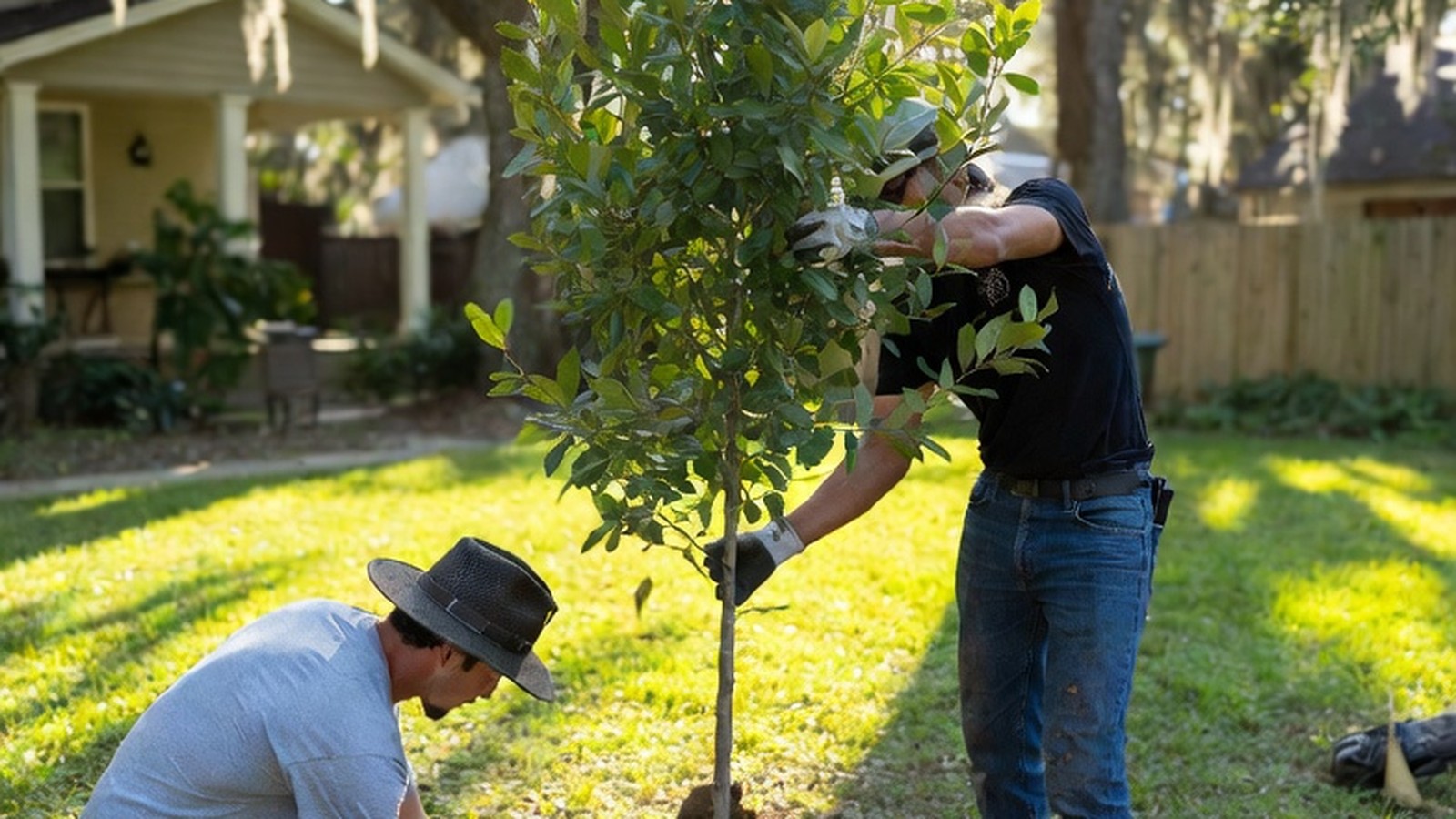
The Best Planting Window
In North Florida, the optimal planting period for most trees is October through February. This is the opposite of what many gardeners expect, particularly those who moved here from northern climates where spring is planting season.
Here's why it works this way, and how to take advantage of it.
Why Fall and Winter Work in North Florida
Root establishment without canopy stress. When you plant a tree in fall or early winter, the tree's above-ground growth is slowed or dormant, but the roots continue growing in the soil. This means the root system establishes and expands during the cooler months, and by the time spring comes and the tree leafs out with full demand for water and nutrients, it has significantly more root system to draw from.
Mild temperatures reduce transplant stress. North Florida winters are mild compared to most of the country. Soil temperatures rarely drop below 40°F, and roots continue active growth well into winter. There's no freeze-kill risk for established nursery stock in most years.
Lower water demand. A dormant or newly planted tree in December requires far less irrigation than the same tree planted in May and immediately faced with North Florida's summer heat and humidity.
Less heat stress during establishment. The most dangerous period for a newly planted tree is the first summer. Planting in fall gives the root system a 3-5 month establishment period before facing peak summer temperatures.
What to Plant in Fall and Winter
Deciduous native trees are particularly well-suited to fall planting:
- Red maple, sweetbay magnolia, swamp chestnut oak, plant while dormant
- Fringe tree, native cherry, native plum
Broadleaf evergreens: southern magnolia, live oak, wax myrtle, can be planted fall through early spring. They're not fully dormant but still benefit from the cooler establishment window.
Avoid planting tropical species (palms, certain tropical ornamentals) in winter, they genuinely are cold-sensitive and need warm soil for establishment.
How to Plant Correctly
Correct planting technique matters more than timing, but timing + technique is the combination that succeeds consistently. See our tree planting guide for full details. The summary:
- Dig wide, not deep. 2-3 times the root ball width, no deeper than the root ball height.
- Set the root flare at grade. The flare where trunk meets roots should be at or slightly above soil level. Never bury it.
- No amendments in the backfill. Use the native soil, amendments create a condition change at the hole edge that can limit root growth beyond the planting hole.
- Mulch 3-4 inches, keep away from the trunk. Mulch over the root zone conserves moisture and moderates temperature. Keep it off the trunk to prevent rot.
- Water consistently through the first year. Even in winter, a newly planted tree needs periodic irrigation in dry stretches.
First-Summer Watering Is Critical
Even with a fall/winter planting advantage, the first summer in the ground is still a critical period. North Florida summers are hot and dry, with periods of drought common between rain events. A tree planted in November that thrived all winter can fail in its first August if watering lapses.
Plan for active irrigation (typically every 5-7 days in the absence of significant rainfall) through the first summer after planting.
Planning to plant a tree this fall on your Tallahassee-area property? Call (850) 570-4074 or request a planting consultation online.