Fruit Trees in North Florida
North Florida's climate supports a good range of fruiting trees and shrubs, we're in USDA Zone 8b/9a, which means mild winters, hot humid summers, and the ability to grow things that can't survive northern climates while also excluding true tropicals.
Here's what grows well, what it needs, and when tree service is relevant.
Satsuma Mandarin (Citrus unshiu)
The most cold-hardy citrus, satsumas are widely grown throughout North Florida and South Georgia. They reliably fruit in the Tallahassee area when given appropriate cold protection during the occasional hard freeze.
Care: Sun, good drainage, regular fertilization during the growing season. Protect during freezes below 22°F, wrapping small trees or using frost cloth. See our freeze damage guide if cold damage occurs.
Pruning: Remove crossing branches, dead wood, and suckers below the graft union annually. Light shaping is fine; heavy reduction limits fruiting. This is typically homeowner-manageable on young trees.
When to call: Large, mature satsumas with dead scaffold limbs, trees that have frozen back significantly and need restorative pruning, or trees growing into structures.
Fig (Ficus carica)
Figs are highly productive in North Florida with little care once established. They grow large (15-25 feet) if unpruned and are not typically cold-damaged except in the coldest winters.
Care: Sun, tolerate most soils, minimal fertilization. Very drought-tolerant once established.
Pruning: Figs can be kept smaller with regular summer pruning after the first crop. Removing crossing branches and maintaining an open structure improves air circulation and fruiting. Figs can also be hard-pruned if they've grown too large.
When to call: Large, overgrown figs that need significant reduction. Figs can be managed by homeowners when young but become substantial trees.
Persimmon
Both American persimmon (Diospyros virginiana) and Asian persimmon (Diospyros kaki) grow well in North Florida. American persimmon is a native species that grows wild throughout the region; Asian persimmons are widely cultivated for fruit.
Care: Persimmons are relatively low-maintenance once established. They tolerate poor soils better than most fruit trees.
Pruning: Structural pruning when young establishes good form. Mature trees need minimal intervention beyond dead wood removal.
When to call: Large native persimmon trees with structural issues, or Asian persimmons that have grown into structures or overhead utilities.
Peach
Peaches require chill hours to set fruit, the Tallahassee area (Zone 8b) is on the edge of reliable peach production. Low-chill varieties developed for Gulf Coast growing conditions work better than standard peaches.
Care: Full sun, good drainage, annual dormant pruning is essential for peach productivity. Peaches fruit on one-year wood, without annual pruning that removes old wood and encourages new shoots, production declines sharply.
Pruning: Annual dormant pruning (January-February) for peaches is not optional if you want fruit. This is typically homeowner-manageable with the right guidance; we can provide guidance or handle it if the trees have grown large.
Blueberry
Rabbiteye blueberries (Vaccinium virgatum) are native to North Florida and extremely productive in the region. They grow 8-15 feet if unpruned.
Care: Acidic soil (pH 4.0-5.5) is critical, blueberries won't thrive in the neutral-to-alkaline soils common in some areas without soil amendment. Full sun, moderate water.
Pruning: Blueberries benefit from removing old canes and maintaining the shrub's renewal cycle. This is homeowner-manageable.
When Tree Service Is Involved
For most backyard fruiting plants, routine care is homeowner-managed. Tree service becomes relevant when:
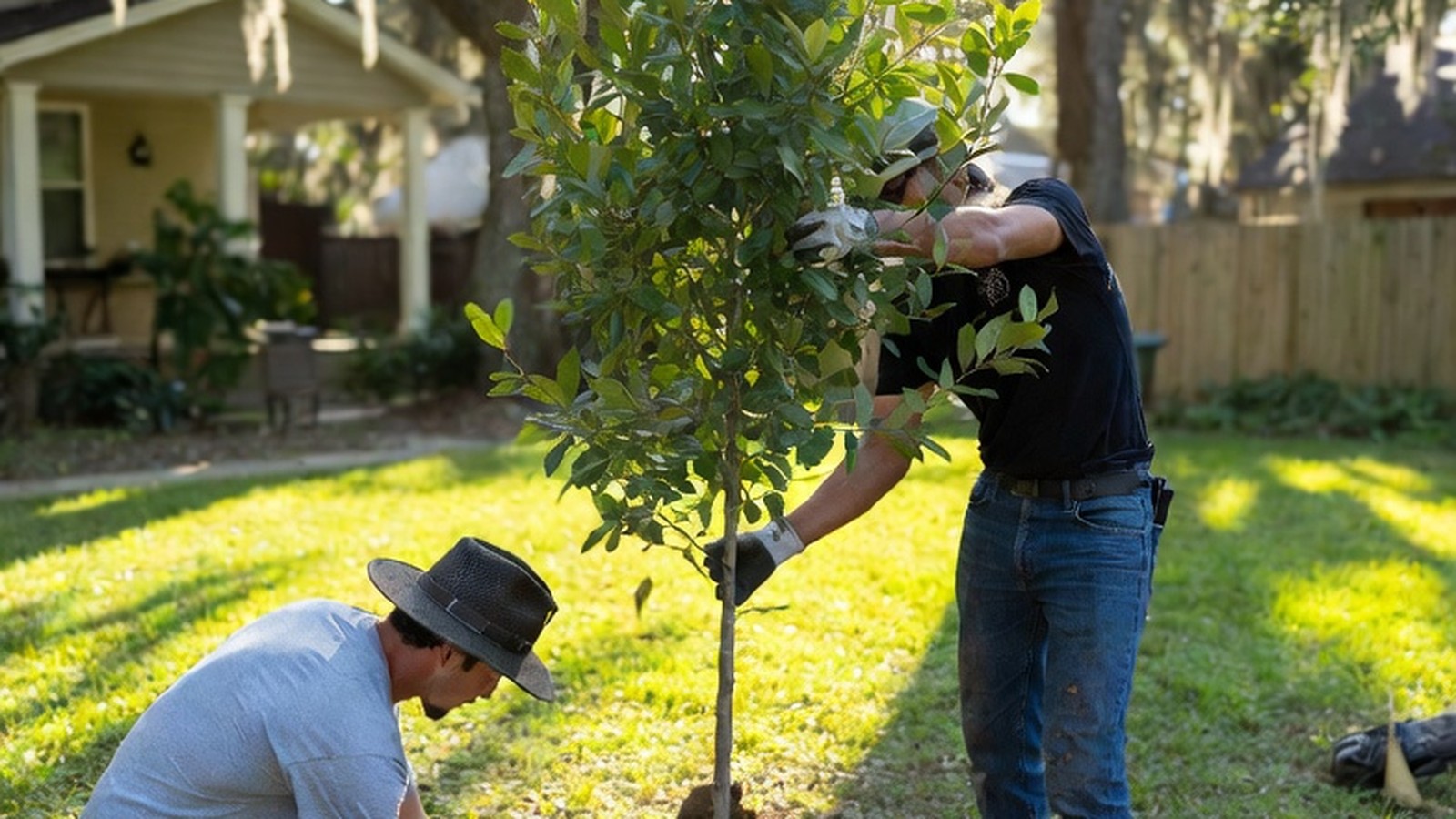
- A mature fig, persimmon, or other fruit tree has grown large and needs reduction or structural pruning that requires climbing
- A fruiting tree has grown into power lines or structures
- A fruiting tree has significant dead wood or structural issues that pose hazard
- Cold damage from a severe winter requires assessment of what can be saved vs. removed
Fruit tree issues in the Tallahassee area? Call (850) 570-4074 or request a consultation online.