Trees and Summer Cooling in North Florida
North Florida summers are brutal, 90°F+ days, high humidity, and an air conditioning bill that reflects it. Strategic tree planting is one of the few things that genuinely reduces cooling load without ongoing operating costs.
The numbers are meaningful. The USDA Forest Service estimates that strategically placed shade trees can reduce summer air conditioning costs by 15-35% depending on the property. In Florida's climate, where cooling accounts for a large fraction of residential energy use, that represents real money over a tree's lifetime.
How It Works
Trees cool buildings through two mechanisms:
Direct shading: Trees that shade roof surfaces, walls, and windows block solar radiation from heating the building. Shading a west-facing wall in late afternoon, or a south-facing roof during peak sun, directly reduces heat gain.
Evapotranspiration: Trees release water vapor through their leaves in a process called evapotranspiration. This passive cooling effect reduces air temperatures around and downwind of trees, a large, leafy canopy can cool the surrounding air by several degrees compared to an unshaded paved surface.
Optimal Placement
West and southwest: The afternoon sun is most intense and strikes west and southwest-facing walls at a low angle that penetrates deeply into windows. Trees on the west side of a structure provide the highest cooling value per tree in North Florida.
South: South-facing walls and roof surfaces receive the most cumulative solar radiation over the day. Broad-canopy trees to the south of a structure provide significant shading of the roof and upper walls during the hottest part of the day.
East: Morning sun is less intense, but east-side shading reduces early morning heat gain and helps with morning comfort.
Not north: North-facing surfaces receive minimal direct sun in North Florida, trees planted primarily to the north provide limited cooling value.
Species Selection for Shade in North Florida
Live oak (Quercus virginiana): The best shade tree in North Florida. Wide-spreading canopy, semi-evergreen (provides year-round partial shading), extremely long-lived. Established live oaks provide exceptional summer cooling. The tradeoff: they grow large and require appropriate siting, don't plant a live oak 15 feet from a structure.
Southern red oak, Shumard oak: Large deciduous oaks with significant summer canopy. Drop leaves in fall, which allows winter sun through, actually a benefit for passive solar heating in winter.
Bald cypress (Taxodium distichum): Deciduous conifer, excellent canopy, native, attractive fall color. Good choice for moister sites.
Tulip poplar: Fast-growing, large, deciduous. Provides significant shading more quickly than oaks.
Avoid: Avoid species with shallow, aggressive roots planted close to structures, species that drop significant debris, or invasive species. See our native species guide.
Timing Expectations
Trees take time to provide meaningful shading. A newly planted live oak will begin providing meaningful shade in 5-7 years, significant cooling benefit in 15-25 years, and substantial shading in 30-40 years. Other species provide faster canopy development, southern magnolia, tulip poplar, and similar species grow faster and provide earlier benefit, though not the same multi-generational longevity.
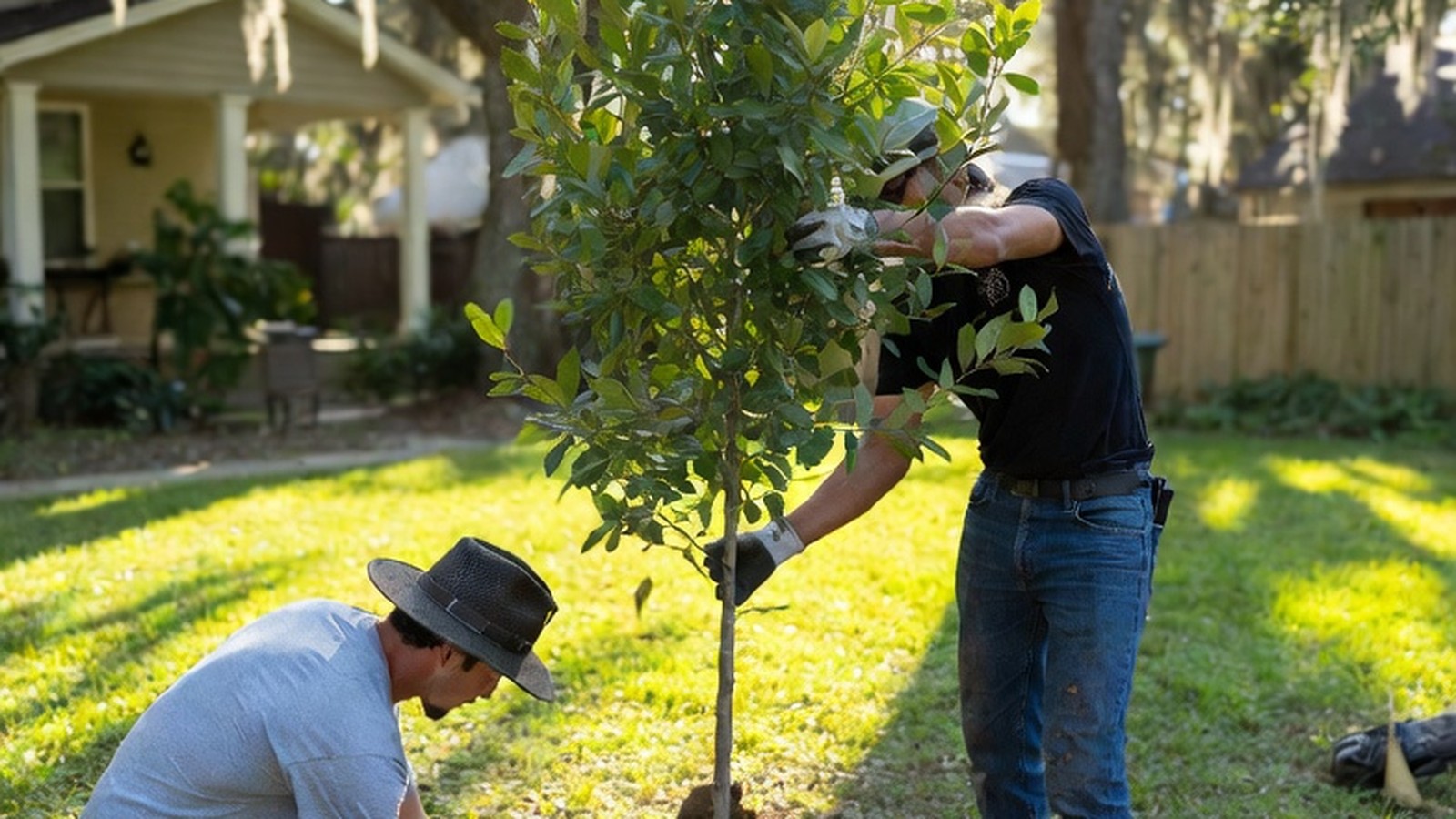
Planting now means cooling in the future. Fall and winter are the ideal planting window in North Florida.
Planning shade tree planting on your Tallahassee property? Call (850) 570-4074 or request a consultation online.