North Florida Has a Different Hurricane Problem Than the Coast
People on the Gulf Coast think about storm surge. Inland Florida (Tallahassee, Leon County, the Panhandle corridor from Marianna to Quincy) has a different problem: trees.
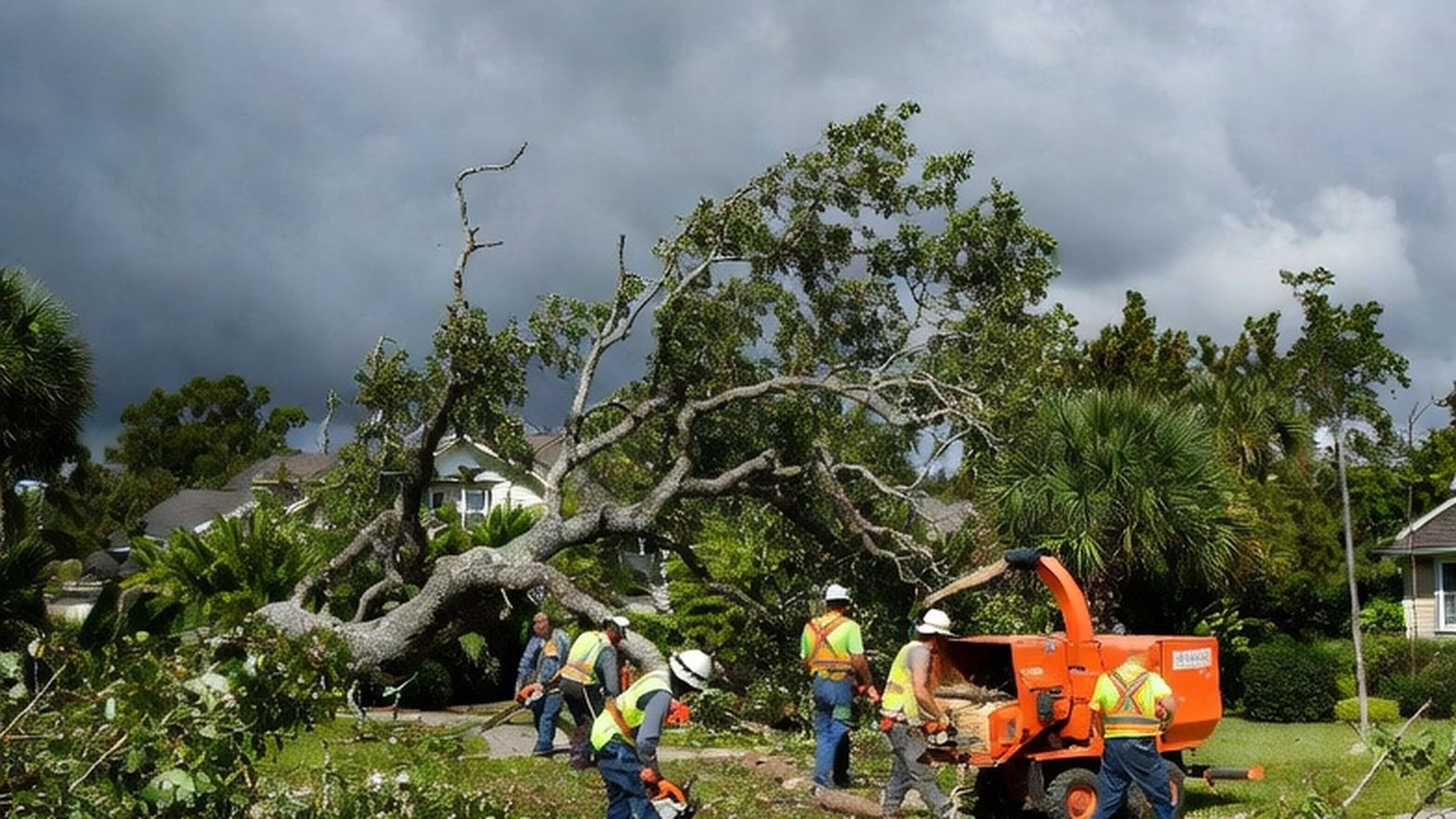
We are one of the most heavily treed metropolitan areas in the country. The same tree canopy that makes Tallahassee beautiful is also what makes storms here uniquely destructive. When Hurricane Hermine came through in September 2016 as a Category 1, it knocked out power to more than 100,000 customers in Tallahassee. Most of that was trees (slash pines, live oaks, pecans) landing on lines. When Michael hit as a Category 5 in October 2018, parts of the Big Bend and Panhandle didn't see restoration crews for two weeks. When Idalia came through in August 2023 and made landfall near Keaton Beach as a Category 3, Tallahassee caught the feeder bands and lost trees again.
None of these storms were freak events. They were North Florida doing what it does. The difference between the properties that saw major damage and the properties that came through okay often came down to one thing: whether the trees had been looked at before the season started.
Hurricane season is June 1. If you're reading this in May, you're on time. Here's what to do.
Part 1: Pre-Season Checklist. Do This Now (Before June 1)
This is the work that matters most. Emergency crews are unavailable during active storms. Tree services are booked solid within 48 hours of a named storm. This is the window.
1. Walk Every Tree Over 20 Feet on Your Property
You're looking for:
- Dead or dying branches in the upper canopy: these are "widow makers." They look stuck. They're not. A tropical system will drop them.
- Cracks or splits at major branch unions: especially V-shaped crotches where two main limbs fork. This is where trees fail.
- Fungal growth at the base or on the trunk: shelf fungus or mushrooms at the root flare mean internal decay. A tree can have a full green canopy and a hollow trunk.
- Leaning that's changed: any tree that has shifted lean since last season warrants a closer look.
- Raised or cracked soil at the base: this is a root system under tension. It means the tree is actively failing on one side.
2. Flag Your Live Oaks Specifically
Live oaks are the dominant shade tree in Tallahassee neighborhoods and one of the most wind-resistant trees in North Florida, but they have a failure mode that catches people off guard. Live oak limbs are heavy. Properly structured, they handle wind well. When they've been topped, heavily pruned on one side, or have included bark at major unions, they can shed entire scaffold limbs under tropical wind loading.
If you have a live oak with large horizontal limbs extending over your roof or your driveway, that's the tree to prioritize for a pre-season inspection. A cable or brace installed now can hold a compromised union through a storm. Waiting until a storm is named is too late.
3. Flag Your Slash Pines and Longleaf Pines
Pines are the other major failure category in this area. Slash pine and longleaf pine are beautiful, tall, and extremely common in Leon County residential properties, and they are more vulnerable to wind throw than live oaks because their root systems are shallower and they offer a large flat surface to the wind.
Specific things to check on pines:
- Any lean over 15 degrees: pine lean usually means root system compromise or wind throw in progress
- Sparse or dying upper crown: called "flagging," this often indicates root disease (especially fusiform rust or littleleaf disease in slash pines)
- Any history of standing water or construction near the base, these weaken the root plate and the tree may look healthy while being structurally compromised
A tall pine in active decline will come down in a major storm. There is no cabling fix for this, the correct answer is removal before the season.
4. Clear Deadwood Throughout the Canopy
Even on healthy trees, deadwood accumulates. Small dead branches in the interior canopy are normal; large dead branches in the outer canopy are hazards. Before hurricane season, have dead limbs removed across the board, this reduces wind resistance and removes projectiles.
5. Assess Trees Within Fall Distance of Your Roof, Vehicles, and Utility Lines
Draw the circle. Any tree that, if it fell, would reach your house, your car, a neighbor's fence, or the service line to your meter, that tree gets looked at first. This isn't about removing healthy trees. It's about triaging which hazardous trees have the most consequence if they fail.
6. Consider Proactive Removal for High-Risk Trees
Not every tree needs to come down. But some trees are the right call to remove before a storm rather than after. If a tree has multiple risk factors (it's tall, it's leaning toward the house, it has decay at the base, it's been structurally compromised) the cost of removing it before the season is a fraction of what cleanup and repair costs after a storm. We've done the math for hundreds of Tallahassee homeowners. It's not close.
Get the full printable checklist at /hurricane-prep: it's free, covers everything in this post, and includes a homeowner inspection form you can fill out while walking your property.
Part 2: When a Storm Is Forecast (72–48 Hours Out)
A named storm is in the Gulf and the track puts Leon County in the cone. Here's what you can still do.
7. Book a Tree Service Immediately. Not 24 Hours Out
The moment a storm enters the Gulf and local forecasts start mentioning Tallahassee, tree services get booked. Forty-eight hours out, most legitimate companies have a full queue. Call early, and be realistic, if there's a backlog, emergency pruning may not happen before the storm. This is why Part 1 matters.
8. Identify the Immediate Hazards and Clear the Surroundings
If you weren't able to get pre-season tree work done, focus on what's practical:
- Move vehicles out from under large trees with suspect limbs
- Move patio furniture, outdoor equipment, and any debris that could become a projectile
- If you have a generator, make sure the path to it is clear
9. Do Not Attempt to Cut Trees Yourself in Storm Conditions
This seems obvious. It's not. Every major storm season, people in Leon County are injured or killed trying to cut overhanging limbs in 30–40 mph pre-storm gusts. Wait. If a limb is hanging over your roof, that limb was either manageable before the storm or it's going to take a tree service to deal with safely.
10. Know Your Emergency Contact Numbers
- Reed Tree Service 24-hour emergency: (850) 570-4074
- Leon County Emergency Management: (850) 606-5000
- Talquin Electric outage line: (850) 627-7651
- FPL outage line: 1-800-468-8243
Part 3: After the Storm
The storm has passed. Here's how to approach the aftermath correctly.
11. Don't Go Outside Until It's Truly Clear
For a tropical system, the back half of the storm can arrive with minimal warning. The wind drops, it looks clear, and then the back eyewall hits. Wait for official all-clear from Leon County Emergency Management before going outside to assess.
12. Document Everything Before Any Work Starts
Walk the property and photograph all damage before anything is moved or cut. Every angle, with something in frame for scale. This is your insurance documentation. A large tree on your house is an insurance claim, not a DIY cleanup job. Call your adjuster before authorizing structural work, many policies have provisions about emergency repairs that require prior authorization.
13. Triage What's Urgent vs. What Can Wait
Urgent (address the same day):
- Tree or major limb on the roof or against the house
- Downed limb over the entry, path, or anywhere people pass
- Uprooted tree leaning against a structure
- Anything involving downed power lines (call the utility company, do not touch)
High priority but not immediate:
- Hanging limbs over the yard away from structures
- Split or cracked main structure on a standing tree
- Uprooted trees in open yard
Can wait for normal scheduling:
- Small branch and twig cleanup
- Trees that lost branches but are structurally intact
- Cosmetic canopy damage
For a full storm damage triage guide, see how to assess your trees after a hurricane or storm damage.
14. Watch for Contractor Fraud. It's Real in This Market
After Hermine, after Michael, after Idalia, the same thing happens. Out-of-state contractors with no Florida license and no insurance roll into Tallahassee and offer cut-rate emergency work. Pressure tactics like "I have one crew available today only" are a red flag. Verify that any contractor is licensed with the Florida Department of Agriculture and has general liability and workers' comp before authorizing work. An uninsured worker injured on your property is your liability.
15. Get on the Calendar for Post-Storm Assessment
After a major storm, even trees that didn't visibly fail should be looked at. Root systems under severe wind load can be compromised invisibly. A tree that came through Michael or Idalia "fine" might be at elevated risk for the next event. Schedule a post-storm walk with a professional once the emergency phase is over.
Get the Full Checklist as a PDF
Everything in this post is available as a free printable PDF at /hurricane-prep. Enter your name and email and we'll send it directly, plus the homeowner inspection form and a guide to what to look for on your own property walk.
Get the Hurricane Prep Checklist
We Cover the Full Tallahassee Area and Surrounding Region
We work throughout Leon County and the surrounding area. Tallahassee, Quincy, Havana, Monticello, Perry, Crawfordville. If you're in the North Florida/Panhandle corridor and you're not sure about a tree on your property heading into hurricane season, call us. We'll tell you exactly what we're looking at.
(850) 570-4074: 24-hour emergency service, free estimates.
Frequently Asked Questions
When should I have my trees checked before hurricane season?
Ideally, by mid-May, four to six weeks before June 1. This gives enough runway to schedule removal or major pruning before tree services get booked out. Most years, companies in the Tallahassee area get a surge of calls in late May and are at or near capacity by the time the first named storm of the season forms. If you're reading this in May, call now.
Are live oaks safe to keep near the house during hurricane season?
Generally yes, live oaks are among the most wind-resistant trees in North Florida, and a healthy, well-structured live oak is usually a lower risk than a tall pine. The key word is "well-structured." A live oak that has been topped, has large horizontal limbs with included bark at the union, or has root zone damage is a different situation. A pre-season inspection will tell you whether the tree is in the low-risk category or needs attention.
How much does it cost to remove a hazardous tree before hurricane season?
It varies significantly by the size of the tree, its location, and what equipment is required. A straightforward removal of a mid-size pine in an open yard is a very different job from removing a large live oak over a house that requires a crane. We give free estimates, call (850) 570-4074 or request one online. One data point that's consistently true: planned pre-season removal costs less than emergency post-storm removal, which in turn costs a fraction of what roof or structural repair costs.
What does "storm cleanup" actually involve?
Storm cleanup is the full scope of post-storm tree work: removing fallen and partially fallen trees, clearing limbs from structures, hauling debris, and grinding stumps as needed. We also handle coordination with utility companies when trees are in contact with power lines, and we can work with your insurance adjuster if the damage is going through a claim. Emergency service is available 24 hours a day, (850) 570-4074.