What Counts as "Large"
There's no universal definition, but in the Tallahassee tree service context:
- Large: 18-30 inch DBH (diameter at breast height), 50-80+ feet tall
- Very large: 30+ inch DBH, 70-100+ feet, significant spreading canopy
A mature live oak with a 36-inch trunk and 60-foot canopy spread is a completely different project from a water oak that's 16 inches and 45 feet. The techniques, equipment, crew size, and time required are all different.
What Makes Large Tree Removal More Complex
Sections must be rigged and lowered. You can't just drop a large tree, in any residential setting, there's almost always something nearby (structure, fence, car, other tree, utility line) that would be in the drop zone. Large tree removal involves climbing into the canopy, cutting sections, rigging those sections with ropes, and lowering them in a controlled sequence. This takes multiple crew members working in coordination.
More material per section. A 30-inch chunk of live oak cut from 40 feet up may weigh 300-500 lbs. Rigging, lowering, and moving that to a truck or chipper takes equipment and labor that smaller work doesn't require.
Equipment access may require planning. Getting a crane, lift, or equipment into the work area sometimes requires planning, gate access, temporary fencing relocation, surface protection if driving over lawn or landscape.
Log material is heavy. Even after the tree is down, processing and moving the wood is significant physical work. Large pieces go to a log landing and require equipment to load.
When a Crane Is Used
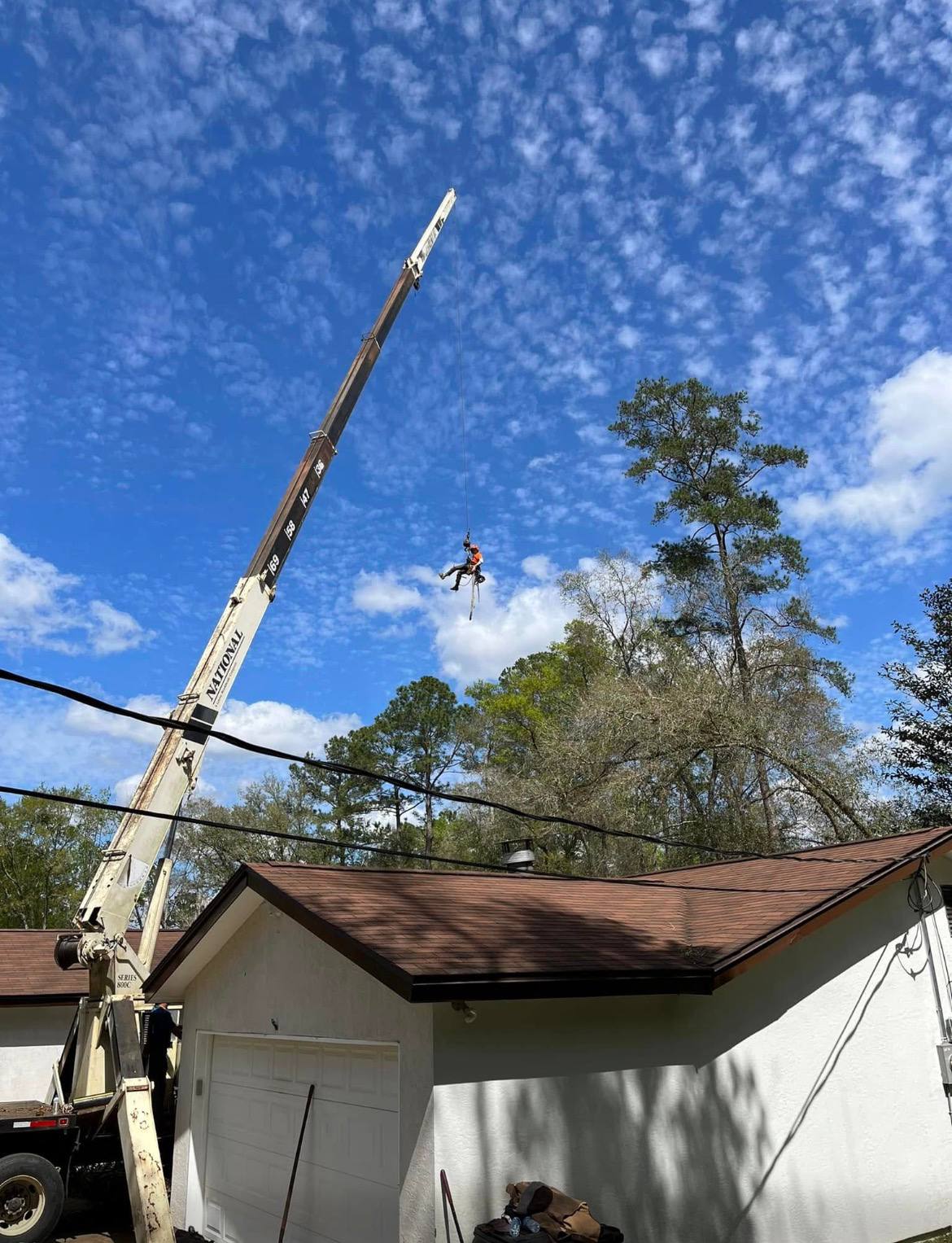
Crane-assisted tree removal is the technique for trees that can't be conventionally rigged, either because they're too large for conventional rope rigging to handle safely, or because the drop zone doesn't allow for any section to swing at any point in the removal.
A crane holds the section being cut, allowing it to be lifted directly out and set in a clear area, rather than swung through an arc. This is the safest method for trees over structures, vehicles, or tight lots.
Crane work involves a crane operator (separate from the tree crew), coordination between climber and operator, and typically a larger landing area for sections. It adds to cost but is sometimes the only method that's actually safe.
See our crane tree removal guide.
What Drives Price on Large Trees
- Size (trunk diameter and height): Direct driver of labor time and equipment requirements
- Location: A 36-inch oak in an open field is much less complex than the same tree 10 feet from a house
- Species: Dense, heavy wood (live oak, water oak) takes more time per section than lighter species
- Canopy condition: A full, vigorous canopy has more material; a dead tree may be more brittle and require more caution
- Equipment access: Crane work, tight lot access, or difficult chip truck positioning all add cost
- Stump: Grinding a 36-inch stump takes significantly more time than a 12-inch stump
Getting an Estimate on a Large Tree
We assess large trees in person, a written estimate requires an on-site visit. For trees in the 24+ inch DBH range, the estimate includes a specific plan for the removal sequence and any equipment or access requirements. Call (850) 570-4074) to schedule an estimate visit.
Large tree removal in the Tallahassee area? Call (850) 570-4074 or request an estimate online.