What Is Lichen?
Lichen is a composite organism, a symbiotic partnership between fungi and algae (or cyanobacteria). It grows on bark, rocks, and other surfaces where it can anchor and receive light. In North Florida's humid climate, lichen is everywhere: on live oaks, water oaks, magnolias, fence posts, and concrete.
The most common forms on North Florida trees:
- Foliose lichen: leafy, gray-green, slightly three-dimensional, often scale-like
- Crustose lichen: flat, crust-like, appearing painted onto the bark surface
- Fruticose lichen: shrubby or filamentous, growing outward from the surface (less common on trees)
Does Lichen Harm Trees?
No. Lichen is not a parasite. It doesn't penetrate bark or extract nutrients from the tree. It uses the tree surface purely as a substrate, a place to anchor and receive light. The relationship is essentially neutral for the tree.
This is a common misconception that leads people to waste time and money trying to remove lichen from otherwise healthy trees.
When Lichen Is a Signal, Not a Cause
Here's the important nuance: heavy lichen coverage can indicate that a tree has thinning canopy.
Lichen requires light to grow. A dense, healthy tree canopy casts enough shade on the bark that lichen growth is limited. When a tree's canopy thins (from stress, disease, root problems, or natural aging) more light reaches the bark, and lichen grows more prolifically.
So a tree covered in lichen isn't being harmed by the lichen. But extensive new lichen growth on a tree that previously had little may indicate the tree is in decline and the canopy is thinning. The lichen is a symptom indicator, not a cause.
If you notice a tree that's suddenly developing much more lichen than it had before, it's worth having someone assess the tree's overall health, not to treat the lichen, but to understand why the canopy may have thinned.
The Spanish Moss vs. Lichen Confusion
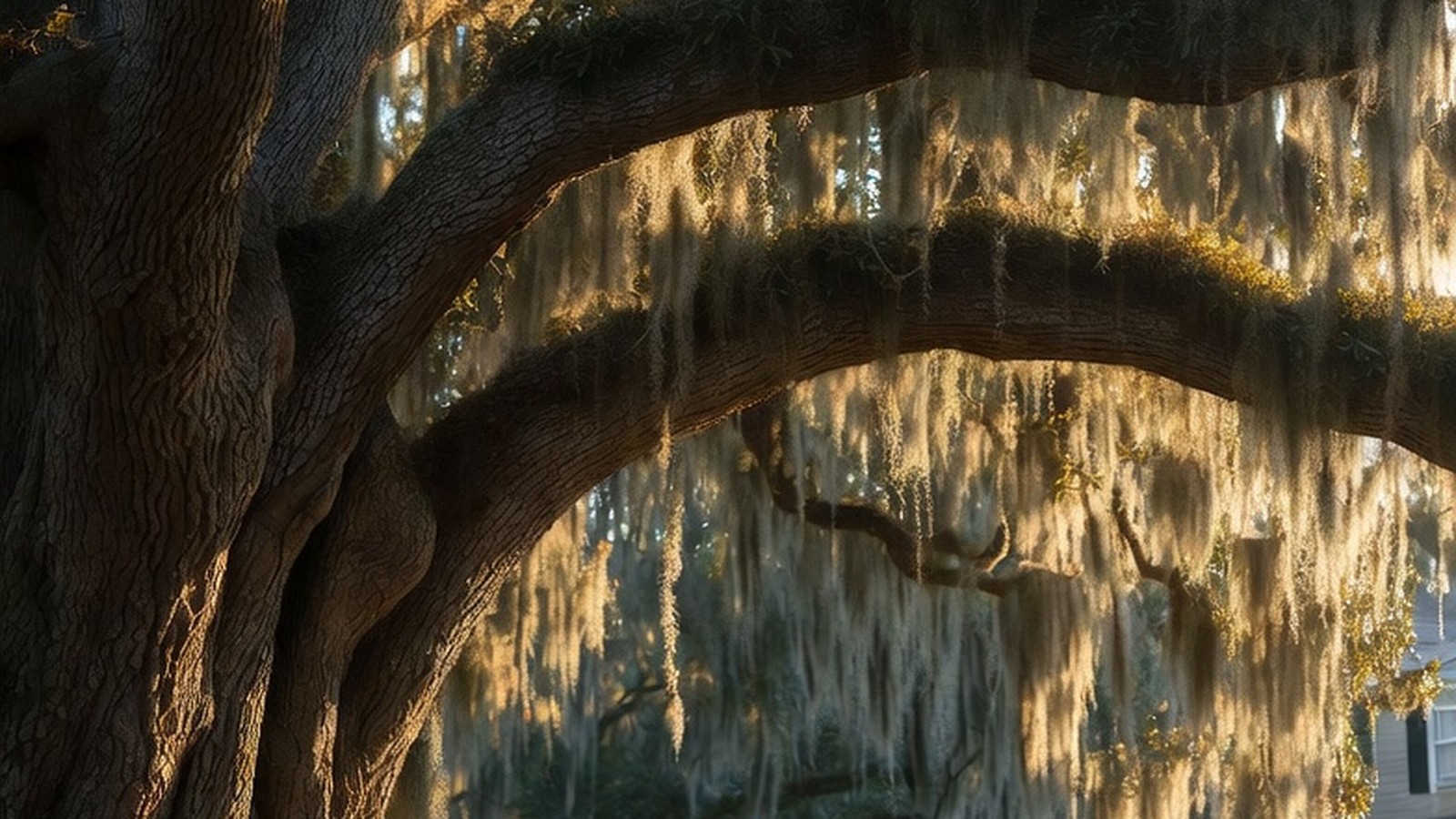
Spanish moss (which is neither moss nor lichen, it's an epiphytic flowering plant) is sometimes confused with lichen by North Florida residents unfamiliar with the local flora. Both are common on live oaks and other trees, and neither harms the tree. The distinction matters mostly for understanding what you're looking at.
See our Spanish moss guide for more on Spanish moss specifically.
Should You Remove Lichen?
For healthy trees: no, there's no need. Removing lichen from a healthy tree is purely cosmetic and has no benefit to the tree's health. Scrubbing bark to remove lichen can actually damage bark tissue.
For trees in decline: the right response is to assess and address the underlying cause of decline, not to clean the bark. If a water oak has extensive lichen and thinning canopy, the management decision is about the tree's condition and risk level, not the lichen.
The exception is purely aesthetic on specimen trees or trees in formal landscape settings where appearance is the goal. Even then, mild copper-based treatments are used carefully by professionals, not aggressive mechanical removal.
Questions about your trees? Call (850) 888-5603 or request a consultation online.