What You're Actually Buying
When you buy a tree at a nursery, you're buying a root system with a crown attached. The crown is what you see; the root system is what determines whether the tree survives and thrives.
Most tree failures (death within the first few years, chronic decline, structural problems) trace to root system issues that were present at the time of purchase but not visible. Here's what to examine before you buy.
Container vs. Balled-and-Burlap
Container trees: Grown in a pot. The root system is in the container, you can inspect it, and it's fully intact. Advantages: lower transplant stress, available year-round, can be planted at more times of year. Disadvantage: containers limit root growth, leading to circling and girdling roots if the tree has been in the container too long.
Balled-and-burlap (B&B): Field-grown trees dug with a root ball wrapped in burlap (or wire basket with burlap). The root system has been severed at digging, you're buying a portion of it. Higher transplant stress than container, but often available in larger sizes. B&B trees should be planted quickly and should not sit on a lot for an extended period after digging.
For most residential landscape planting, container trees in appropriate sizes are the easier choice.
Inspecting Container Trees: Root System
The most important inspection for a container tree is the root system, which most people skip.
How to check: At the nursery, slide the tree out of the container (this is acceptable to do, a nursery selling healthy stock shouldn't have a problem with it). Look at the root ball.
What you want to see:
- Roots that are white or light tan, firm, and spread through the potting medium
- Roots that are turning toward the edge of the container but haven't started circling significantly
Red flags:
- Roots circling the inside of the container (circling roots become girdling roots, they wrap around the trunk and strangle the tree over years)
- Roots growing out the drainage holes and into the ground beneath the container (the tree is rootbound and has been there too long)
- Dark, mushy roots (root rot: the tree is declining)
- Roots visibly knotted or compressed into a tight mass at the bottom
Girdling roots are a dealbreaker. A tree with significant girdling roots may appear healthy for years before the girdling roots choke out the root flare and cause sudden decline or death. Don't buy it.
Trunk and Crown Evaluation
Trunk taper: A healthy tree has a trunk that tapers, it's wider at the base than at the top. A tree with a trunk that's the same width from top to bottom (no taper) has often been staked so tightly for so long that it hasn't developed normal structural wood. These trees often fail when the stake is removed.
No stake dependency: A tree that can't stand on its own without a stake is not ready to go in the ground. Healthy nursery stock should be freestanding or only lightly staked.
Crossing branches: Look for branches that cross and rub against each other, these create wounds. Minor crossing branches on a young tree aren't disqualifying, but heavy crossing branch structure in the crown suggests poor early development.
Leader presence: For most shade tree species, a single dominant leader (main upward stem) indicates proper structure. Trees with multiple competing upright stems ("co-dominant stems") are prone to structural failure later, the two stems compete and the attachment between them weakens over time.
Signs of disease or pest damage: Yellow or mottled leaves, visible fungal growth, bark abnormalities. These may indicate problems that will persist after purchase.
Species Selection for North Florida
Buy for your actual climate and conditions, not for what looked good at the nursery. A few North Florida considerations:
- Zone 8b rating minimum: many attractive nursery plants are zone 9 or higher and will be damaged in hard freezes
- Match to your soil type (sandy and well-drained vs. clay and wet)
- Full sun vs. shade as your site requires
- Mature size matched to available space
See our post on native trees for North Florida yards for species that perform well in the region.
Planting and Aftercare
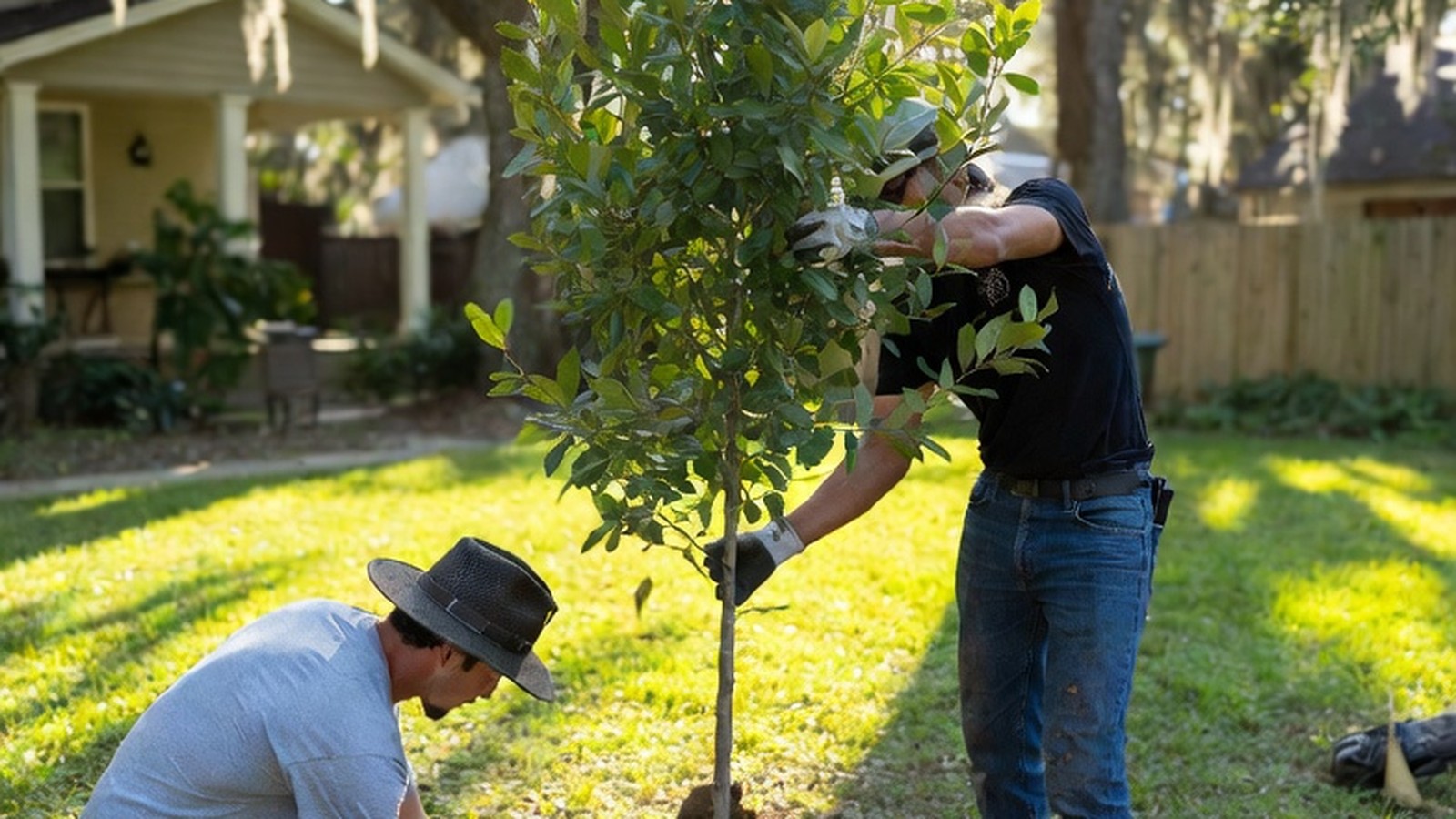
Selecting a quality tree is the first step. Planting it correctly (at the right depth, with the root flare at or slightly above grade, with appropriate mulching, and with adequate irrigation through the first growing season) determines whether a good tree stays a good tree.
We plant trees throughout the Tallahassee area and can advise on species, spacing, and planting best practices for your site.
Call (850) 570-4074 or request a planting estimate online.