Updated October 15, 2026. Rules and warnings below come from the sources linked next to them. Check them yourself before you rely on them.
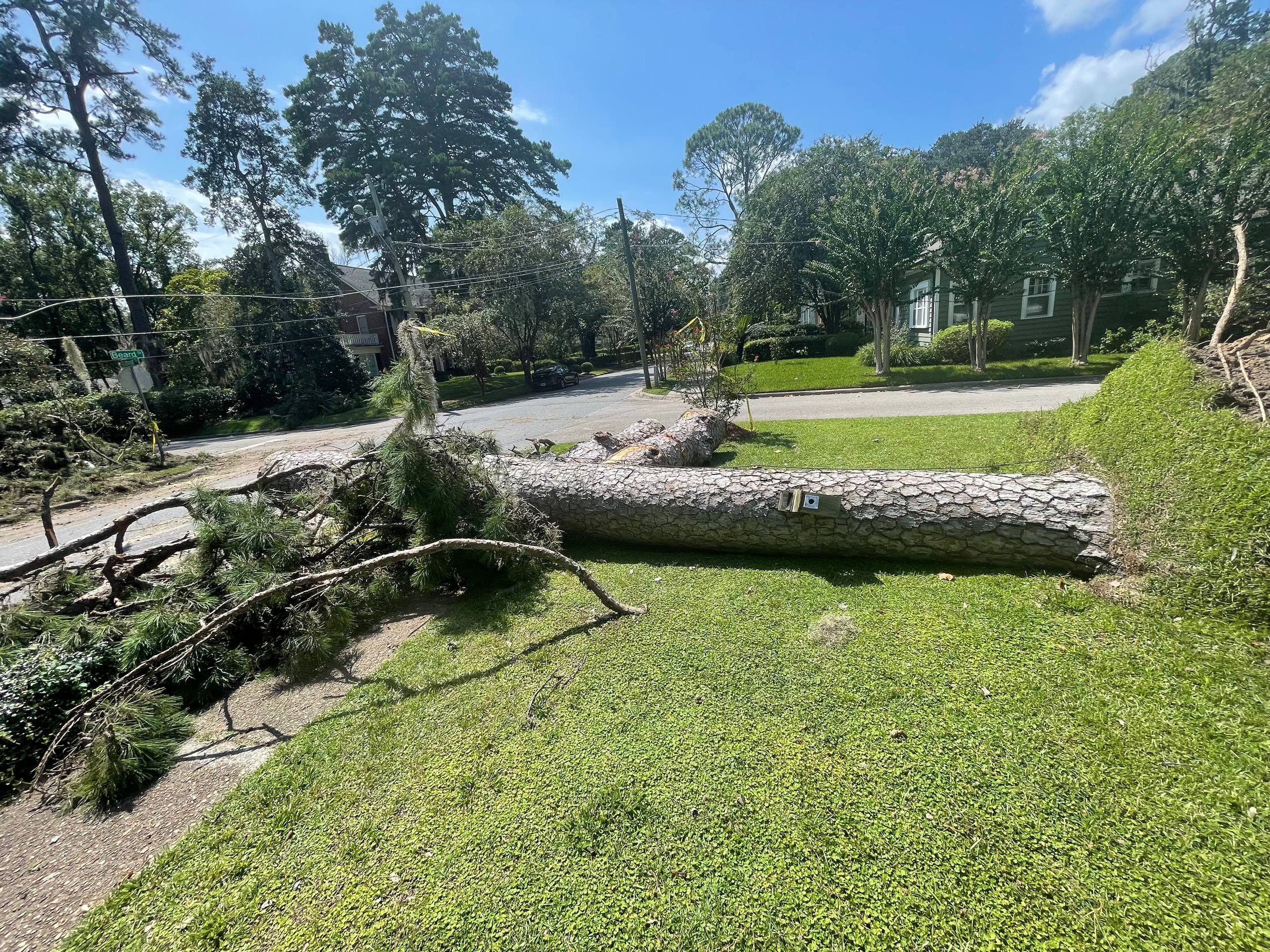
Hurricane Isaias came ashore near Destin as a Category 2 storm on the night of Friday, October 9, 2026. The next day, Florida Attorney General James Uthmeier warned about price gouging and repair scams, and state officials warned residents to be cautious about contractors who solicit repair work after a storm.
If you typed "storm chaser tree service" into Google because a crew just knocked on your door, here is a short list of checks you can run before anyone starts a saw.
What a storm chaser is
In this trade it means a crew with no local ties that appears after a disaster, quotes something vague, asks for money up front, and moves on to the next town. Crews travel to where the trees are down, so out of town proves nothing either way. Reed Tree Service is based in Tallahassee, and our climbing crew is working the Emerald Coast through late October. So run every check below on us too, and don't take anyone's word for it.
1. Look for a local trail
The Attorney General's office, in its tips after Hurricane Ian, told people to research a company and its reputation, look for references online or ask a friend, and watch out for anyone who approaches unsolicited about tree removal.
In practice: search the company name, not the name on the truck door. Read the reviews and check that the phone number rings back. Ask a neighbor or your HOA manager who they used. Ask for photos of recent jobs. On October 10 the Attorney General also said his office had received reports of tree-service text messages that look like scams, and he asked people not to respond to them.
2. Get the quote in writing
The same AG guidance says to get multiple written estimates and to ask whether debris removal is included. A written quote should name the address, which trees, what work, and what happens to the wood afterward. If it only says "tree removal," ask what that covers.
The debris line deserves a close read. In Santa Rosa County, the county's storm update says a contractor who cuts or removes fallen trees is responsible for hauling away all the debris. A quote that stops at the cutting can leave you with a pile you are not allowed to put out. Our debris pickup guide lays out the rule for each county and city.
On price: Florida's price gouging law bars unconscionable price increases on essential goods and services during a declared emergency. News4Jax reports that those services can include tree removal, with penalties of up to $1,000 per violation and up to $25,000 per day. You can report a suspected case at myfloridalegal.com or at 1-866-966-7226. We can't tell you what a fair number is, but two or three written quotes will show you the spread, and our guide to what sets the price of storm tree removal explains why quotes differ.
3. Never pay the full amount up front
The Attorney General's tips say it plainly for tree removal: never pay the full amount up front, and don't make the final payment until you are completely satisfied with the work. The same tips say to hesitate before handing over a large deposit, so ask what any deposit covers. A crew that demands full payment before the first cut is one to skip.
4. Ask to see a business tax receipt
The AG's office notes that state law criminalizes selling goods and services to the public without a business tax receipt. Ask to see it, and note which city or county issued it. State officials also urged residents to verify contractors' credentials and not to sign anything until they know who they are dealing with.
A receipt shows the business is set up to sell to the public. It does not show the work will be good, which is why it is one check among five.
5. Be wary of discounts and pressure
The AG's list includes watching out for unsolicited offers, and for contractors who claim a discount because they have leftover supplies from another job. A crew that needs you to sign today, or that quotes a price only if you say yes at the door, is working against your chance to compare.
A note on city pickup
In Fort Walton Beach, the city said its curbside debris cleanup is covered under its contract with DRC Emergency Services and that no DRC employee or subcontractor will ask residents for payment, according to WJHG. Someone who asks you to pay for that pickup is not the city's crew. The Fort Walton Beach Sanitation Division is at 850-833-9655.
How we work, so you can check it
Josh looks at the job and gives you a written quote for that job. The crew climbs and rigs trees down in sections, lowering each piece on lines, which suits tight lots in Destin and Fort Walton Beach. Josh cuts the debris and moves it to the road. On big jobs he can arrange haul-off through a sub, quoted per job. Ask for all of that on paper before the crew starts.
The Destin storm cleanup page has what we are doing near Destin right now.
FAQ
Is it a scam if a crew knocks on my door after a storm?
Not automatically, but the Attorney General's guidance tells people to watch out for anyone who approaches unsolicited. Take their name and number, then run the checks above before you agree to anything.
How do I report price gouging?
Go to myfloridalegal.com or call 1-866-966-7226, the state's reporting line named in the News4Jax story.
Should I pay a deposit?
The AG says to hesitate before large deposits and never pay the full amount up front. Get the terms in writing before any money moves.
Does Reed Tree Service come from out of town?
Yes. Reed is based in Tallahassee, and the crew is working the Emerald Coast through late October. Check us the same way you would check anyone else.
Want a written quote from a climbing crew working near you? Call Josh at (850) 888-5603.