Solar and Trees: A Common Conflict
Florida gets more sun than almost anywhere in the country. Solar adoption in Tallahassee and Leon County has grown significantly, and with it, a recurring situation: homeowners who want to go solar, or who already have panels, discovering that the trees they love are reducing (sometimes substantially) what their system produces.
This isn't a small issue. A panel with even partial shade can drag down the output of an entire string in older inverter systems. Modern microinverter and power optimizer systems handle partial shading better, but shade still reduces production.
We get called regularly to assess trees relative to solar installations. Here's how to think through the decision.
How Shading Actually Affects Solar Production
Solar panels produce power proportional to the sunlight hitting them. Shade from any source (a tree, a chimney, a neighboring structure) reduces production in the shaded panels.
The string inverter problem: In traditional systems with a central string inverter, panels are wired in series. A single shaded panel can reduce the output of every panel in the string, sometimes significantly. It's like a series of water hoses with one pinched: the whole system is limited.
Microinverters and power optimizers: These newer configurations allow each panel (or a few panels) to operate independently. Shading one panel only reduces that panel's output, not the whole array. If you have this type of system, the shade problem is less severe, but still real.
Seasonal variation: The sun's path is lower in winter, meaning shadow lengths are longer and angles are different. A tree that barely affects your panels in June may substantially shade them in December. A shade analysis done in summer can be misleading for annual production calculations.
The 4% rule of thumb: Some solar installers note that 4% shade on a panel can reduce its output by 25-40% in a string inverter system due to the cascading effect. The numbers vary widely by system configuration, panel technology, and shade pattern.
When Tree Removal Makes Financial Sense
The math is different for each situation. Before deciding, you want to know:
Which trees are actually causing the shade? Have a solar installer or an arborist assess which trees are problematic during peak production hours (roughly 9 AM to 3 PM, when sun is highest). Not every tree near the house is the culprit.
How much production is being lost? A monitoring system shows actual vs. expected production. If you're losing 15% of annual production to shading, that's a concrete number to compare against removal cost.
What's the tree worth? A mature live oak has landscape value, environmental value, and may affect your property appraisal. It also provides cooling shade that may reduce AC costs, partially offsetting the solar loss.
Can the panel layout be changed? Sometimes repositioning panels to avoid a shaded roof zone is cheaper than tree removal, especially for smaller or more removable trees.
Is the tree removable without significant loss? A 30-inch water oak that's marginal anyway is different from a 150-year-old live oak that defines the property.
What Tree Work Short of Removal Can Help
Before full removal, consider:
Crown elevation (raising): Removing lower branches increases the sun angle that reaches panels, which can help if the shade problem is from lower branches casting long morning or afternoon shadows.
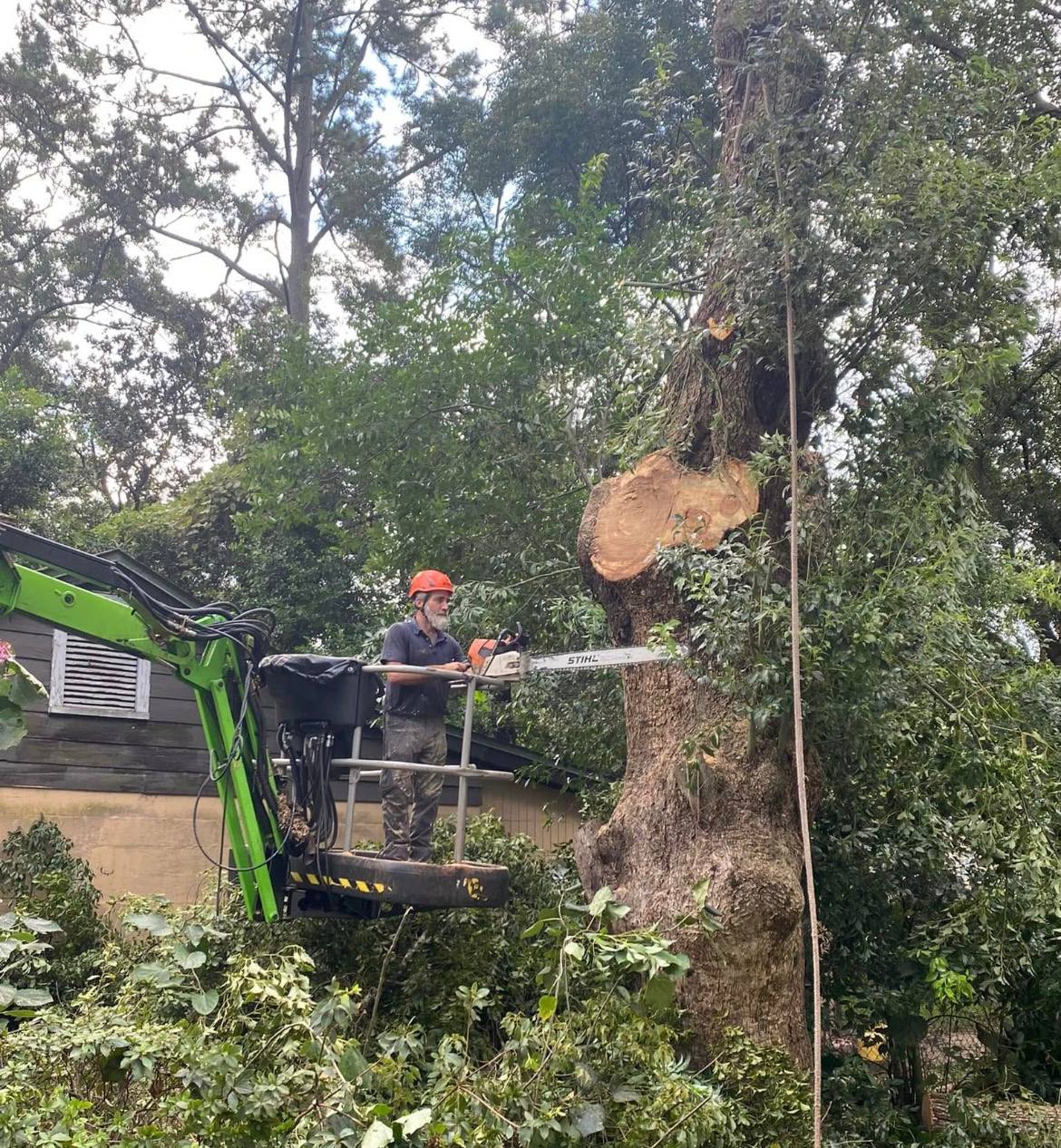
Selective crown reduction: Removing specific upper branches that shadow the panel field can substantially reduce shading without removing the tree.
Canopy thinning: Reducing overall foliage density allows more diffuse light through, though this helps less than removing the specific obstructing branches.
These approaches are less effective than removal if the tree is directly between the panels and the sun during peak hours, but they're worth evaluating for trees that are partially problematic.
The Live Oak Complication
Live oaks are the dominant shade tree in Tallahassee, and they're legally protected. Any removal of a live oak over a certain diameter requires a permit from the City of Tallahassee or Leon County (depending on your location). This doesn't mean you can't remove them, it means the process takes longer and requires documentation of why removal is warranted.
Solar production loss is generally a recognized justification in permit applications. We can provide documentation of tree location and size as part of a permit application.
See our post on Tallahassee's live oak permit process for details on what's required.
Getting the Analysis Right
For a significant solar decision, get two assessments:
From your solar installer or a solar monitoring consultant: What's the actual production loss from current shading? Which panels are affected? What would production look like with specific trees removed?
From a tree service: What would removal involve? What's realistic for trimming vs. removal? Are there permit implications?
Combining both gives you the cost-benefit picture you need to make an informed decision. Removing a significant tree based on a feeling that it might be affecting solar (without knowing which panels are shaded or how much production is lost) often leads to regret.
Questions about trees and solar in the Tallahassee area? Call (850) 570-4074 or request an assessment online.