Why Mulch Matters More in North Florida
Most people mulch for one reason: it looks good. The beds look clean, the yard looks maintained. That's fine, but in Tallahassee's climate, mulch is doing a lot more work than aesthetics.
North Florida has a real problem with summer heat and sandy, fast-draining soil. Soil temperatures in unshaded, unmulched beds can exceed 140°F in July. Tree and plant roots don't survive that, or they survive it stressed, which opens the door to disease and secondary pest issues. A proper layer of mulch keeps soil temperatures 10-25°F cooler. In Leon County's summer, that's the difference between a thriving planting and a struggling one.
Mulch also:
- Retains moisture: reduces irrigation frequency in sandy North Florida soil by slowing evaporation
- Suppresses weeds: a 3-inch layer blocks most weed germination without chemicals
- Prevents soil compaction: protects root zones from foot traffic and lawn equipment
- Feeds the soil: organic mulch breaks down slowly, adding organic matter to North Florida's notoriously nutrient-poor sandy soil
- Protects from mowers: keeps equipment away from root flares and bases, preventing the "mulch volcano" damage and mower strikes that injure so many trees
What Type of Mulch to Use
Not all mulch is equal. Here's what works in Tallahassee's climate.
Hardwood Chip Mulch. Best for Most Applications
Hardwood chips from tree work (fresh-ground or aged) are among the best mulches available. They're coarse enough to allow good air and water penetration, break down slowly, and amend the soil as they do. Arborist chips (the mix of wood, bark, and green material that comes off a chipper) are particularly good for trees and shrubs because the mix of particle sizes doesn't compact the way uniform materials do.
This is what we use from our tree work, fresh chips are available when we're working in your area.
Pine Bark Mulch. Excellent for Beds
Aged pine bark is widely available in bagged form and works well for ornamental beds. It's slightly acidic, which suits azaleas, camellias, and most flowering shrubs common in Tallahassee yards. It also stays in place well on sloped beds and doesn't float during heavy rain as badly as fine shredded material.
Pine Straw. Common, Lower Performance
Pine straw is the default mulch across North Florida and South Georgia, and it's not bad, it's readily available, cheap, and decomposes slowly. But it does float during heavy rain, compacts into a mat that can repel water when dry, and doesn't add as much organic matter to the soil as wood-based mulches. It's fine for large areas and natural-looking beds. It's not ideal right at the base of trees or in high-value plantings.
What to Avoid
Dyed mulch. Red, brown, and black dyed mulches are made from ground-up CCA-treated lumber, pallets, and other waste wood. The dye covers a variety of source materials. These mulches break down quickly, add little organic matter, and may introduce contaminants into your soil. There's no good reason to use them when better options are available.
Rubber mulch. Gets hot in summer (the opposite of what you want), doesn't decompose or feed the soil, and has a host of documented issues. Avoid.
Deep fresh wood chip layers directly against stems. Fresh wood chips can cause nitrogen draw-down as they decompose, pulling nitrogen out of the soil temporarily. Keep chips away from the base of plants and don't pile excessively deep around trunks.
How Deep to Mulch
The standard recommendation is 2–4 inches, and the actual depth matters:
- Less than 2 inches: insufficient for temperature and moisture benefits; weeds punch through
- 2–4 inches: the sweet spot. Good weed suppression, water retention, temperature regulation without oxygen restriction
- More than 4 inches: can restrict oxygen to roots, hold excess moisture against stems, and create habitat for voles and other rodents
The other rule: keep mulch away from the trunk base. The mulch volcano (a pile of mulch built up against the trunk) is one of the most common landscape mistakes and causes real damage. Mulch against bark traps moisture against the root flare, promotes disease and rot, and can slowly girdle the tree. Keep a 6-inch clear zone around the trunk all the way to bare soil.
The Mulch-After-Removal Connection
When we remove a tree, the grinding process produces a quantity of wood chips from the stump. These chips can be:
- Left as mulch right in the area, good for natural garden beds or utility areas
- Spread to a bed or other area on your property if you'd like
- Hauled away with the rest of the debris if you don't want it
Fresh stump grindings do have more nitrogen draw-down potential than aged chips. If you're planting immediately in the same area, we'd recommend letting the grindings age or using a different mulch source in that specific spot.
Delivery and Installation
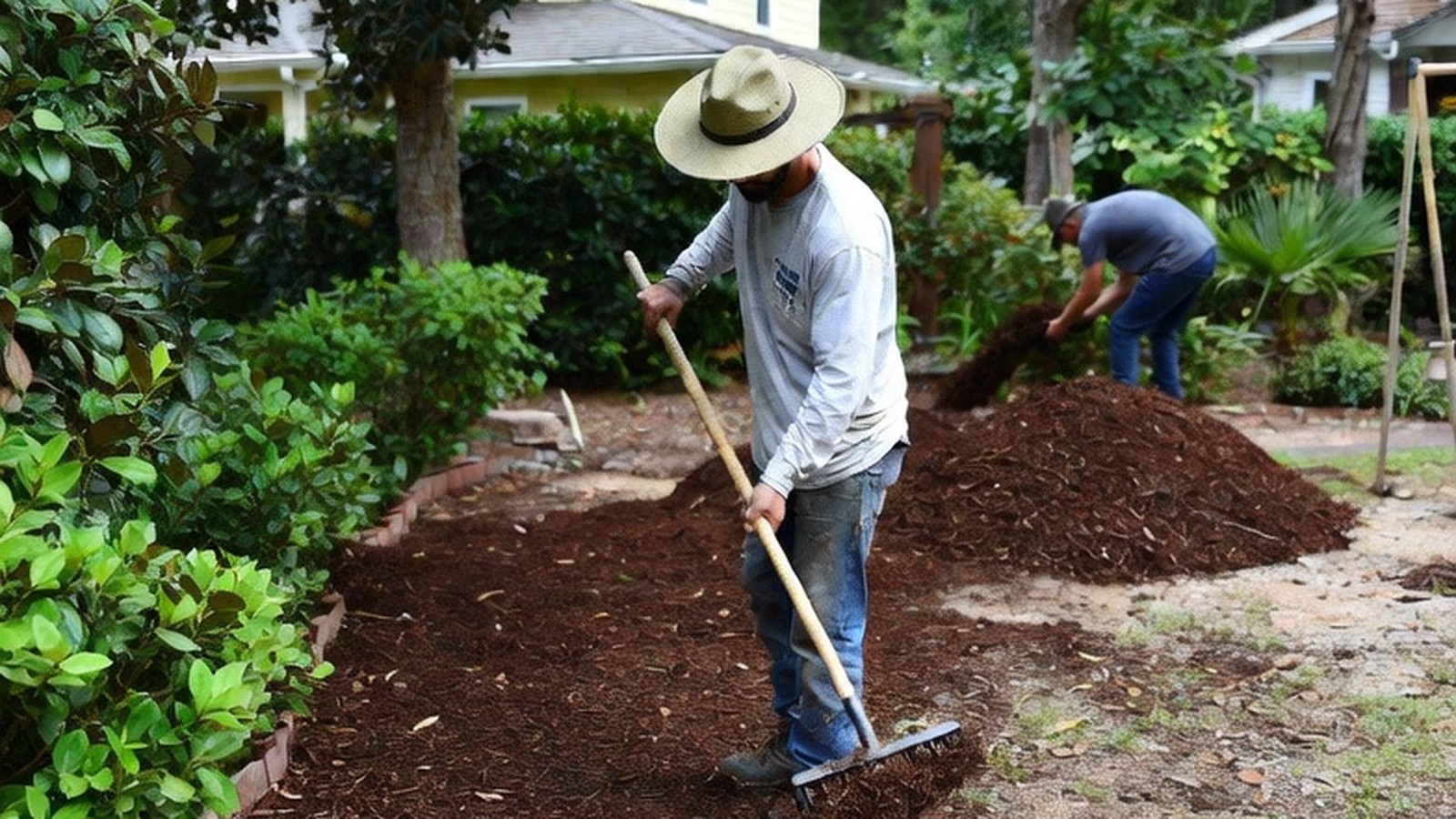
We supply and install mulch as a standalone service throughout Tallahassee, Leon County, and the surrounding region. Call us at (850) 570-4074 to discuss what you need (area size, bed type, current condition) and we'll tell you what makes sense.
For smaller areas, we'll walk you through material selection. For larger properties or commercial sites, we'll provide a bulk delivery and installation quote. Request an estimate online.
We serve Tallahassee, North Florida, and South Georgia: including Leon, Gadsden, Jefferson, Thomas, Grady, and surrounding counties. Call (850) 570-4074 for mulch delivery and installation estimates.