
July in Tallahassee means hot afternoons, heavy humidity, and a lot of yard activity for stinging insects. Wasps, hornets, and bees are especially active this time of year, and trees (especially older live oaks, hollow trunks, and dead limbs) are some of their favorite real estate. If you've noticed increased buzzing around a tree in your yard, it's worth paying attention before someone gets hurt.
Why Trees Attract Stinging Insects in Summer
Our North Florida canopy provides exactly what these insects look for: shelter, moisture, and food sources like sap, pollen, and other insects.
- Hollow cavities in mature live oaks and water oaks make ideal nesting spots for wasps and sometimes honeybee colonies.
- Dead or decaying wood is soft and easy for insects to hollow out further.
- Dense foliage on laurel oaks and magnolias hides paper wasp nests until you're standing right under them.
- Cracks in bark or old pruning wounds give hornets an entry point into a tree's interior.
As temperatures climb through August, colonies grow larger and more defensive, which is exactly why late summer is when we get the most calls about aggressive nests near patios, driveways, and mailboxes.
Warning Signs You Shouldn't Ignore
- Consistent insect traffic in and out of a single spot on the trunk or limb
- Visible paper-wasp nests hanging from lower branches
- A humming or buzzing sound coming from inside a hollow section of trunk
- Increased insect activity near a tree that also has dead limbs, cracks, or decay
If you're seeing any of this, don't get closer to investigate, and don't attempt to spray, smoke, or knock down a nest yourself, especially near a tree that may already have structural issues. Ladders, chainsaws, and angry hornets are a bad combination.
Tree Service vs. Pest Control: Who to Call
Here's where it gets confusing for a lot of homeowners. If the nest is small, accessible, and out in the open, a licensed pest control company can usually handle it. But if the insects are nesting inside a hollow tree, high in the canopy, or in a limb that also needs to come down, that's where a tree service comes in.
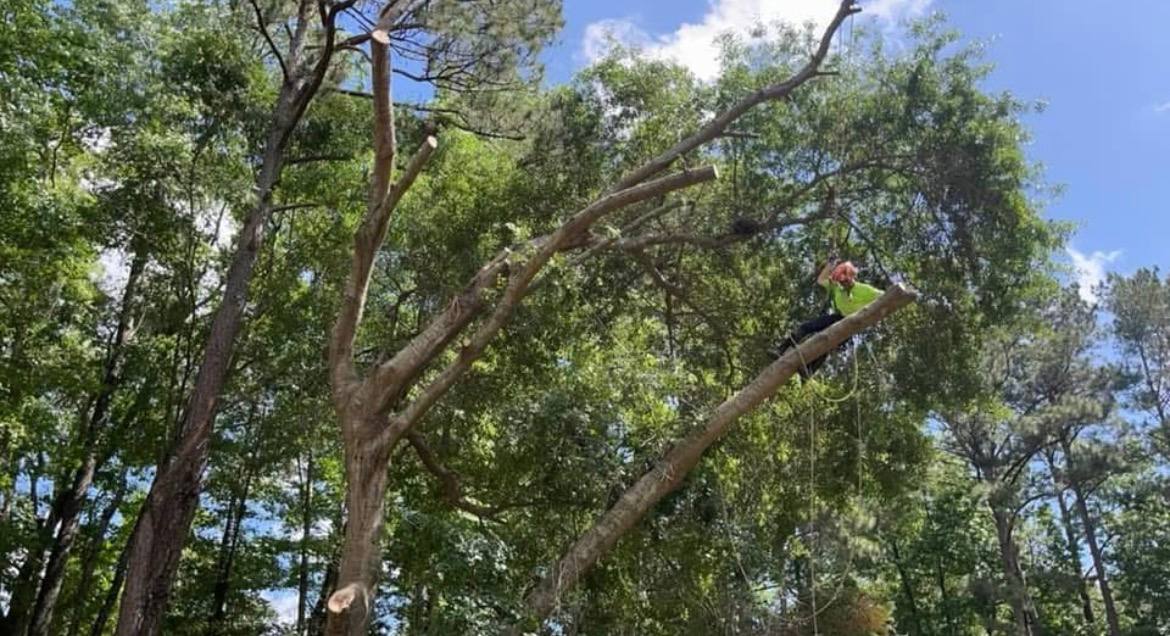
At Reed Tree Service, we regularly work alongside pest control needs when a hollow or decaying tree is the actual root of the problem. Removing a hazardous limb or hollow trunk section doesn't just get rid of the nest, it removes the shelter that's attracting insects in the first place. Owner Joshua Reed and his crew have handled plenty of jobs where the real fix wasn't a pesticide, it was addressing a rotting tree that had become an insect magnet.
Reducing the Risk Around Your Property
- Have dead or dying trees removed before decay creates cavities
- Get regular pruning to eliminate weak, cracked, or hanging limbs
- Ask Josh to look at any tree showing hollow spots, especially near high-traffic areas of your yard
- Don't ignore a "quiet" hollow tree, activity often picks up fast once a colony establishes
Summer in the Canopy City means enjoying your yard, not avoiding it because of a hidden hazard overhead. If you've spotted a suspicious hollow, crack, or nest activity in one of your trees, don't wait until it becomes a bigger problem.
Call Reed Tree Service at (850) 888-5603 or request a free estimate and we'll take a look. With over 10 years serving Tallahassee and the surrounding areas, we know exactly what to watch for.