

★★★★★
“I had to use Patrick Reed to do some work for me today. I must say what a wonderful talented man he was. He was so polite and helpful — I don't know how to thank him for his help.”

That old stump is wasting yard space, attracting termites, and tripping people. We grind it out and give you your yard back.
After a tree comes down in Tallahassee or anywhere across North Florida, you're left with a stump, and stumps don't just sit there quietly. They attract termites and carpenter ants, send up stubborn shoots you have to keep mowing over, and turn into ankle-twisting hazards in your yard. Stump grinding is the fastest, most affordable way to get rid of them for good: our professional grinder chews through the stump and surface roots below grade, leaving you usable yard space and a pile of free mulch at a fraction of the cost of chemical treatments or full excavation. Call us for a free estimate on stump removal cost. Josh walks the property, quotes the job, and you decide.
A stump might seem harmless, but it's a termite magnet. As it decays, it becomes exactly the kind of soft, damp wood that subterranean termites love, and once they're established in a stump near your house, it's a short trip to your foundation. Stumps also sprout. Some species, especially live oaks and elms, send up aggressive shoots from the roots that keep coming back no matter how many times you mow them. Grinding the stump and the major surface roots stops that for good. And then there's the practical stuff: mowing around stumps is annoying, they kill your mower blades, and they're a tripping hazard for kids and guests.
We bring in a professional-grade stump grinder (a machine with a spinning carbide-tipped wheel that chews through wood and roots). We grind the stump down six to eight inches below the surface by default. If you're planning to plant a new tree in the same spot, we go deeper. If you're putting in a fence, patio, or driveway, we can go as deep as needed. The process is fast: most residential stumps take 30 minutes to an hour. The grinder does all the work, and it creates surprisingly little mess outside the immediate stump area.
The stump turns into a pile of wood chips and dirt, essentially free mulch. Most homeowners are happy to keep the grindings. We can spread them back into the hole, rake them level, and you've got a smooth area ready for grass seed or sod. Hauling the grindings away is an add-on if you prefer. A lot of our customers use the excess grindings in their garden beds or around other trees. It's good material, and it would have cost money as bagged mulch. Might as well put it to use.
Diameter is the biggest factor, because a wider stump means more passes and more wear on the grinder. Root flare comes close behind. A live oak can flare two to three feet beyond its trunk, and all of that has to be ground, so oak stumps price at the high end for their size. Access counts too. A stump against a fence, beside an A/C unit, or under a deck may need a smaller machine and extra setup, and slope limits where the grinder can sit. Grinding deeper than standard, for a new planting or a footing, adds to the price. Several stumps in one visit usually get a per-stump discount, since moving the machine is a fixed cost.
Josh walks the stump and quotes it on site. Call Josh at (850) 888-5603 for a free estimate.
Grinding cuts the stump and the major surface roots down below grade and turns the wood into chips. The rest of the root system stays underground and decays over the following years. Full stump removal means pulling the entire root ball with an excavator or a large skid steer. It leaves a big hole to backfill and typically costs two to four times as much as grinding the same stump.
Removal is usually worth it only when you are building directly over the root zone. For a lawn, a garden bed, or light landscaping, grinding does the job and costs less.
Live oaks are the big ones. The root flare is wide, and a live oak stump that was only cut flush will keep sending up shoots. Slash pine stumps are the easiest we grind: the wood is dense, but the roots run deep and straight instead of wide, so a pine stump goes quickly. Laurel oaks, a common street tree in Tallahassee, tend to go hollow with age. A hollow stump grinds faster because there is less wood, but the machine can drop into a void, so we adjust our technique. Sweetgums put up aggressive suckers after cutting, and grinding below grade is the only reliable way to stop them.
Tell us about anything buried or built near the stump. Irrigation lines, fences, driveways, and A/C pads all change how we set up. If the grinder will work near buried utilities, have them marked through Sunshine 811. If the stump sits behind a narrow gate or in a tight side yard, say so when you call, because it may need a smaller track-mounted machine.
What is left is a cavity filled with chips and fine grindings. Most people leave the chips in the hole and top them with soil before seeding, since chips settle over a few months. The rest make good mulch for garden beds and tree bases. Hauling the grindings away is an add-on. If you plan to plant a tree in the same spot, tell us ahead of time so we grind deeper.
Stump grinding is an add-on to a removal and is never bundled in for free. If we are taking the tree down, ask for grinding on the same quote and Josh will price both together. If the stump is tucked in a corner where it bothers no one, some people skip it, which is fine as long as it is a decision and not an assumption. After a larger clearing with a row of stumps, grinding pairs well with brush clearing and a fresh layer of mulch.
Grinding a stump on private residential property generally does not need a permit in Leon County. There are two exceptions: a stump in a public right-of-way, and the stump left after removing a protected tree whose removal needed a permit. For large oaks that is a real question. In Tallahassee, many live oaks are protected and the largest are treated as heritage trees. Tell Josh your address when you call (850) 888-5603 and our crew will say whether a permit rule applies before any cuts are made.
We grind stumps across Leon County and the Big Bend, including these Tallahassee neighborhoods and nearby towns.
We don't cut corners. Here's how every stump grinding job works from start to finish.
We check the stump size, location, and what's nearby (irrigation lines, fences, driveways) so we know exactly what we're working with.
We position the grinder, protect nearby surfaces from flying chips, and clear the area around the stump for safe operation.
We grind the stump and major surface roots below grade. Standard depth is 6-8 inches; deeper on request for new plantings or construction.
We fill the hole with grindings, rake the area level, and clean up any scattered chips. You can seed, sod, or mulch the area right away.
You've got options for tree work in Tallahassee. Here's why our customers keep calling us back.
Common questions about stump grinding in Tallahassee and the surrounding area.
Stump grinding cost in Tallahassee is based primarily on the diameter of the stump. Small stumps under 12 inches are quick, affordable jobs. Large hardwood stumps, the 36-inch live oaks common to North Florida, take longer and wear more tooling, so they cost more. Call Josh at (850) 888-5603 for a free estimate. Josh walks the stump and quotes it.
We position a professional-grade stump grinder over the stump, a machine with a spinning carbide-tipped wheel that chews through wood and roots. The operator grinds across the stump in overlapping passes, working down to 6-8 inches below grade. The whole process takes 30 minutes to an hour for a typical residential stump. The result is a pile of wood chip grindings and a hole that gets raked level and filled back in. No chemicals, no heavy excavation, no mess beyond the immediate stump area.
Standard depth is 6 to 8 inches below ground level. That's deep enough to plant grass over it and mow without hitting anything. If you plan to plant a new tree in the same spot or pour a patio or driveway, we go deeper, just let us know your plans and we'll adjust the depth accordingly.
Most residential stumps are ground in 30 minutes to an hour. A single small stump in an open yard is one of our faster jobs. Large live oak stumps with wide surface roots, or stumps in tight spots near fences and irrigation lines, take longer. If you have multiple stumps, we can typically knock out a batch in a single visit. We'll give you a realistic time estimate when we quote the job.
Stump grinding by itself generally does not require a permit. However, if the stump is what's left after removing a heritage tree that needed a city or county removal permit, that permit covers the whole job including the stump. If you're unsure about your situation (particularly for large oaks in Tallahassee or Leon County) we'll advise you when we come out for the estimate. Tell Josh your address when you call (850) 888-5603 and our crew will say whether a permit rule applies before any cuts are made.
For the vast majority of residential situations, grinding is the right call. Full root ball excavation requires a backhoe, tears up your yard significantly, and costs several times more, it's usually only justified for new construction where the ground needs to be completely cleared for a foundation or paving. Grinding chews the stump and major surface roots below grade, which is more than sufficient for lawn, garden, or light landscaping use. The remaining underground roots decay on their own over a few years without causing problems.
The stump turns into a pile of wood chip grindings, essentially free mulch. Most homeowners keep them. We can spread them back into the hole, rake the area level, and the spot is ready for grass seed or sod. Haul-off of the grindings is an add-on if you'd rather not have them. A lot of our customers put the excess chips to use in garden beds or around tree bases. It's the same material as bagged hardwood mulch from the store, so you might as well use it.
No, grinding eliminates regrowth. Stump sprouting happens because the root system still has energy stored in it. Once we grind through the stump and the major lateral roots, that connection is severed and the root system has no way to regenerate. Species like live oak and Chinese elm are aggressive sprouters if the stump is just cut flush, but proper grinding below grade stops that completely. You won't be mowing over shoots the following spring.
No. Stump grinding is an add-on to tree removal, priced by stump diameter and discussed at the free estimate so you only pay for what you want. The stump stays at ground level unless grinding is on your quote. Ask for it when you call (850) 888-5603 and we can usually price both jobs together.
For a lawn, garden, or light landscaping, grinding is the better choice. It leaves the deeper roots to decay on their own and costs far less than pulling the root ball, which typically runs two to four times the price of grinding the same stump. Full removal makes sense when you are building a foundation or paving directly over the root zone.
Usually, yes. We check what is nearby before we start, protect nearby surfaces from flying chips, and use a smaller track-mounted machine when the space is tight. Tell us where the irrigation lines, fence, and A/C unit sit so we can plan the setup, and have any buried utilities marked.
Yes. Stump grinding is a service on its own, so it does not matter who took the tree down. Tell us the stump diameter, species if you know it, and what is around it, and we will quote it the same way.
Grass, yes. The standard 6 to 8 inch grind is deep enough to seed or sod over, and most people top the chips with soil first since they settle over a few months. For a new tree in the same spot, tell us before we start so we grind deeper.
Other ways we can help with your trees and property.
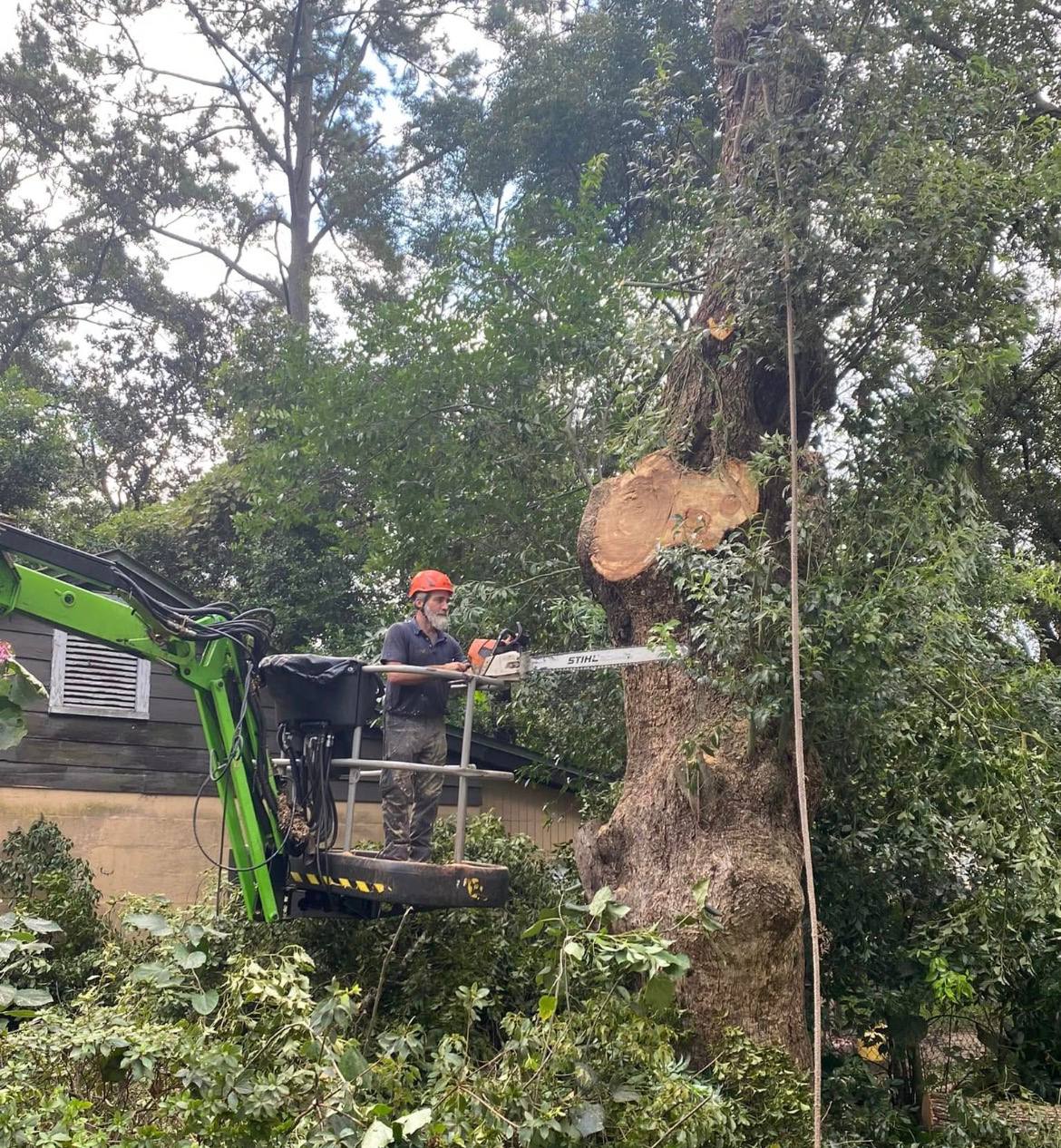
Safe removal of any size tree, from open-yard drops to sectional takedowns over roofs. Insured.
Learn More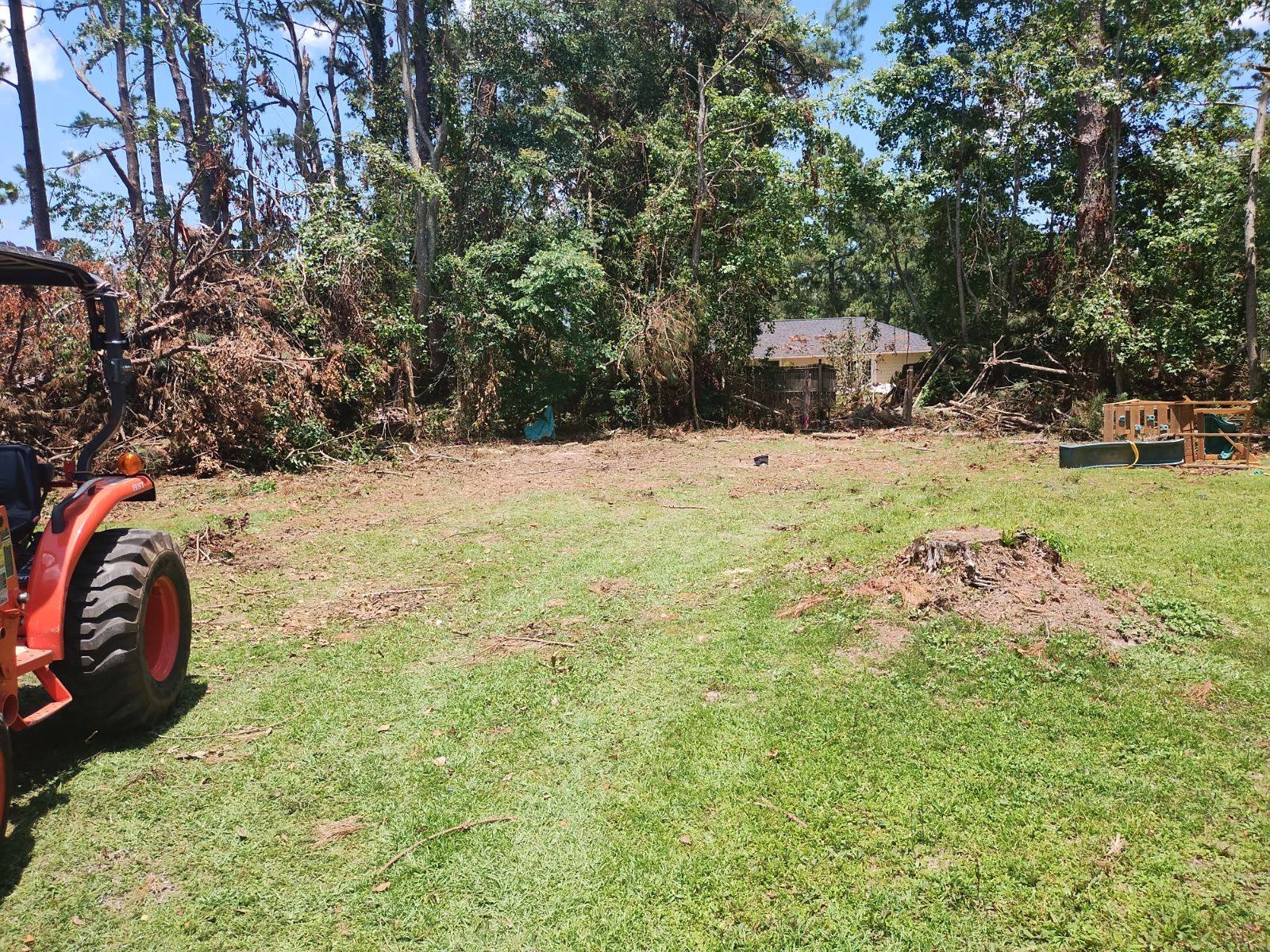
Clear overgrown lots, brush, and vegetation to reclaim your property.
Learn More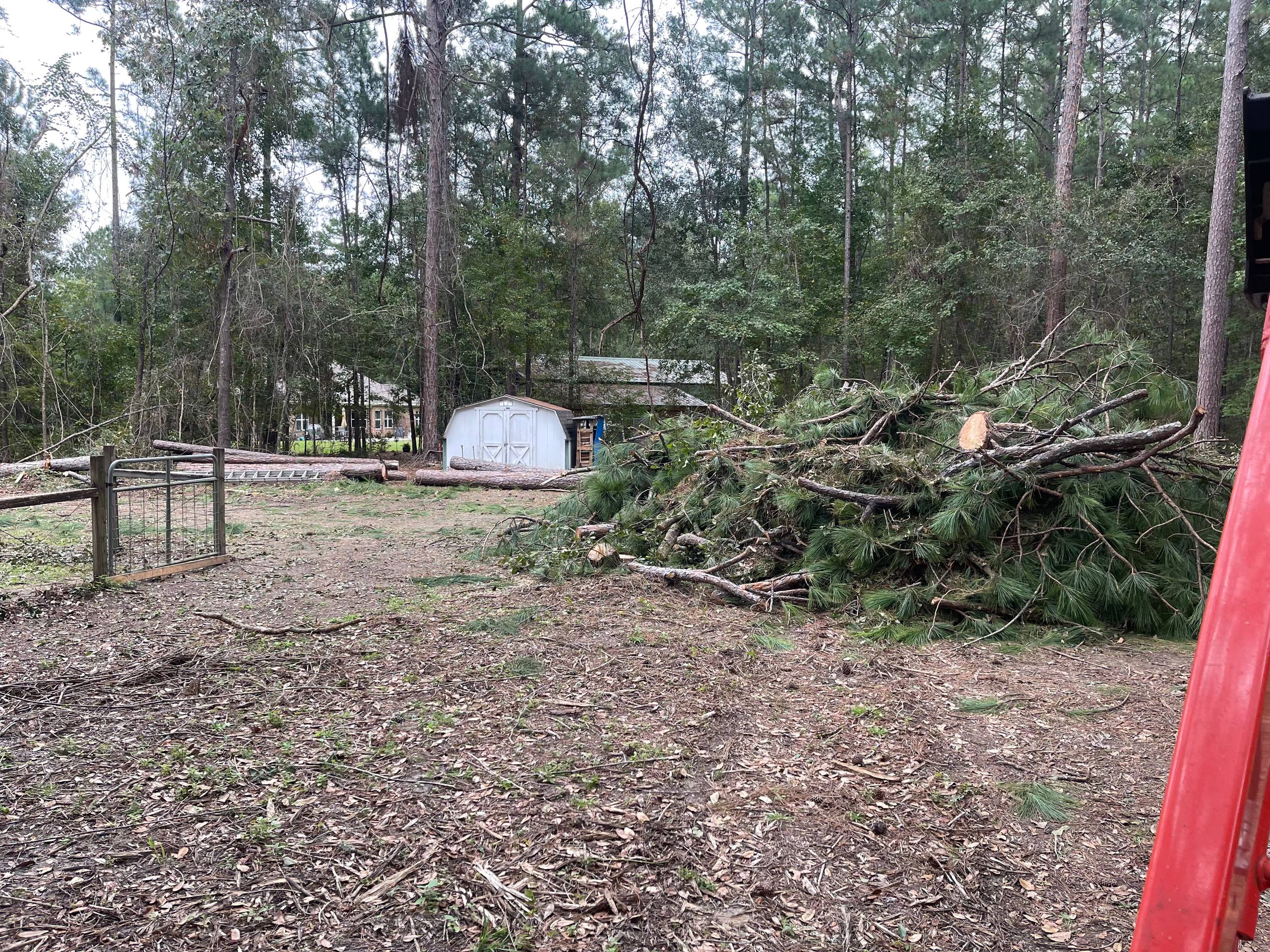
Fresh mulch installation and delivery to protect your landscaping and improve curb appeal.
Learn MoreWe provide stump grinding throughout the Big Bend region and beyond.